Usman Ali, an Afghan national arrested after the Gulistan-i-Jauhar assault, has lifted the curtain on exactly how Pakistan was targeted — and who gave the orders.
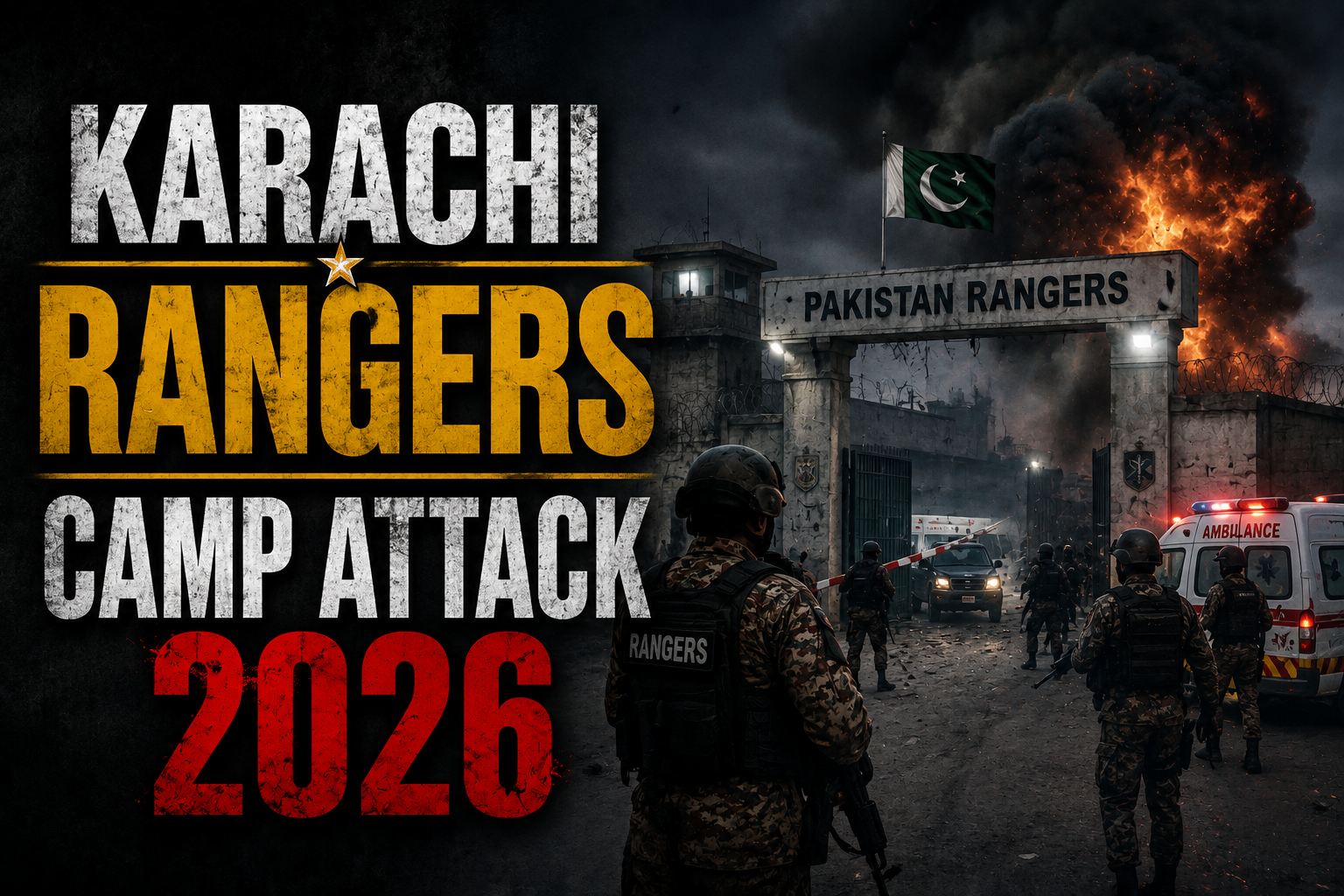
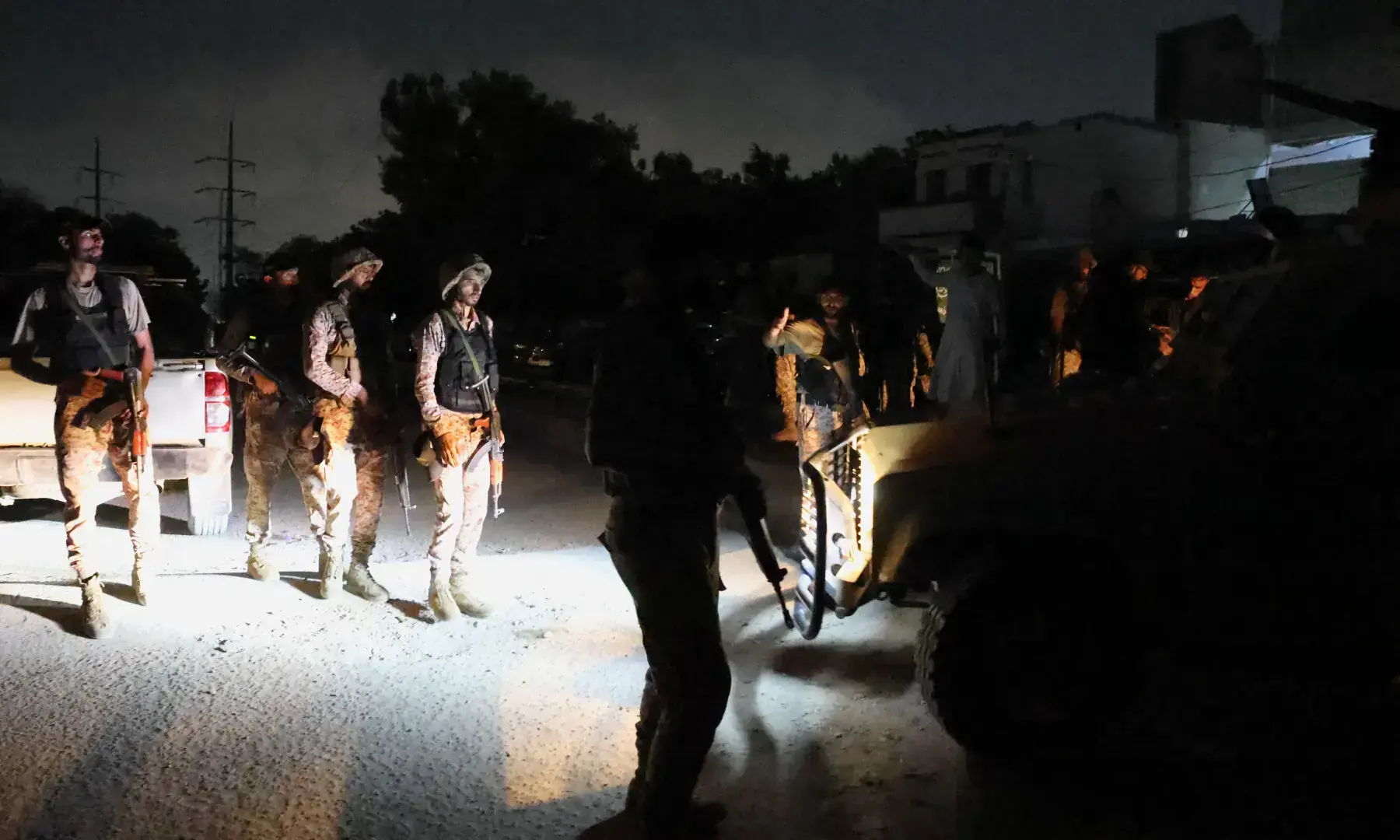
The night of June 27, 2026 started like any other in Gulistan-i-Jauhar, one of Karachi’s busiest residential neighbourhoods. Families were winding down. Students near the area’s universities were heading home. Then a blast ripped through the main gate of a Pakistan Rangers (Sindh) camp — followed immediately by sustained gunfire that, by eyewitness accounts, lasted close to fifteen minutes.
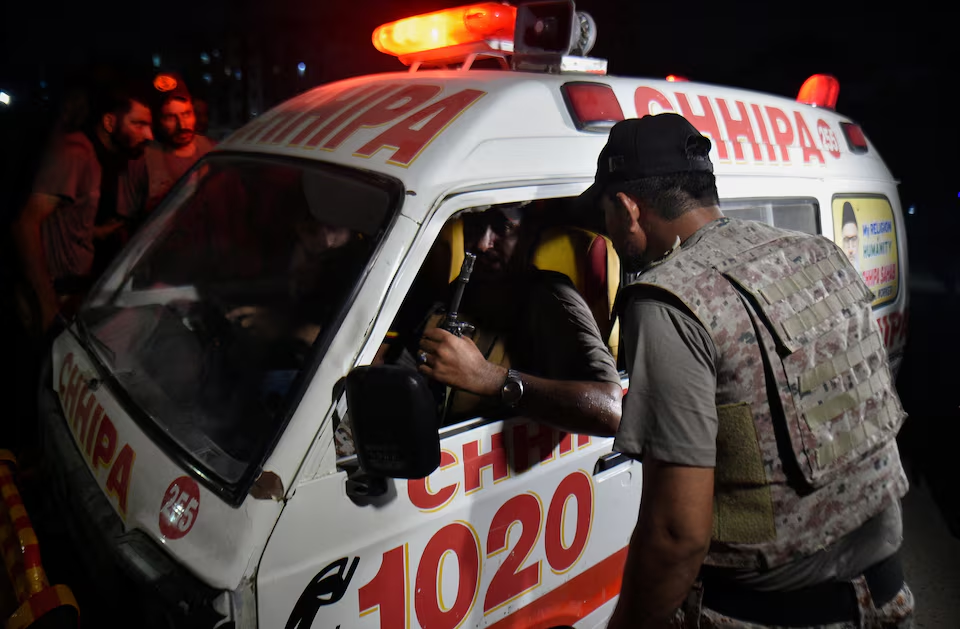
By the time it was over, three Rangers personnel had embraced martyrdom. Four others lay injured. And Pakistan was staring at one of the most brazen urban terror attacks it had seen in years.
Karachi Rangers Sindh foiled what the military called a “cowardly terrorist attack,” killing three attackers and capturing one in an injured condition — later confirmed to be an Afghan national. That captured man, who identified himself as Usman Ali, has since become the most important witness in unravelling the full picture of the assault.
The Attack: What Happened at Gulistan-i-Jauhar
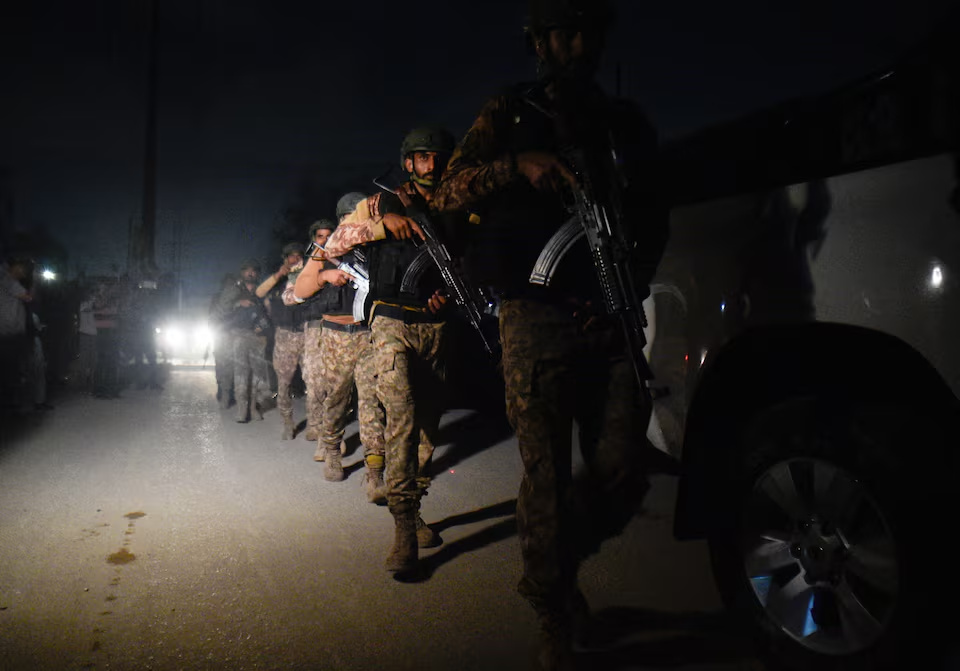
Militants from Jamaat-ul-Ahrar detonated an explosive at the entrance of the Rangers camp in Karachi’s Gulistan-i-Jauhar neighbourhood before opening fire on the troops. The violence erupted along a major road flanked by several universities and Pakistan’s meteorological department — a densely populated, civilian-heavy zone.
One resident, Mohammad Bakhsh, was praying at a nearby mosque when the explosion struck. “The ground felt like it does when there is an earthquake,” he said. “When we came out there was smoke everywhere… then the gunfire started.” He described the firing continuing for roughly fifteen minutes before security forces gained the upper hand.
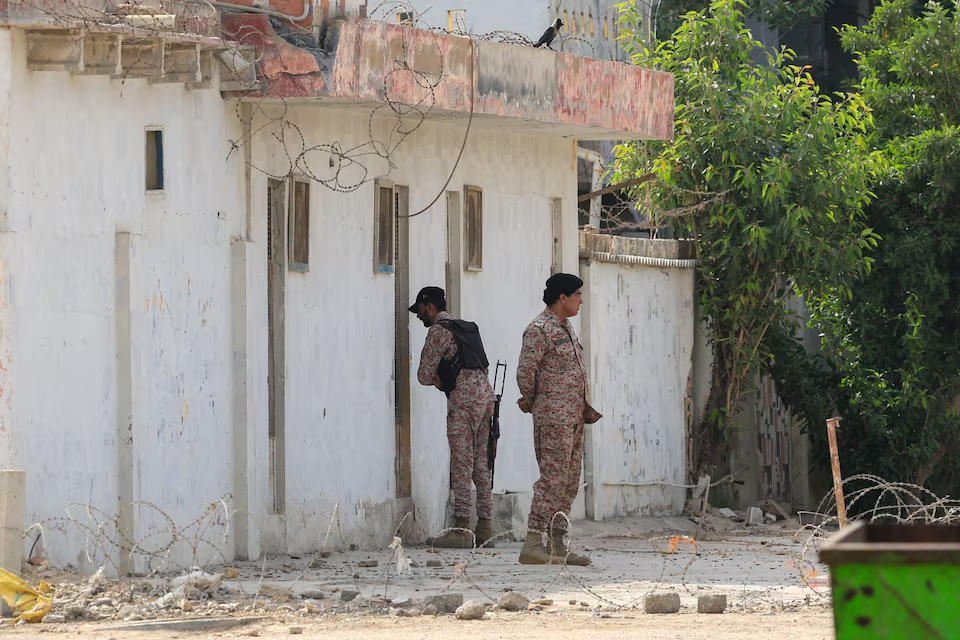
Roads connecting Mosmiyat Chowrangi to Gulistan-e-Jauhar Block 6, Kamran Chowrangi and Chaman Iqbal Colony were immediately closed for traffic following the incident. Paramilitary soldiers moved in swiftly, cordoning off streets as AFP journalists on the ground heard heavy gunfire echoing through the night.
Who Is Usman Ali — The Man Who Survived
The arrested terrorist identified himself as Usman Ali, a member of the India-backed terrorist group Jamaat ul Ahrar, hailing from Jalalabad city in Afghanistan’s Nangarhar province.
He named three accomplices involved in the operation: Abdul Hadi, Janaan, and Umar Farooq — all of whom, he claimed, belonged to Jamaatul Ahrar. Of the four attackers, Hadi was killed during the assault. Janaan and Umar Farooq were also neutralised. Only Usman Ali was taken alive — wounded while attempting to flee.
His confession, as relayed by security sources, reads less like an interrogation and more like a detailed operational debrief. Every step of the plot, from the planning stages in Afghanistan to the moment of the blast, has now been mapped.
Trained in Afghanistan, Armed from Waziristan
Perhaps the most alarming detail to emerge from Usman Ali’s confession is just how structured and state-like the operation behind this attack appears to be.
Ali revealed that all members of the cell received training in Afghanistan, including how to prepare suicide jackets and assemble explosive vests, under an instructor named Umar Qari. In his own words:
“All of us underwent rigorous training in Afghanistan. I was provided with a vest; we are trained to assemble suicide jackets ourselves. We all know how to manufacture suicide vests as we received specialised training for this in Afghanistan.”
The weapons used were not sourced locally. According to Ali, Abdul Hadi had procured the weapons used in the attack from Waziristan. Hadi, a resident of Bajaur, was described as deeply familiar with Karachi — someone who had operated in the city previously and who handled all local logistics for the cell.
Ali also identified the group’s commander in Afghanistan as Ahrar Moulvi, the man he claims directed the entire operation. All travel arrangements, the security sources confirmed, were completed before the group ever set foot in Karachi.
Seven Days in the City Before Striking
The cell did not arrive and attack immediately. Ali told investigators that he and his companions arrived at Abdul Hadi’s residence seven days before the attack and were housed in an under-construction building. That week was used for reconnaissance and finalising operational details.
In a detail that reveals just how carefully this plot was concealed, Ali admitted that initially the group could not tell the difference between the Pakistan Army and the Pakistan Rangers. “We came to know about the Rangers after coming here,” he told investigators. The Rangers camp in Gulistan-i-Jauhar was not necessarily the original or only target — it was selected after the cell had already embedded itself in the city.
All logistical arrangements had been completed before the group reached Karachi, and Abdul Hadi, described as highly familiar with the area, coordinated their movement on the ground.
Who Is Jamaat ul Ahrar — Pakistan’s Long-Running Threat
Jamaat ul Ahrar (JuA) is not a new name in Pakistan’s security landscape. The group was formed by Abdul Wali aka Omar Khalid Khorasani in 2014 following a split from the banned Tehreek-i-Taliban Pakistan (TTP), though both groups subsequently joined hands in 2024. Khorasani himself was killed in a car bomb attack in Afghanistan in August 2022.
According to the United Nations Security Council, JuA is based in Nangarhar, Afghanistan. “Most of JuA commanders and operatives hail from Mohmand Agency… dispersed after Pakistan’s military operation Zarb-i-Azb. Remnants continue to launch terrorist attacks inside Pakistan,” the UN body notes.
Pakistan’s ISPR has described JuA in its official statements as an “Indian proxy” — a framing that places the Karachi attack squarely within Islamabad’s broader accusation that New Delhi is funding militant groups operating from Afghan soil. India categorically denies these allegations.
ISPR Response: Pakistan Promises Retribution
The military’s response to the attack was immediate and unambiguous. Field Marshal Asim Munir, Chief of Army Staff and Chief of Defence Forces, expressed his deepest condolences to the families of the martyred soldiers, stating that their sacrifices further reinforced the nation’s unwavering commitment to safeguarding Pakistan at all costs.
Pakistan’s military warned it would carry out “retribution operations” against the perpetrators of the attack to avenge the martyrdom of its soldiers. Sanitisation operations were launched in the area to ensure no other attackers remained at large.
Prime Minister Shehbaz Sharif praised Rangers personnel for thwarting the assault, stating:
“The nation stands shoulder-to-shoulder with its brave armed forces, the Rangers, and all law enforcement agencies. Our struggle will continue with full determination and resolve until the scourge of terrorism is completely eliminated.”
The Afghanistan Question: A Pattern Pakistan Can No Longer Ignore
The Karachi attack does not exist in isolation. It is the latest in a pattern of cross-border terrorism that Pakistani officials say has intensified dramatically since the Afghan Taliban took power in Kabul in 2021.
Pakistan witnessed a surge in terror activities, particularly in its Khyber Pakhtunkhwa and Balochistan provinces, since 2021. Pakistan launched Operation Ghazab lil-Haq, killing scores of Afghan Taliban operatives and allied militants and injuring hundreds more. In October 2025, border clashes erupted after the Afghan Taliban and affiliated militants launched unprovoked attacks on Pakistani border posts.
Just earlier this month, Pakistan carried out strikes on terrorist hideouts along its border with Afghanistan, killing 26 terrorists. Information Minister Attaullah Tarar confirmed those strikes came in response to recent terrorist incidents, including an attack on a Federal Constabulary post in Musa Dara in Peshawar on June 11.
Defence and security analysts say these confessions conclusively demonstrate that the interim Afghan Taliban regime continues to allow Afghan soil to be used as a safe haven for terrorists plotting attacks against Pakistan. Strategic experts noted that Pakistan has repeatedly presented the Afghan Taliban administration with evidence regarding cross-border terrorism, yet actionable steps remain pending.
What Happens Next
The capture of Usman Ali alive is a significant intelligence break. His confessions have already connected the dots between a Nangarhar-based terror commander, a Bajaur local who served as their Karachi guide, weapons sourced from Waziristan, and training camps that, by his own account, operate openly in Afghanistan.
Whether those confessions translate into diplomatic action — or something more direct — remains the question Pakistan now faces. The ISPR’s language of “retribution operations” suggests Islamabad is not planning to let this moment pass quietly.
For the families of the three Rangers who gave their lives in Gulistan-i-Jauhar, no operational response brings back what was lost on the night of June 27. But their sacrifice has, at minimum, handed Pakistan its clearest window yet into the machinery behind these attacks.
People Also Ask
Who carried out the Karachi Rangers camp attack on June 27, 2026?
Jamaat ul Ahrar (JuA), described by Pakistan’s military as an Indian-backed proxy group, claimed responsibility. The attack involved four terrorists, three of whom were killed. The surviving attacker, Usman Ali, is an Afghan national from Nangarhar province.
How many Rangers personnel were martyred in the Karachi attack?
Three Pakistan Rangers (Sindh) personnel embraced martyrdom. Four others were injured during the exchange of fire.
Where exactly did the Karachi Rangers attack take place?
The attack targeted a Pakistan Rangers (Sindh) camp in the Gulistan-i-Jauhar neighbourhood of Karachi, near Mosmiyat Chowrangi.
Was the arrested terrorist trained in Afghanistan?
Yes. Usman Ali confirmed to investigators that the entire cell, including himself, received training in Afghanistan under an instructor named Umar Qari, including how to prepare and assemble suicide jackets and explosive vests.
What was Pakistan’s official response to the attack?
The ISPR vowed retribution operations against the perpetrators. Field Marshal Asim Munir expressed condolences to the families of the martyred soldiers. Prime Minister Shehbaz Sharif praised the Rangers for foiling the breach and reaffirmed the state’s commitment to eliminating terrorism.
Did this attack change your view on Pakistan’s security situation in major cities? Share your thoughts in the comments below.