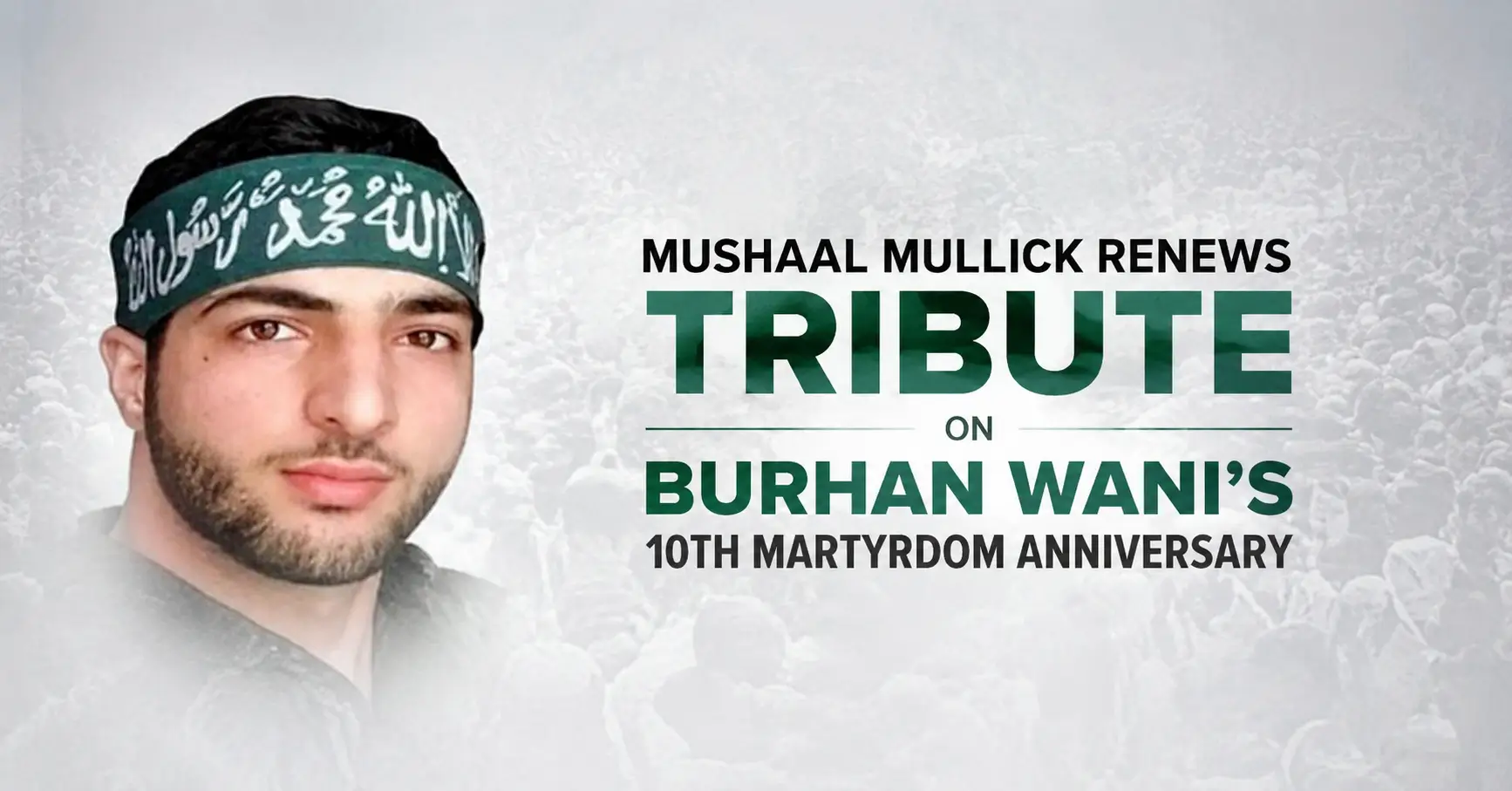
Burhan Wani’s martyrdom anniversary fell on July 8, 2026 — a full decade since the 22-year-old Hizbul Mujahideen commander was killed by Indian forces. The date remains one of the most emotionally charged on the Kashmiri political calendar.
Mushaal Hussein Mullick, Chairperson of the Peace and Culture Organization and wife of jailed Hurriyat leader Yasin Malik, has used the occasion in previous years to call Wani a symbol of Kashmiri resistance. Her organization and allied groups renewed similar tributes this year as part of wider commemorations.
Who Was Burhan Wani? A Timeline of the 2016 Killing

Burhan Wani, a Tral-born commander of the Hizbul Mujahideen, gained prominence for using social media to publicize his militancy — a break from earlier insurgent tactics. He was killed along with two associates by Indian troops in what Kashmiri groups describe as a staged encounter in the Kokernag area of Islamabad district on July 8, 2016.
- His death triggered months of unrest across Indian-administered Kashmir
- Kashmiri rights groups say Indian forces killed more than 150 civilians during the protests that followed, using bullets, pellets, and teargas
- New Delhi’s official position, at the time and since, has been that Wani was a designated militant commander, not a political leader
Kashmir Observes Youm-e-Tajdeed-e-Ahad With Rallies and Marches

This year’s anniversary carried added weight as the tenth since Wani’s death. Kashmiris on both sides of the Line of Control marked July 8 as a “Day of Resistance,” with rallies held from Muzaffarabad to Srinagar to Karachi.
Hurriyat Conference designated the day as Youm-e-Tajdeed-e-Ahad, urging people to visit martyrs’ graveyards and reaffirm what it calls the movement’s founding pledge. In Karachi, organizers held a solidarity march from the Arts Council to the Karachi Press Club.
Hurriyat and Pakistani Leaders Renew Self-Determination Calls

The Jammu Kashmir Democratic Freedom Party said Wani had become a symbol of courage for Kashmiri youth and that his death drew international attention to the unresolved dispute. Hizbul Mujahideen chief Syed Salahuddin echoed the sentiment at a Muzaffarabad conference.
Salahuddin argued Wani’s death revived the Kashmir freedom movement and undercut Indian claims that it was directed by outside forces, framing Wani as an enduring symbol of resistance. Mullick’s own past statements follow this same script — casting Wani as a youth icon rather than an armed commander.
A Contested Legacy: Militant Commander or Freedom Icon?
For a global readership, the framing matters. India’s government and security establishment have consistently classified Wani as a terrorist operative of a banned militant outfit, not a political figure — a position that has not shifted in ten years.
READ MORE : Strait of Hormuz Ceasefire Crumbles as US Strikes Iran
Even inside India, the picture is more layered than official statements suggest: a former head of India’s Research and Analysis Wing once remarked that whatever label was applied to Wani, he had genuinely become a popular icon on the ground in Kashmir. That contradiction — designated militant to New Delhi, folk hero to large parts of the Valley — is precisely why the anniversary keeps generating friction each year.
What the 10th Anniversary Means Going Forward
Hurriyat’s Abdul Rashid Minhas also pointed to recent remarks by Pakistan’s military leadership, welcoming Field Marshal Asim Munir’s statement at a Corps Commanders’ Conference linking regional peace to Kashmiri self-determination.
That reference signals how the anniversary now overlaps with live Pakistan-India military and diplomatic tension, not just historical commemoration.
Ten years on, neither the ground reality in Kashmir nor the two countries’ opposing narratives about Wani have moved closer together. The ritual of tribute — from Islamabad to Muzaffarabad to Srinagar — continues largely unchanged, even as the political deadlock it responds to shows no sign of resolution.