
Islamabad has done something no Pakistani finance ministry has managed before pay debt back early, at scale, and keep doing it for over a year straight. That counts as a turnaround or a talking point depends on who you ask.
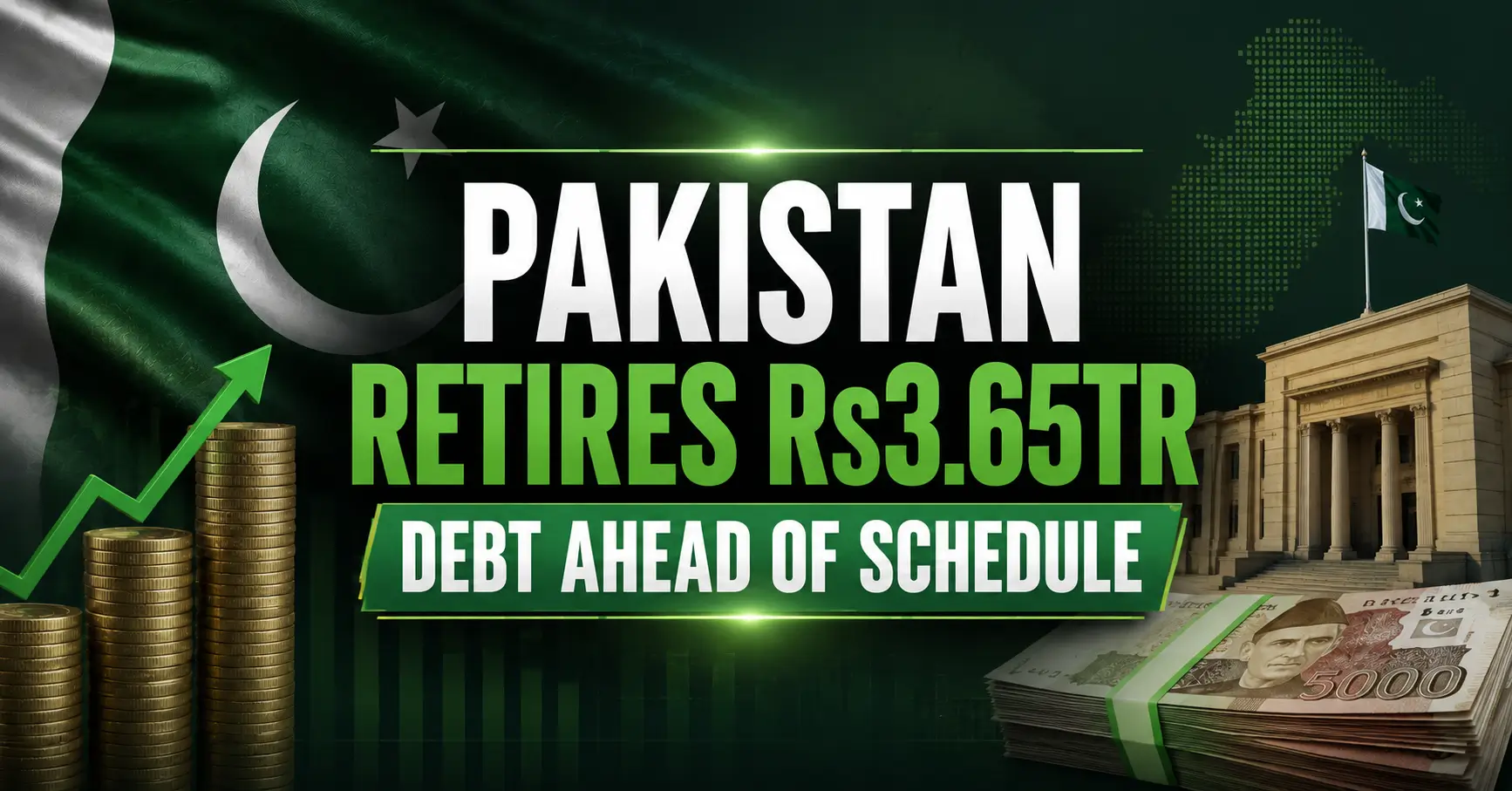
Pakistan’s Rs3.65 Trillion Early Debt Retirement: What Just Happened

Pakistan’s Ministry of Finance has early-retired Rs3,654 billion in domestic debt since December 2024 — a 14-month run confirmed by Khurram Schehzad, Adviser to Finance Minister Muhammad Aurangzeb, on January 29, 2026. The debt was owed to both the open market and the State Bank of Pakistan (SBP).
The latest tranche, Rs300 billion, went to the SBP just before the announcement. Schehzad called it proof of a “decisive shift toward fiscal discipline,” language his ministry has repeated at every milestone since mid-2025.
Breaking Down the Six-Payment Debt Retirement Timeline
The retirement drive built up in stages: Rs1,000 billion in December 2024, Rs500 billion in June 2025, then a sharp jump to Rs1,160 billion in August 2025 — the single largest tranche. Smaller payments of Rs200 billion and Rs494 billion followed in October and December 2025.
READ MORE: Oil Prices Surge 6% as Trump Declares Iran Truce Over
By the time Rs300 billion landed at the SBP in January 2026, the July-to-January window of FY26 alone accounted for over Rs2,150 billion — 44% more than all of FY25’s early repayments combined, according to ministry figures.
Why Pakistan’s Debt-to-GDP Ratio Is Falling

Officials point to two indicators as evidence of genuine progress: total public debt fell from roughly Rs80.5 trillion in June 2025 to about Rs80 trillion by November 2025, and the debt-to-GDP ratio has eased from around 74% in FY22 to near 70%.
SBP-held debt specifically dropped from Rs5.5 trillion to roughly Rs3 trillion — about 44% of it retired years ahead of a 2029 maturity date. Average domestic debt maturity has also stretched from 2.7 years to 3.8 years, a shift the ministry says reduces rollover risk.
Fiscal Discipline or Political Messaging? The Debate Behind the Numbers
Not everyone reads these numbers the same way. Public reaction to the announcement, visible on Business Recorder’s comment threads, has been openly skeptical — several readers argued the repayments are funded “from the people’s pockets” amid persistently high inflation.
That critique cuts to a real tension: early debt retirement requires cash, and that cash comes from taxation, SBP profits, or spending restraint — not from thin air. The ministry frames it as prudent management; critics call it accounting optics dressed up as reform.
What Early Debt Retirement Means for Ordinary Pakistanis

For households, the practical link is interest savings. Schehzad’s team says falling rates combined with disciplined repayment saved taxpayers over Rs850 billion in FY25, with roughly Rs800 billion projected for FY26 through debt switches and stable rates.
Lower SBP borrowing also theoretically eases pressure on money supply and inflation over time. But the immediate, visible impact on grocery bills or utility costs remains indirect — savings show up in the budget, not the wallet, at least not right away.
How This Fits Pakistan’s $7 Billion Deal
This debt retirement push runs alongside Pakistan’s ongoing $7 billion IMF Extended Fund Facility. Stretching debt maturity and cutting central bank reliance are exactly the kind of structural benchmarks the Fund has pushed Islamabad toward in successive reviews.
Separately, the finance ministry has committed to extending average domestic debt maturity to four years and two months by June 2027, alongside consolidating idle government bank balances — moves that reinforce, rather than replace, the early retirement strategy.
Risks That Could Reverse the Fiscal Discipline Narrative
Fiscal discipline built on a 14-month streak is not the same as fiscal discipline built into institutions. Election-cycle spending pressure, a fresh balance-of-payments shock, or slippage on tax collection targets could all interrupt the pattern quickly.
Pakistan’s total public debt, despite the early retirements, still rose by roughly Rs9 trillion in FY25 on a gross basis — a reminder that retiring old debt hasn’t stopped new borrowing from replacing it, even as the composition improves.
Expert and Public Reaction to the Debt Retirement Announcement
Schehzad has consistently urged against reading per-capita debt figures in isolation, arguing on X that “many advanced economies carried some of the highest per-person debt levels globally, yet remained fiscally stable” due to strong repayment capacity.
Independent analysts, cited across financial media, generally agree the repayments have improved Pakistan’s debt profile — even as they caution that total borrowing continues to grow overall, meaning the retirement drive is reshaping the debt, not eliminating it.
Final Thought!
Rs3.65 trillion retired early is a real number, verified across ministry statements and independent financial reporting — not spin. Whether it marks a durable institutional shift or a favorable window that closes with the next fiscal shock is the question Pakistan’s next two budget cycles will answer.
Do you think Pakistan’s early debt retirement drive reflects lasting fiscal reform, or a short-term push that election-year spending could unwind?