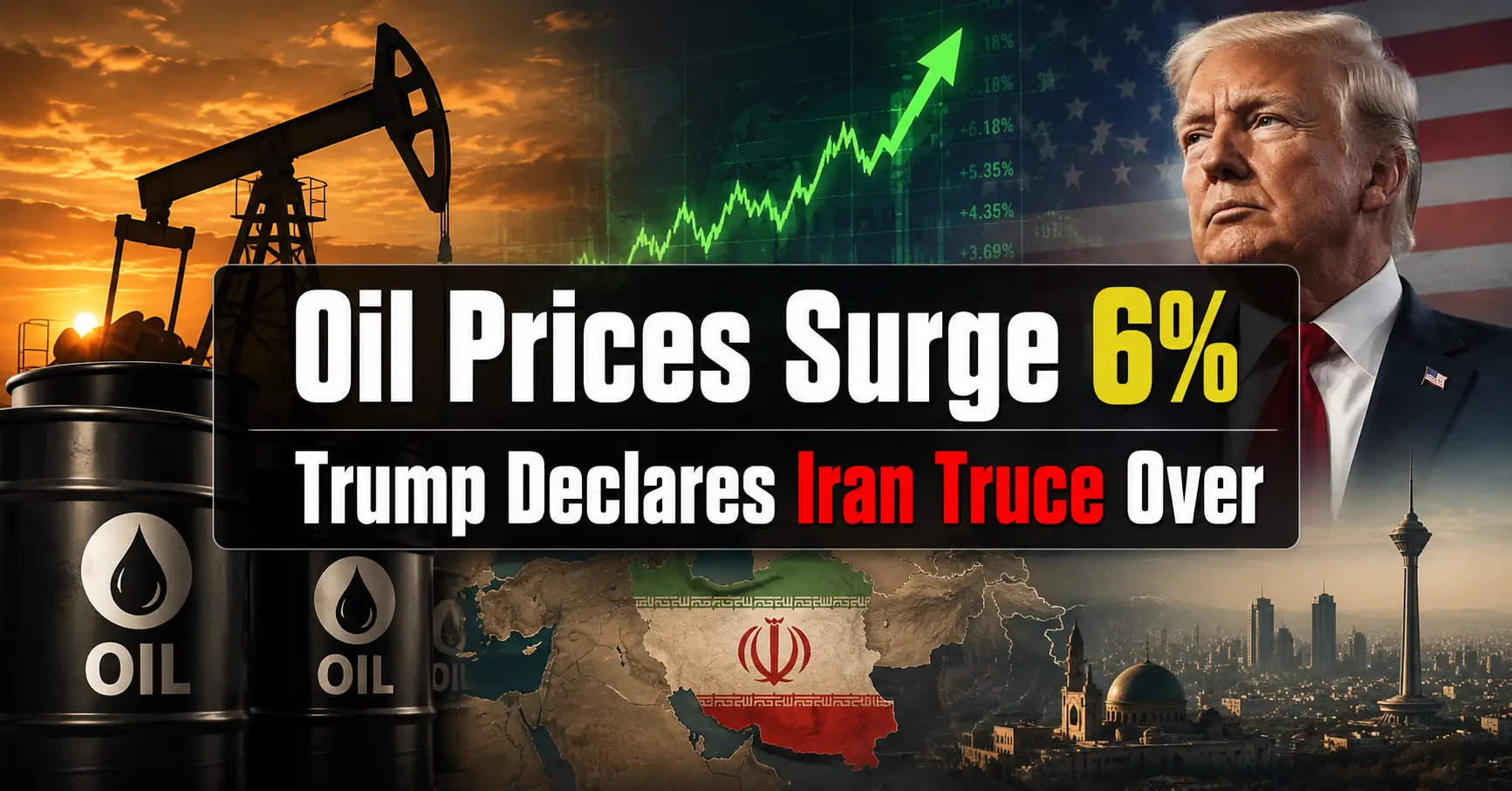

Global oil markets convulsed this week after President Donald Trump effectively tore up the fragile truce with Iran, sending crude prices rocketing and wiping billions off stock markets from New York to Seoul.
What Triggered the Renewed Iran-U.S. Tensions

Oil prices Iran ceasefire fears returned Wednesday after Trump told reporters at the NATO summit in Ankara that the U.S. agreement with Tehran was finished. “To me, I think it’s over,” Trump said, adding that negotiators “have to come back to me,” calling further talks “a waste of time dealing with them.”
The remarks followed a chaotic 48 hours. The Treasury Department cancelled its authorization allowing Iran to sell oil on Tuesday, a move critics had viewed as a major concession in the earlier interim deal. Iran’s foreign ministry called it a “gross violation” of the memorandum reached last month.
Strait of Hormuz Attacks Spark the Escalation
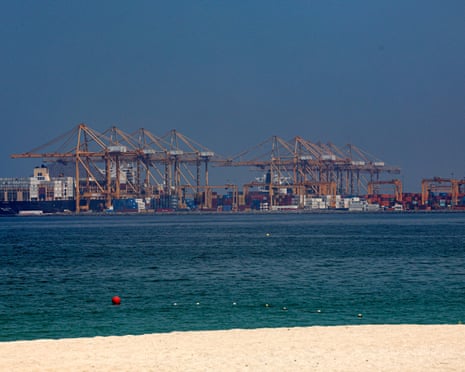
The immediate spark for the oil prices Iran ceasefire collapse was maritime. Three commercial vessels were struck near the Strait of Hormuz on Tuesday, with Tehran declining to claim responsibility for the attacks. Washington responded within hours with force.
U.S. Central Command bombed more than 80 targets inside Iran overnight, hitting air defense systems, command networks, radar sites, anti-ship missile capability and small naval vessels. The U.S.-led Joint Maritime Information Center raised its threat rating for the waterway to “severe.”
Brent and WTI Crude: The Numbers Behind the Surge

The scale of the rally stunned traders who had grown used to a calmer market. West Texas Intermediate futures rose 4.4% to close at $73.52 a barrel, while Brent, the international benchmark, jumped 5.2% to settle at $78.02.
Key figures from the session:
- U.S. crude briefly touched $76 a barrel, its largest single-day move since early June
- Brent spiked as high as $80 intraday before easing
- The two-day gain across the market topped 7%
- Rigzone reported oil trading up more than 6% at the time of writing, with WTI near $72 and Brent near $76
- Heating oil, a proxy for jet fuel, climbed 11%, while wholesale gasoline futures rose 5%
Trump’s Mixed Signals Rattle Global Markets
The oil prices Iran ceasefire whiplash deepened when Trump threatened even harsher action. He said U.S. forces would “probably hit Iran again tonight” and floated taking over Kharg Island, Iran’s main crude export hub, along with reimposing a naval blockade on the Strait of Hormuz.
READ MORE: Pakistan Loses $2 Billion in Exports this Year
Yet hours later he pulled back sharply. “I don’t think it’s going to start again,” Trump told , predicting prices would soon fall because “we have an oil glut right now” with tankers exiting Hormuz. That reversal briefly calmed jittery traders.
Iran Pushes Back: Ghalibaf Accuses Washington of Truce Violations
Tehran’s response was defiant rather than conciliatory. Parliament Speaker Mohammad Bagher Ghalibaf accused Washington of “major MOU Violations,” listing renewed Strait restrictions, fresh strike threats, reinstated oil sanctions and attacks on southern Iran.
His statement carried a warning for markets watching the oil prices Iran ceasefire saga unfold. “The era of bullying and extortion is over. It leads nowhere. We don’t fold,” Ghalibaf said, according to a statement posted on his X account.
Stock Markets and Bond Yields React Worldwide
Equity investors did not take the news calmly. The S&P 500 briefly fell 1.1% before trimming losses to close down 0.3%, while the Dow Jones Industrial Average dropped 577 points and the Russell 2000 tumbled 0.9%.
The tremors spread far beyond Wall Street:
- Germany’s DAX and France’s CAC 40 each closed down more than 2%
- South Korea’s Kospi sank 5.3% amid a separate AI-stock sell-off
- Hong Kong’s Hang Seng bucked the trend, rising 3%
- The 10-year Treasury yield climbed toward 4.60%, up sharply from 3.97% before the war began
U.S. gas prices, which had fallen from a May high of $4.56 a gallon to $3.79, stopped declining and flatlined this week, according to AAA data.
How the Oil Price Shock Is Hitting Pakistan
For Pakistan, the oil prices Iran ceasefire breakdown is not an abstract headline — it is a direct threat to an already fragile economy. Islamabad has been quietly mediating between Washington and Tehran throughout the crisis.
A senior Pakistani finance official, identified as Karim, warned this week that renewed hostilities could push 4.3 million Pakistanis into poverty, while weakening remittance inflows from the Gulf and swelling the country’s import bill. The scars from earlier this year remain fresh.
Consider the earlier shock alone:
- Pakistan’s weekly oil import bill surged 167%, from roughly $300 million before the conflict to nearly $800 million by late April 2026
- Petroleum imports absorbed nearly one-fifth of Pakistan’s total import bill in the first half of FY2026, reaching $7.98 billion
- Brent had only just retreated to the $70-73 range before this week’s fresh spike, officials noted
Pakistan was already named among the countries hit hardest by the earlier 2026 fuel crisis, alongside Bangladesh and Vietnam, as Asian buyers absorbed the brunt of Strait of Hormuz disruptions.
What Analysts Are Watching Next
Market strategists remain split on where oil prices Iran ceasefire tensions head from here. Samer Hasn of XS.com said markets are again recognizing “the fragility of the current ceasefire,” warning supply-disruption risk remains high while diplomacy drags on.
Others see room for de-escalation. Hasn noted a “sudden breakthrough” on tanker traffic or eased Iranian export restrictions is not impossible, partly because Washington has limited appetite for a prolonged war ahead of midterm elections with gasoline near $4 a gallon.
For now, the truce hangs by a thread, and every statement from Ankara, Tehran or Islamabad has the power to move markets by billions within minutes.