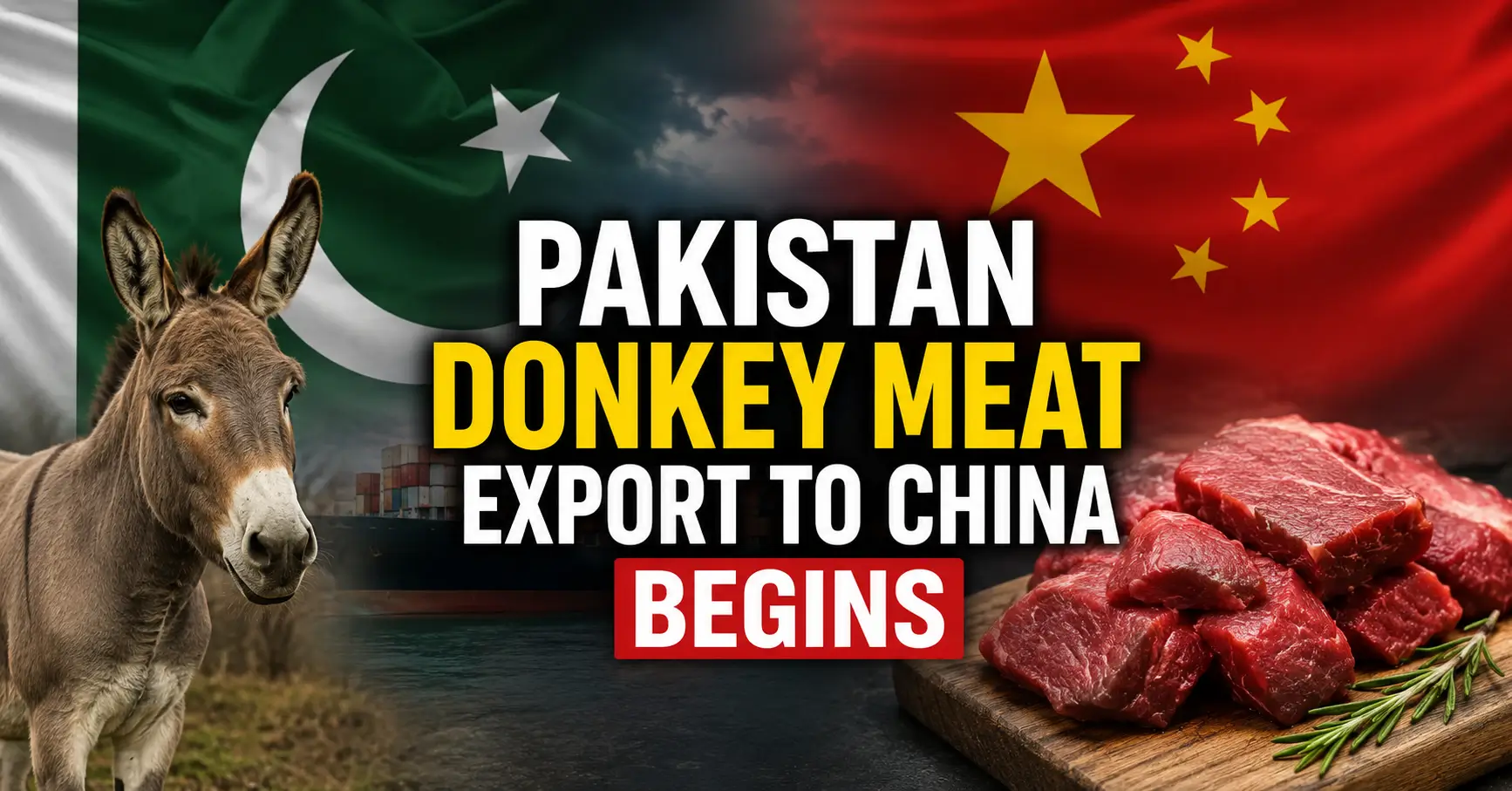
Pakistan’s donkey meat export to China has moved from policy paper to physical cargo. This month, the country’s first commercial shipment produced in the Gwadar Free Zone cleared customs at Tianjin Port, marking the earliest food product from the zone to reach a Chinese consumer market.
Pakistan’s First Donkey Meat Shipment Reaches China
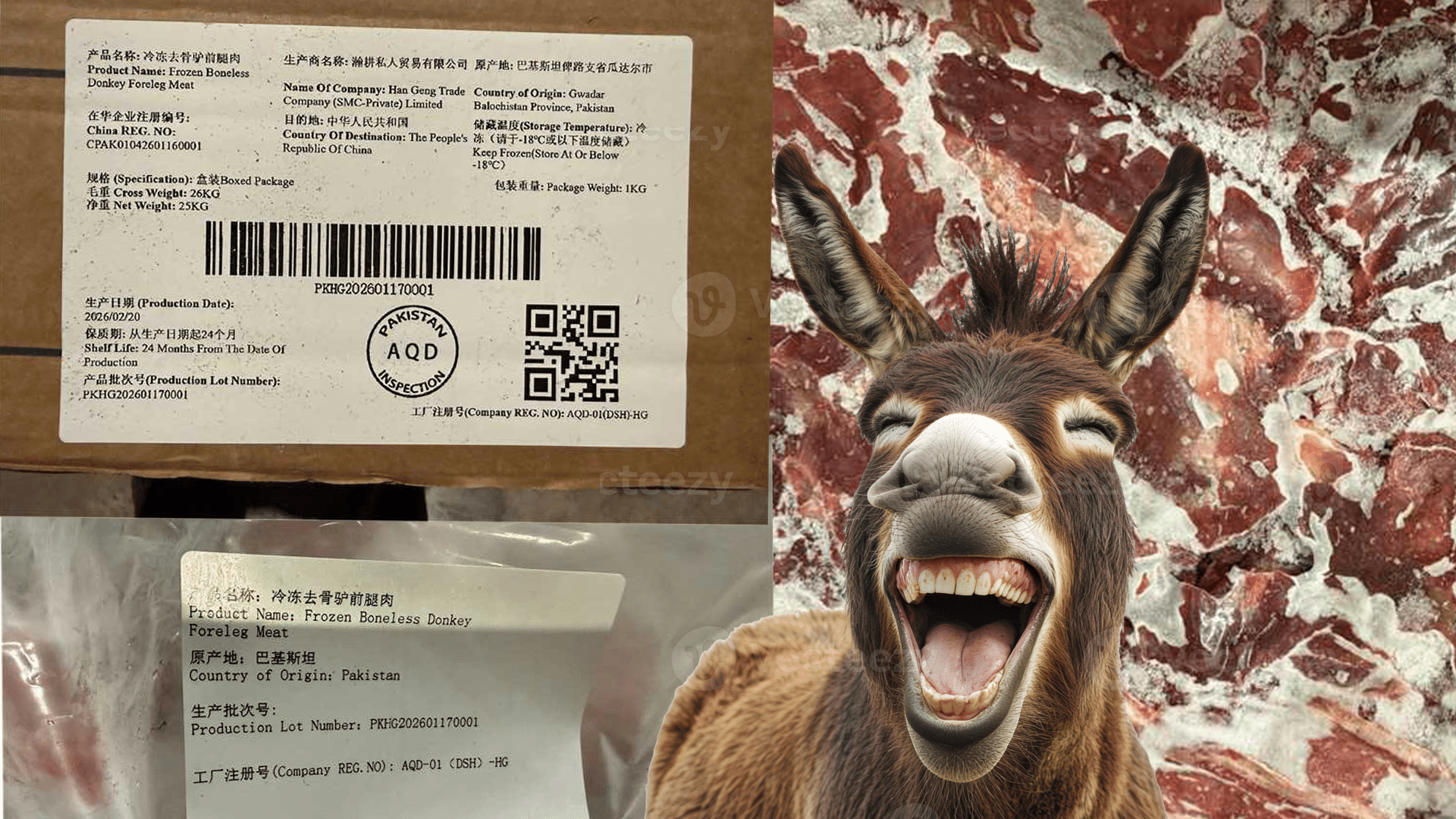
The maiden Pakistan donkey meat export to China arrived after years of stop-start negotiations between Islamabad and Beijing. It was processed at a dedicated slaughterhouse in the Gwadar North Free Zone, operated by Chinese firm Hengeng Trading Enterprise.
A Hengeng official credited the Ministry of National Food Security and Research, the CPEC Authority, Prime Minister Shehbaz Sharif, and Planning Minister Ahsan Iqbal for backing the project, framing it as evidence of momentum under the second phase of the China-Pakistan Economic Corridor.
Inside the Deal: Shipment Details and the Gwadar Facility
Hengeng — sometimes referenced as Hangeng in Pakistani coverage — has already moved two consignments by sea, according to trade data reviewed for this report. Together they were worth roughly $195,425.
- First consignment: departed July 5, 2026 — 27.5 metric tons, valued at $66,060
- Second consignment: departed July 9, 2026 — 67.07 metric tons, valued at $129,356
- Both were frozen donkey meat, shipped by sea, cleared through Chinese customs and quarantine inspection
Consignment | Departure Date | Weight | Value |
|---|---|---|---|
| First | July 5, 2026 | 27.5 tonnes | $66,060 |
| Second | July 9, 2026 | 67.07 tonnes | $129,356 |
| Total | — | 94.57 tonnes | $195,425 |
The Gwadar facility represents a $50 million Chinese investment and is built exclusively to process donkey meat and hides for export, with strict controls preventing by-products from entering Pakistan’s domestic market.
Why China Wants Pakistan’s Donkeys

China’s own donkey herd has collapsed by more than 80% since the early 1990s — from roughly 11 million animals to under 2 million — largely due to farm mechanization that made working donkeys redundant. Meanwhile, demand for donkey-derived products kept climbing.
READ MORE: Pakistan Indonesia Economic Ties Enter Bold New Chapter
The core driver is Ejiao, a traditional medicinal gelatin made by boiling donkey hides, marketed for blood health and anti-aging. Industry estimates put annual global demand at 4.8 to 5.9 million donkey hides — a volume China’s shrinking domestic supply cannot come close to meeting.
- Ejiao is produced primarily in Shandong province, which accounts for roughly 90% of national output
- Donkey meat is also eaten as a delicacy in parts of China, including Hebei province
- Since the African Union’s 2024 ban on donkey-skin trade across member states, Pakistan has emerged as one of China’s few remaining large legal suppliers
Timeline: How the Export Deal Nearly Collapsed
Pakistan’s path to this shipment wasn’t smooth. A brief timeline shows how close the arrangement came to falling apart before finally launching:
- 2015: Pakistan’s ECC temporarily banned donkey hide exports over meat-disposal concerns
- July 2024: Export protocols for donkey meat and hides were finalized between the two governments
- April 2025: China’s donkey industry proposed setting up breeding farms inside the Gwadar Export Processing Zone
- April 2026: The ECC, chaired by Finance Minister Muhammad Aurangzeb, formally approved donkey meat and hide exports through Gwadar Port
- May 2026: Hangeng threatened to wind down operations after Chinese customs rejected meat produced before January 16, 2026 over quality concerns — the Prime Minister’s Office intervened within hours to push approvals through
- July 2026: The first two commercial consignments departed and cleared Tianjin Port
That May scare briefly threatened the entire venture. The company publicly warned prospective Chinese investors to weigh “policy execution gaps and institutional uncertainties” before committing capital to Pakistan — a rare public rebuke that forced swift cabinet-level intervention.
The Numbers Behind Pakistan’s Donkey Economy
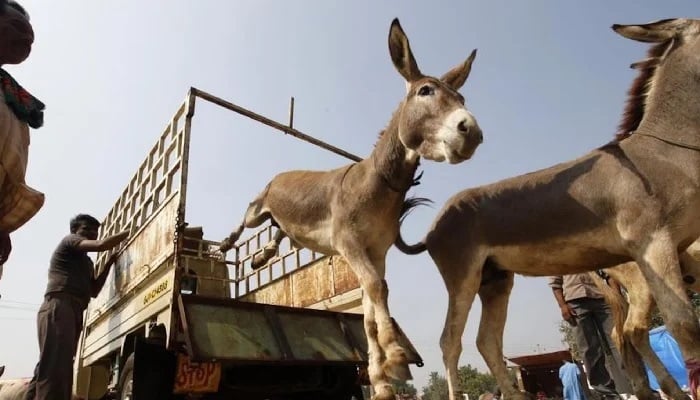
Pakistan’s donkey population has been rising steadily, giving officials confidence the export trade won’t strip rural households of working animals. Pakistan Bureau of Statistics figures published in June show the national herd grew by 109,000 animals in a single year.
- 2024–25 estimate: roughly 5.938 million donkeys
- 2025–26 estimate: 6.047 million donkeys
- Earlier government census figures cited a base population near 5.2 million, underlining consistent year-on-year growth
Officials have previously said supply agreements could eventually cover meat and hides from around 216,000 donkeys annually, processed through Gwadar-based facilities built specifically to keep the trade separate from domestic meat markets, where donkey consumption is considered haram and largely taboo.
Concerns, Controversy and What Comes Next
Not everyone views the Pakistan donkey meat export to China trade as an unqualified win. Animal welfare researchers, including scholars tracking the global Ejiao trade, have flagged biosecurity risks, herd depletion, and an entrenched illegal smuggling network that predates the formal deal.
Authorities have already intervened against unauthorised trade. Islamabad Food Authority raided a Tarnol farmhouse in 2025, seizing roughly 1,000kg of donkey meat and more than 50 live animals destined for undocumented buyers a reminder that formal export channels are meant to compete with, not feed, an existing underground trade.
For now, officials are betting on the Gwadar model centralized, traceable, and export-only to keep the venture legal, contained, and profitable. The volumes scale toward the 216,000-donkey target, or whether further Chinese quality disputes resurface, will determine how big this niche export line eventually becomes.