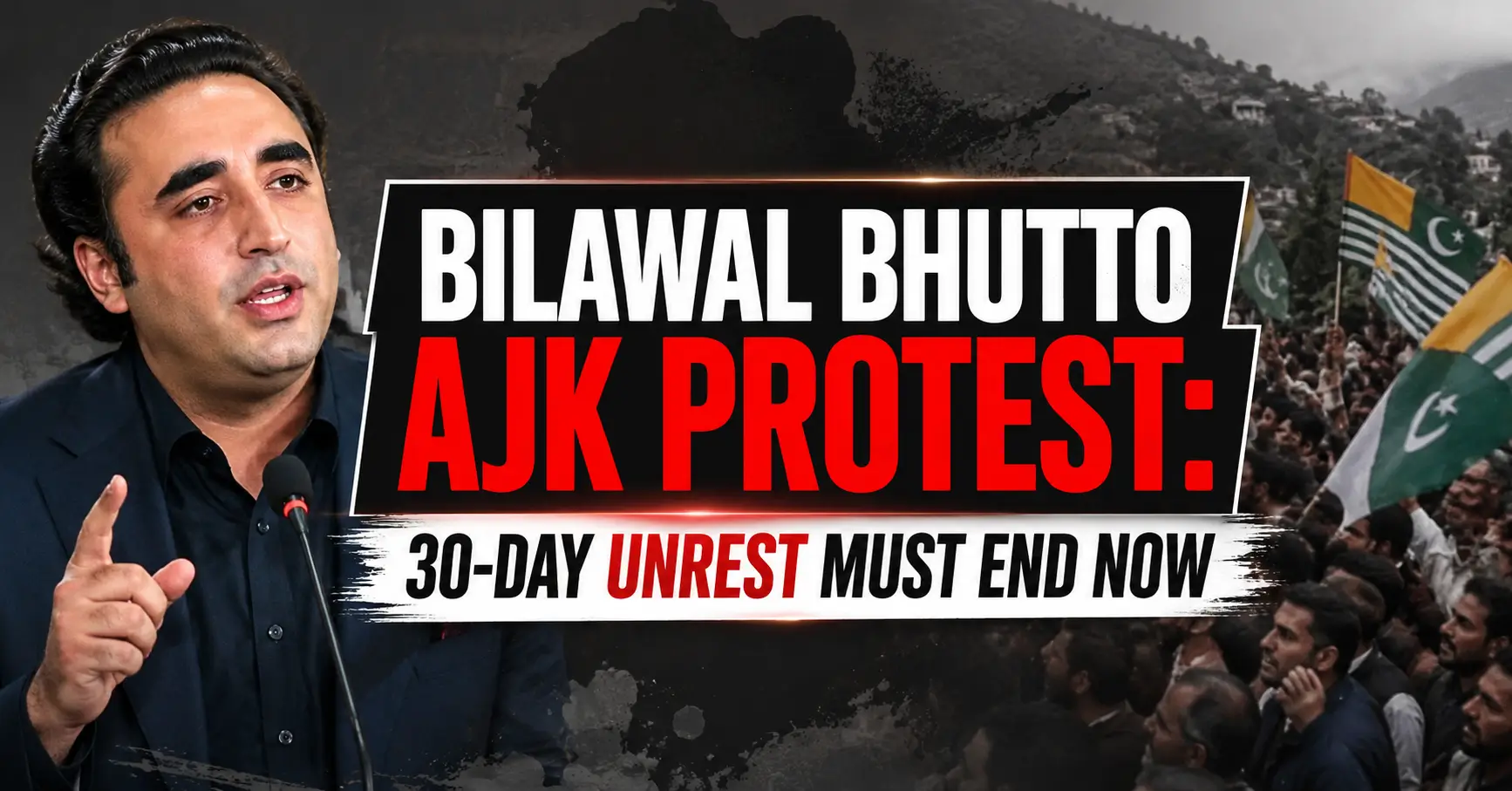

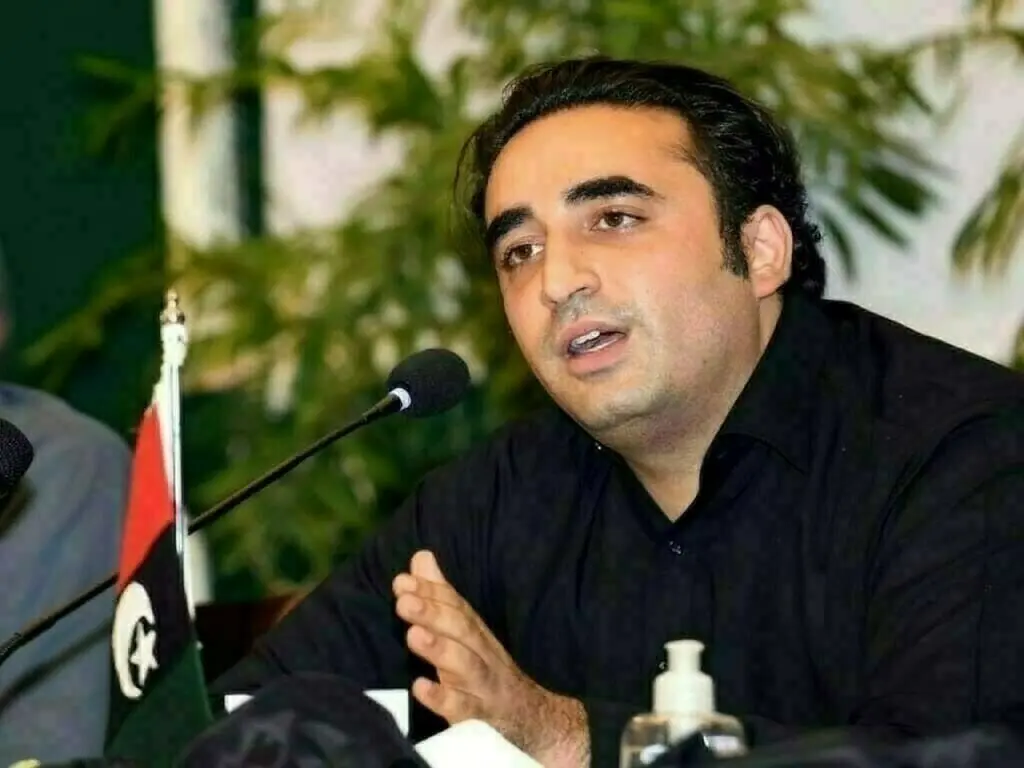
Bilawal Bhutto’s message to Azad Kashmir landed with unusual bluntness. Thirty days of shutter-down strikes, blocked roads and stalled commerce, he told party workers in Muzaffarabad — and that’s long enough.
“You made a record of 30 days of protest,” he said. “Protest cannot be for a lifetime. Now end this protest. Come and talk.”
It wasn’t a press release this time. It was Bilawal Bhutto, chairman of the Pakistan Peoples Party, standing in front of his own ticket holders in the regional capital, days before elections that could reshape who governs Azad Jammu and Kashmir.
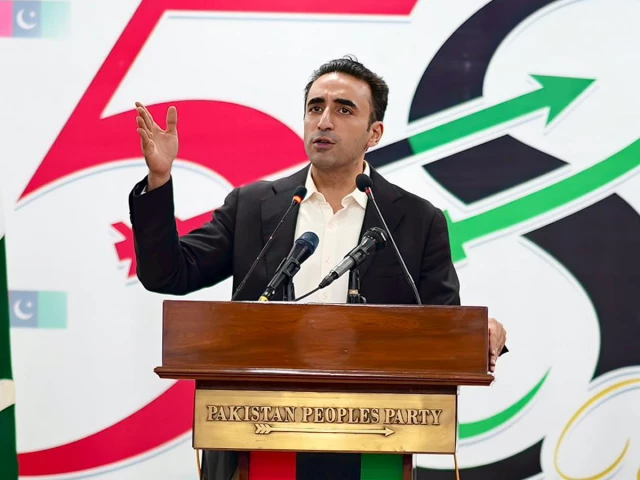
Bilawal Bhutto Chairs Crucial PPP Meeting in Muzaffarabad
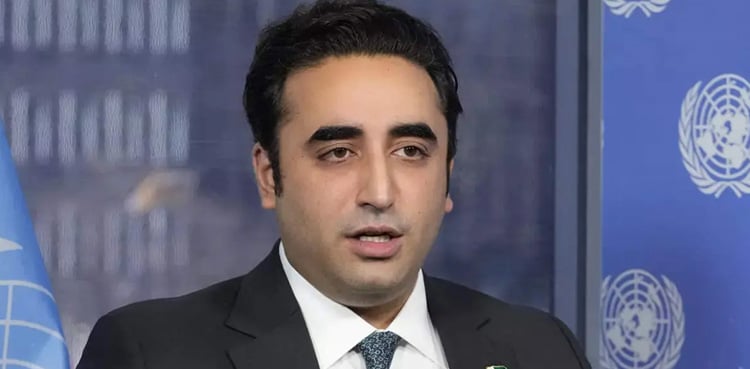
Bilawal Bhutto’s AJK protest remarks came during a party meeting on July 14, attended by former prime minister Raja Pervez Ashraf, Chaudhry Latif Akbar, Chaudhry Yasin, and sitting AJK premier Faisal Mumtaz Rathore. The gathering brought together PPP’s regional leadership just 13 days ahead of the July 27 vote.
He opened by reaffirming the party’s historical link to Kashmir, then pivoted quickly to logistics — telling attendees he had personally raised food-supply shortages with the federal Deputy Prime Minister. Weeks of internet blackouts and closed markets had squeezed household essentials across the territory.
“End This Protest, Come and Talk” — Bilawal’s Direct Appeal
Bilawal Bhutto’s AJK protest appeal wasn’t framed as sympathy alone. He paired it with a pointed history lesson, arguing that confrontation has never delivered lasting rights for Kashmiris and that results come through parliamentary channels, not the street.
- He said extreme behaviour has never secured rights historically
- He insisted disputes be resolved “while staying in the system”
- He claimed the AJK government had met 100% of protester demands
- He warned that unmet youth expectations would benefit “anarchist forces”
What Sparked the JAAC-Led Unrest in Azad Kashmir
The protests trace back to a June 9 strike called by the Jammu Kashmir Joint Awami Action Committee, which demanded the abolition of 12 assembly seats reserved for refugees from Indian-administered Kashmir. JAAC argues the arrangement lets mainstream Pakistani parties steer AJK’s government from outside.
Islamabad banned JAAC on June 5 under anti-terrorism legislation, alleging weapons acquisition and plans to disrupt normal life — a charge the group denies. Clashes since then, particularly in Rawalakot, have left at least 17 people dead, according to one regional research group’s tally, with 11 killed in Rawalakot and six in Kotli.
Supreme Court Ruling and the Refugee-Seats Controversy
On June 7, the Supreme Court of Azad Kashmir ruled the twelve refugee seats are constitutionally protected and cannot be scrapped through executive order — only by constitutional amendment. That ruling hardened the government’s position but didn’t quiet the streets.
Thousands of JAAC supporters remain camped near Rawalakot, roughly 100 kilometres from Muzaffarabad. Mobile networks and internet access have been suspended for weeks in parts of the region, and protest leaders threatened a fresh long march on the capital for July 15 if demands went unmet.
Bilawal Bhutto Pushes for Constitutional Forum and NA Seat
Beyond appealing for calm, Bilawal Bhutto’s AJK protest response included a structural proposal: interim representation for Azad Kashmir as an observer in Pakistan’s National Assembly, plus a seat at the National Finance Commission table.
He also called for a post-election constitutional forum where Kashmiri stakeholders would sit with federal authorities to settle unresolved governance questions. Notably, he criticised parties boycotting the election process and said he personally would remain in AJK until voting concludes on July 27.
Political Stakes: PPP-JUI-F Alliance and the Road to July 27
The meeting also reflects PPP’s electoral calculations. Days earlier, Bilawal Bhutto and JUI-F chief Maulana Fazlur Rehman announced a formal alliance for the AJK Legislative Assembly race, with both leaders expressing confidence they would jointly form the region’s next government after the July 27 polls.
- AJK’s Legislative Assembly has 45 seats, including the disputed refugee quota
- PPP and JUI-F will field joint candidates in selected constituencies
- Fazl has separately offered to mediate between JAAC and the government
- The AJK government insists the election date will not shift
What’s Next for Azad Kashmir’s Political Crisis
Bilawal Bhutto’s AJK protest overture leaves the core dispute unresolved. JAAC has signalled its list of demands will expand after July 14, and the government has ruled out blanket amnesty for detained activists, including senior organiser Shaukat Nawaz Mir.
With polling day approaching fast, the next fortnight will test whether Bilawal’s call for dialogue gains traction — or whether Azad Kashmir heads into elections still gripped by strikes, blackouts and an unresolved refugee-seats standoff.