
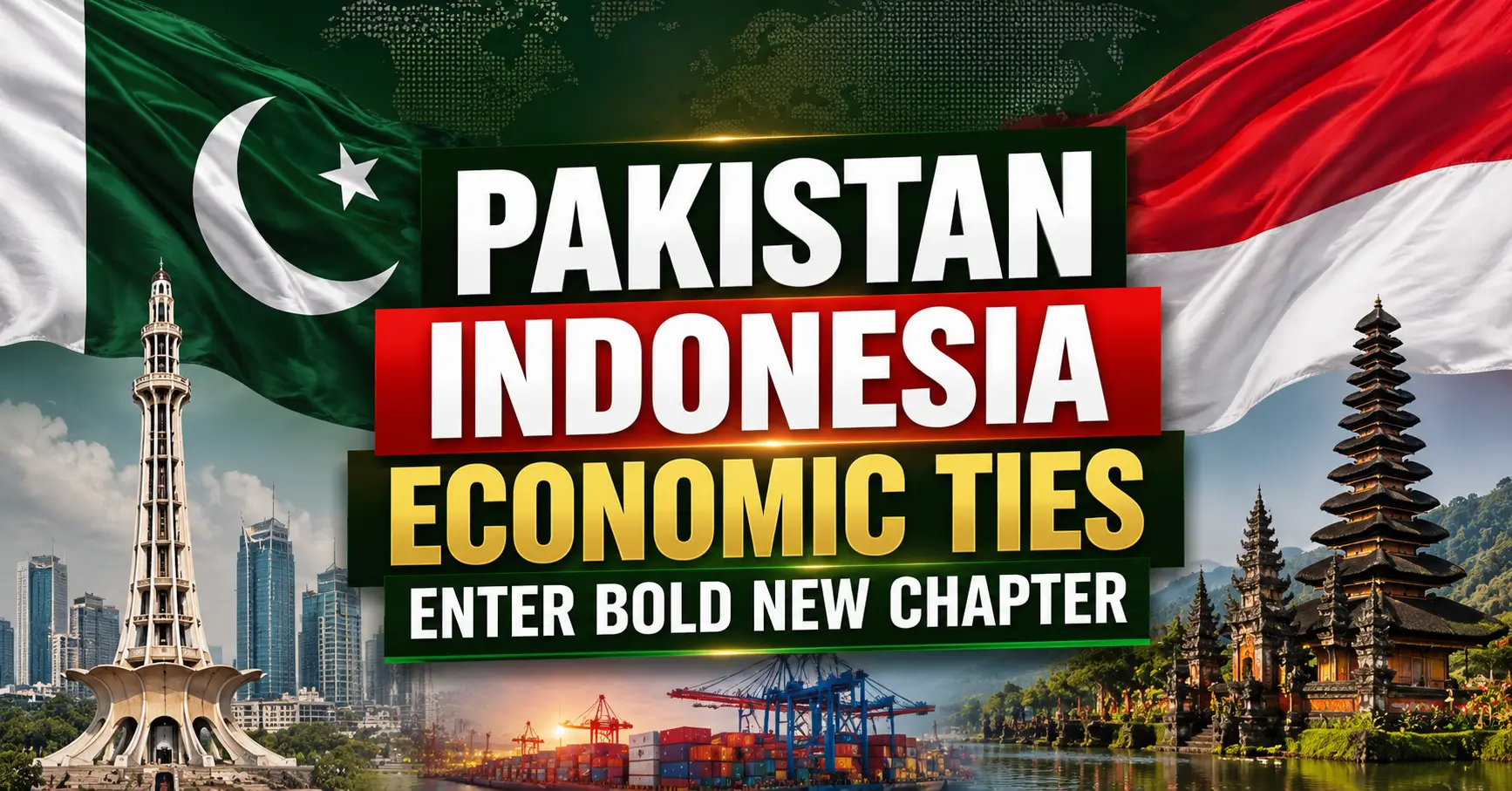

Palm oil built the relationship. Now both sides want more than that. At a forum in Karachi on July 14, government officials, investors and business leaders from Pakistan Indonesia gathered to say the same thing in different words: the old trade relationship isn’t good enough anymore.
What Happened in Karachi
The Indonesia–Pakistan Investment and Business Forum wasn’t just another diplomatic photo op. Organised by Indonesia’s embassy in Islamabad and its Karachi consulate, with backing from the Indonesia Investment Promotion Centre in Abu Dhabi, it pulled together chambers of commerce, investment authorities and academics from both countries.
The headline goal push a Comprehensive Economic Partnership Agreement, or CEPA, that would replace the current Preferential Trade Agreement.
Indonesia’s Ambassador to Pakistan, Lt Gen (retd) Chandra W. Sukotjo, didn’t mince words in his keynote. He said Indonesia and Pakistan needed to turn their longstanding friendship into tangible economic results.
FPCCI Acting President Saquib Fayyaz Magoon made a sharper point that current trade volumes do not reflect the potential of the two countries’ combined 520 million-person market.
Sindh Chief Minister Murad Ali Shah, hosting as chief guest, pointed Indonesian investors toward manufacturing, agriculture, pharmaceuticals, renewable energy, healthcare, infrastructure, logistics and data centres.
A Year of Building Momentum

This forum didn’t come out of nowhere. It’s the latest step in a deliberate sequence that’s been building since December 2025, when Indonesian President Prabowo Subianto made a rare state visit to Pakistan and both sides signed agreements covering higher education, SMEs, anti-narcotics cooperation and halal trade.
The timeline since then:
- January 2026 — Commerce Minister Jam Kamal Khan and Indonesian Vice Minister of Trade Dyah Roro Esty Widya Putri signed an MoU creating a Joint Trade Committee to formalise dialogue between the two economies.
- February 2026 — Indonesia’s Investment Minister Rosan Roeslani, who also heads Indonesia’s sovereign wealth fund Danantara, visited Islamabad. He met PM Shehbaz Sharif, and both sides agreed to accelerate the CEPA timeline, targeting completion by 2027.
- July 2026 — The Karachi forum, where private-sector players from both countries got direct access to each other for the first time at this scale.
That’s a fast pace for South Asia-Southeast Asia diplomacy, and it signals something more than routine goodwill visits.
The Palm Oil Problem — And What Pakistan Wants Instead

Here’s the uncomfortable number nobody skips past for long: Pakistan’s bilateral trade with Indonesia stood at $4.5 billion, with more than 90 percent of it comprising palm oil imports from Indonesia, according to PM Shehbaz Sharif’s own account.
That’s not a partnership. That’s a supply contract.
READ MORE: Bilawal Bhutto chairs PPP meeting in AJK, says protest should end now
Commerce Minister Jam Kamal Khan has been blunt about wanting to rebalance it, arguing Pakistan could serve as a reliable source for minerals, cosmetics, pharmaceuticals, and agri-food commodities for the Indonesian market.
Pakistan’s Trade Development Authority has also been pushing Jakarta on more practical asks — earlier fruit-quota announcements, simpler certification rules, rice quotas and better access for industrial-grade potatoes.
Any of that materialises depends on how seriously both governments treat the CEPA talks over the next 18 months.
Sectors on the Table

Officials from both delegations named similar priority areas, but from different angles. Indonesia’s pitch to Pakistan focused on:
- Manufacturing and downstream industries
- Renewable energy
- Healthcare and pharmaceuticals
- Food security and agribusiness
- Digital economy and data centres
Pakistan’s pitch back leaned on its geography and labour base positioning Karachi as, in Consul General Mudzakir’s words, the country’s commercial, industrial, financial and maritime centre, and Sindh as the entry point for Indonesian capital.
KADIN Indonesia representative Mufti Hamka Hasan went further, describing the two countries as natural partners in food and agribusiness, halal industries, pharmaceuticals and livestock sectors where religious and dietary alignment already gives Pakistani exporters a head start most competitors don’t have.
Why Indonesia Matters Beyond Bilateral Trade
Pakistan isn’t courting Indonesia in isolation. It’s part of a broader pivot toward Southeast Asia. Pakistan-ASEAN trade crossed $11 billion in 2026, even as the bloc-wide trade deficit sat near $4 billion.
Indonesia is the biggest prize in that block for one simple reason it’s ASEAN’s largest economy and, as Ambassador Sukotjo put it, a gateway to ASEAN for any country trying to build regional supply chains.
For Pakistan, locked between Central Asia, the Gulf and China, an Indonesian foothold offers a route into Southeast Asian markets it currently barely touches.
What Comes Next
The 2027 CEPA deadline is ambitious. Trade agreements of this scope — covering customs procedures, services, standards and supply-chain rules routinely take longer than governments promise. Pakistan also has a separate, more immediate ask: getting Indonesia to sign off on fruit and rice quotas that have been sitting on the table for months.
Still, the frequency of engagement this year three major high-level contacts in seven months suggests both capitals are treating this as more than a talking point.
Pakistan intends to organise a Single-Country Exhibition and Business Forum in Jakarta, extending invitations to other ASEAN members, a move that would flip the direction of outreach for the first time.
That translates into a genuinely diversified trade relationship, rather than another year of palm oil invoices, is the real test.