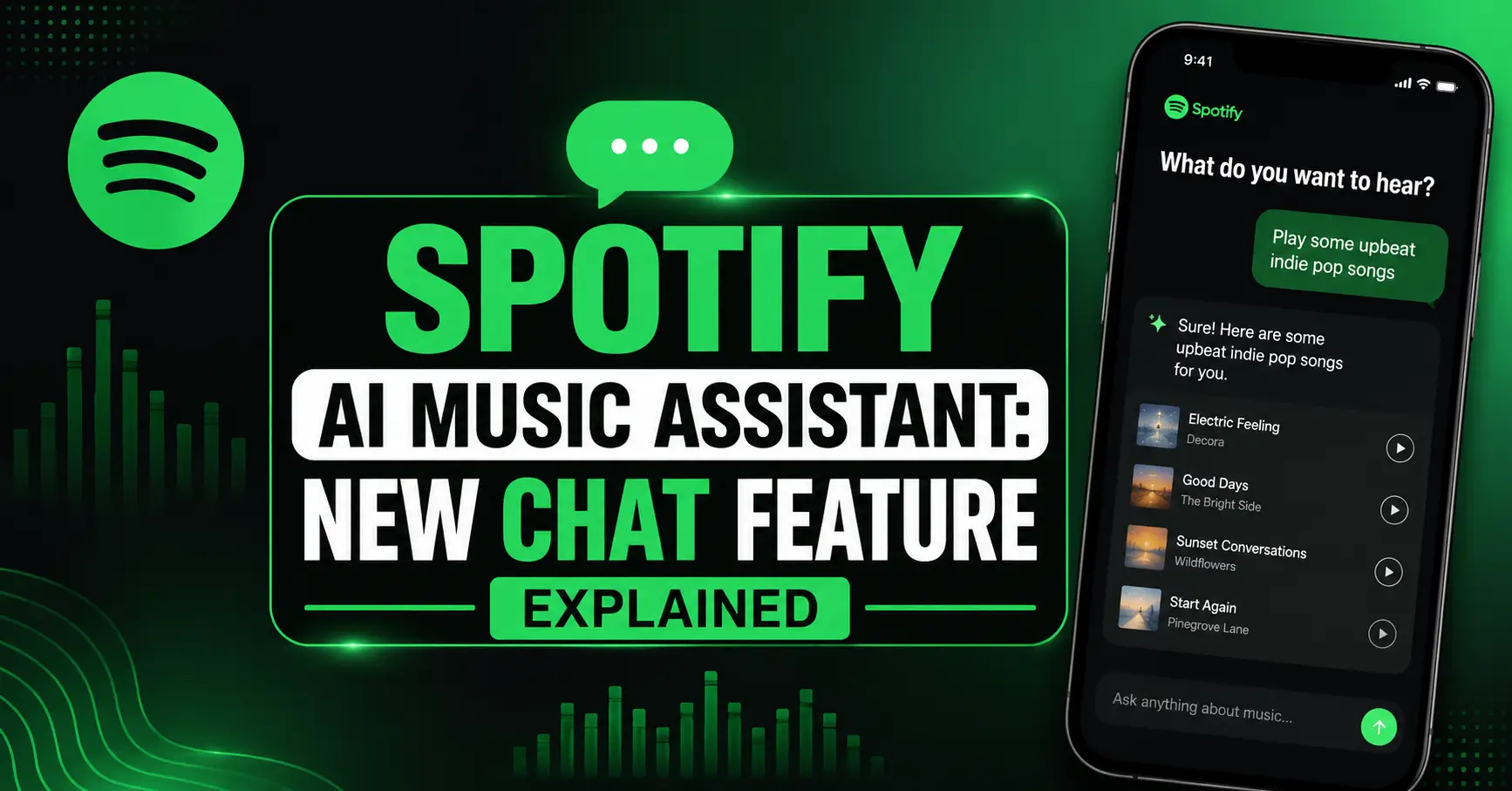

The Spotify AI Music Assistant has arrived and it wants you to talk to it. Starting this week, Spotify Premium users in select markets can type or speak directly to the app, turning a decades-old habit of scrolling and searching into something closer to a conversation with a well-informed friend.
The rollout, confirmed by Spotify on July 14, 2026, marks one of the company’s most visible AI pushes yet. It also lands at a moment when nearly every major streaming platform is racing to bolt conversational AI onto its core product.
What Is the Spotify AI Music Assistant?

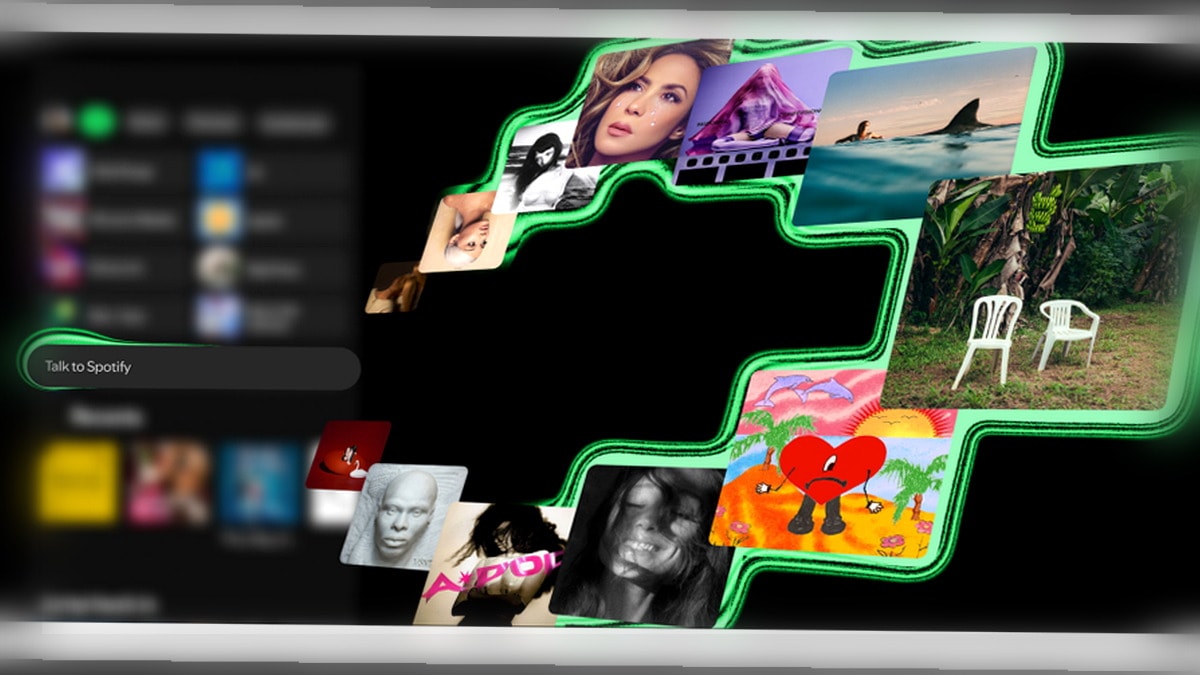
The Spotify AI Music Assistant is a built-in chatbot that lets users have back-and-forth conversations with the app to decide what to play next. It sits inside two familiar spaces: the Home screen and the Now Playing view, so listeners never have to leave the app to use it.
Spotify says the tool goes beyond simple playback commands. Users can ask about an artist’s inspiration, an album’s release date, or dig into their own listening history — turning the assistant into both a discovery engine and a personal music historian.
- Accessible from Home and Now Playing screens
- Works via typed text or spoken voice input
- Supports follow-up, back-and-forth conversation (not just one-off commands)
- Can save songs, queue tracks, and follow artists on request
How the Spotify AI Music Assistant Works
Spotify has been notably tight-lipped about the exact architecture behind the feature. The company confirmed that it uses a mix of its own AI technology and models from multiple providers, based on whatever is best for the task a hybrid approach rather than reliance on a single large language model.
READ MORE: WhatsApp Green Dot Indicator: Big Privacy Shift in 2026
That vagueness is deliberate, industry watchers suggest. Spotify’s edge has always been its catalogue and data, not the underlying model, so leaning on multiple providers lets it swap technology without disrupting the user experience.
- Draws on Spotify’s catalogue of music, podcasts, and audiobooks
- Uses listening history to personalize responses
- Chat history can inform future recommendations
- Company describes the feature as a genuine beta, with imperfect results expected
Where the Spotify AI Music Assistant Is Available Right Now
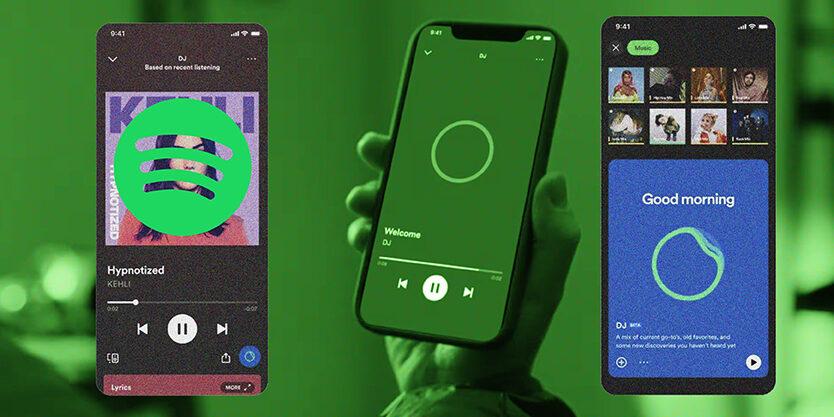
For now, access is deliberately narrow. The feature is initially available in the U.S., Ireland, and Sweden across iOS and Android devices for users 18 years old and above in English. It is restricted to Premium subscribers only. Spotify has not published a timeline for wider availability.
Why Spotify Is Racing to Launch an AI Chat Feature
The timing is not accidental. Spotify has faced mounting pressure from rivals that are folding AI more aggressively into their own ecosystems, and subscriber growth across the streaming industry has slowed. A conversational assistant gives Spotify a fresh reason for free users to consider upgrading.
Industry analysis frames this as a defensive as much as an offensive move. By placing its most advanced AI tools behind the Premium paywall, Spotify sharpens the gap between free and paid tiers precisely as competitors close in on its core turf.
The Apple Music, Amazon Music and YouTube Music Pressure
Spotify has been steadily losing ground to Apple Music in premium subscriber growth, while Amazon Music has been testing AI discovery tools built on Alexa’s conversational strengths. YouTube Music, meanwhile, benefits from Google’s broader AI infrastructure.
Unlike those competitors, Spotify lacks a parent tech giant’s balance sheet and infrastructure. That independence is a strength in agility but a weakness in resources — a Spotify spokesperson told the company had “been preparing for this shift in how people interact with audio content.”
What You Can Ask the Spotify AI Music Assistant
Spotify has offered sample prompts to help users get started, and tech outlets have already begun testing the limits of the tool. Early requests have ranged from simple to highly specific.
- “Play some artists I haven’t heard before,” followed by “make it more upbeat”
- Requests to narrow results to an artist’s most recent releases
- Genre-blending prompts, such as mixing decades or styles into one playlist
- Niche discovery requests, like surfacing artists with small but growing followings
- Questions about a currently playing track’s backstory, genre, or release date
Beyond Chat: Spotify’s Wider AI Strategy
The chat assistant is only the latest piece of a broader AI buildout. Earlier this year, Spotify partnered with Universal Music Group to let fans use generative AI to create covers and remixes of songs, with a revenue-share arrangement for participating artists.
That partnership was announced alongside several other tools unveiled at Spotify’s Investor Day, including an AI-powered audiobook creation tool, new AI features aimed at podcasters, and a desktop app for generating personalized podcasts from a user’s own listening history.
- AI DJ: a long-running feature offering a synthetic voice-guided listening experience
- Generative AI covers and remixes, developed with Universal Music Group
- AI-powered audiobook creation tools for creators
- Studio by Spotify Labs: personalized podcasts and daily briefings
Concerns and Open Questions Around the Spotify AI Music Assistant
As with any AI product still in beta, unresolved questions remain. Spotify has not detailed exactly how much of a user’s listening history the assistant retains, how long chat data is stored, or whether conversations feed back into model training.
There are also open questions about accuracy. Conversational AI tools are prone to confidently stating wrong facts, and music trivia — release dates, songwriting credits, collaborations — is exactly the kind of detail where small errors are easy to make and hard for casual listeners to catch.
What This Means for Listeners and the Streaming Industry
For everyday listeners, the shift signals that typing a search term into a static box may soon feel old-fashioned. Voice and conversational discovery are becoming the default expectation across tech products, and streaming audio is simply catching up.
For the industry, Spotify’s move raises the stakes for Apple, Amazon, and YouTube to respond in kind.Conversational AI genuinely improves music discovery or simply adds a novel layer over the same recommendation engine will become clearer once the beta expands beyond three countries.