
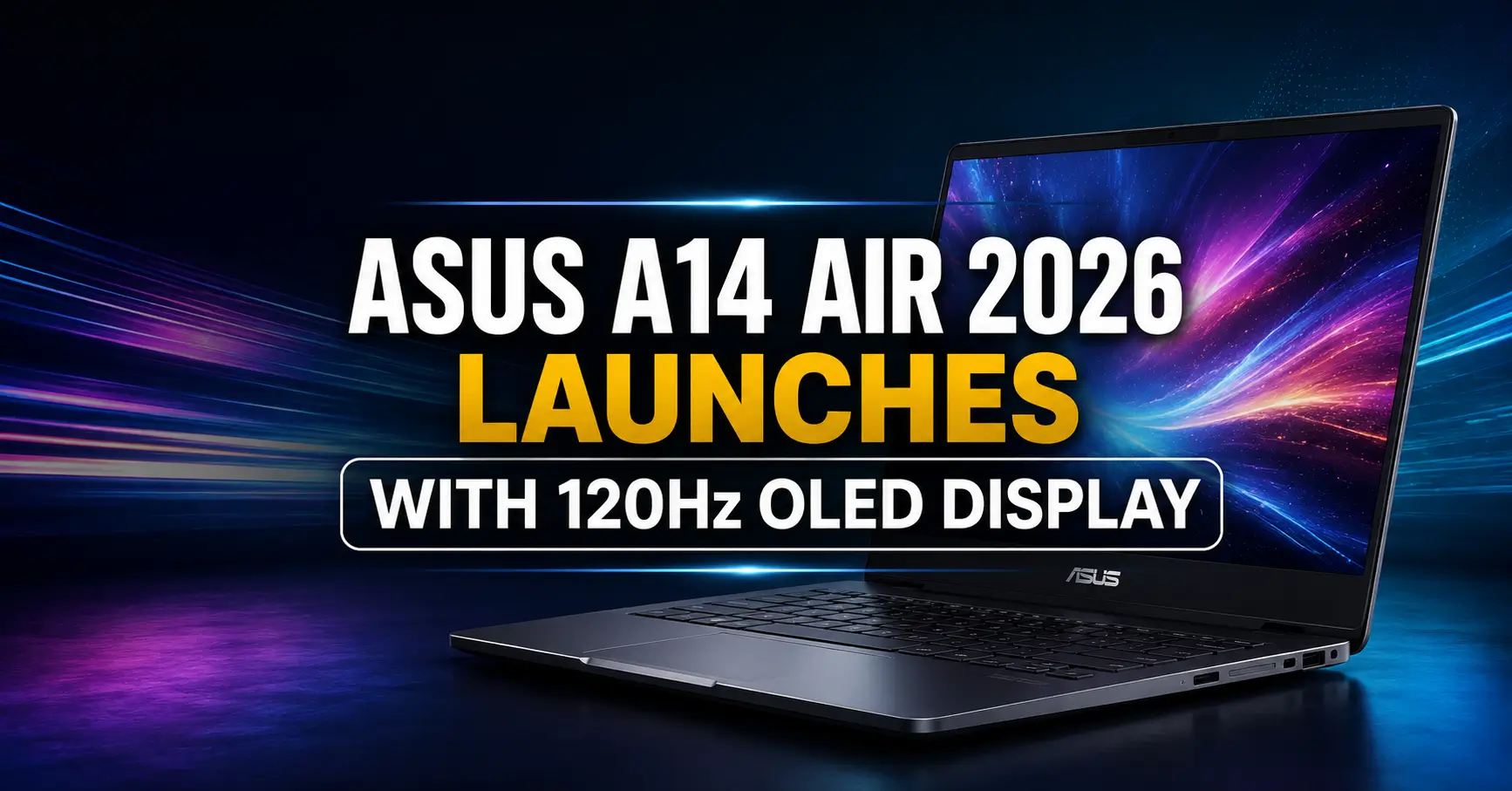
Asus has quietly pulled off something rare in the laptop world a sub-1kg machine that doesn’t force buyers to choose between portability and power.
The Asus A14 Air 2026 went on sale in China this week, and the spec sheet reads like a wish list a 120Hz OLED panel, a genuine Ryzen 9 processor, and a chassis that weighs less than a bag of sugar.
For a market saturated with “thin and light” claims that rarely hold up under real use, this one is worth a closer look.
What Is the Asus A14 Air 2026?
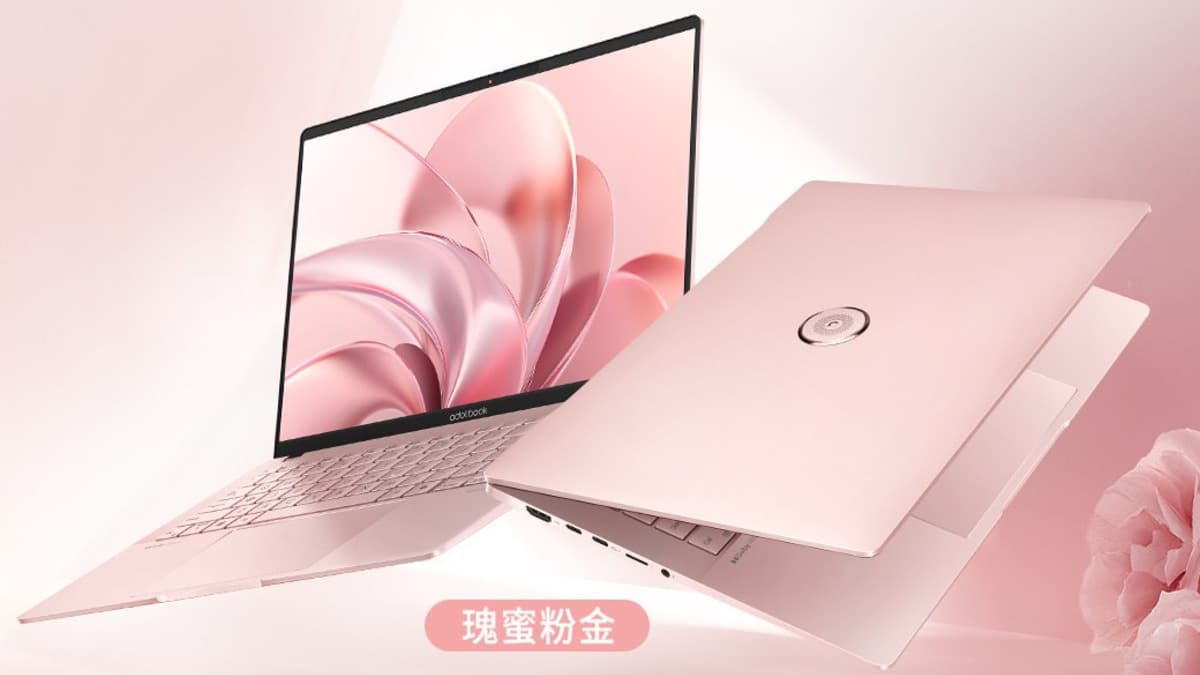
The Asus A14 Air 2026 is a 14-inch ultraportable that Asus positions as a performance-first alternative to typical featherweight laptops. It launched in China on July 12, sold through JD.com, with no confirmed international rollout yet.
What sets it apart from the usual “light laptop” formula is the processor choice. Most ultra-light machines lean on low-power chips that sacrifice speed for battery life. Asus went the other way here, and it shows in the numbers.
Specifications: What’s Powering the A14 Air 2026
At the core sits an AMD Ryzen 9 8945H, an eight-core, 16-thread chip from AMD’s Hawk Point lineup, paired with integrated Radeon 780M graphics. Asus says the setup can run recent AAA titles at reduced settings — unusual territory for a laptop this light.
Other specs round out a capable machine:
- 16GB or 32GB of LPDDR5X RAM
- 1TB PCIe 4.0 SSD standard, with a second M.2 slot for expansion
- 70Wh battery, with the processor rated to draw up to 45 watts
- Dual-fan, dual-heat-pipe cooling system
- Ports: one USB4, one USB-C, two USB-A, HDMI 2.1, 3.5mm audio jack
- Infrared camera for facial recognition and a backlit keyboard
Two fans handling a 45-watt chip inside a chassis this thin is an engineering balancing act, and it’s the detail most competitor coverage skipped over.
Display and Build: The 120Hz OLED Advantage
The headline feature is the screen. The 14-inch OLED panel runs a 2880 x 1800 resolution at a 120Hz refresh rate, covers 100% of the DCI-P3 colour space, and hits a claimed peak brightness of 1,100 nits with DisplayHDR True Black 600 certification.
READ MORE: HMD Vibe 2 5G Launched: Unisoc Chip, 6000mAh Battery at Just $115
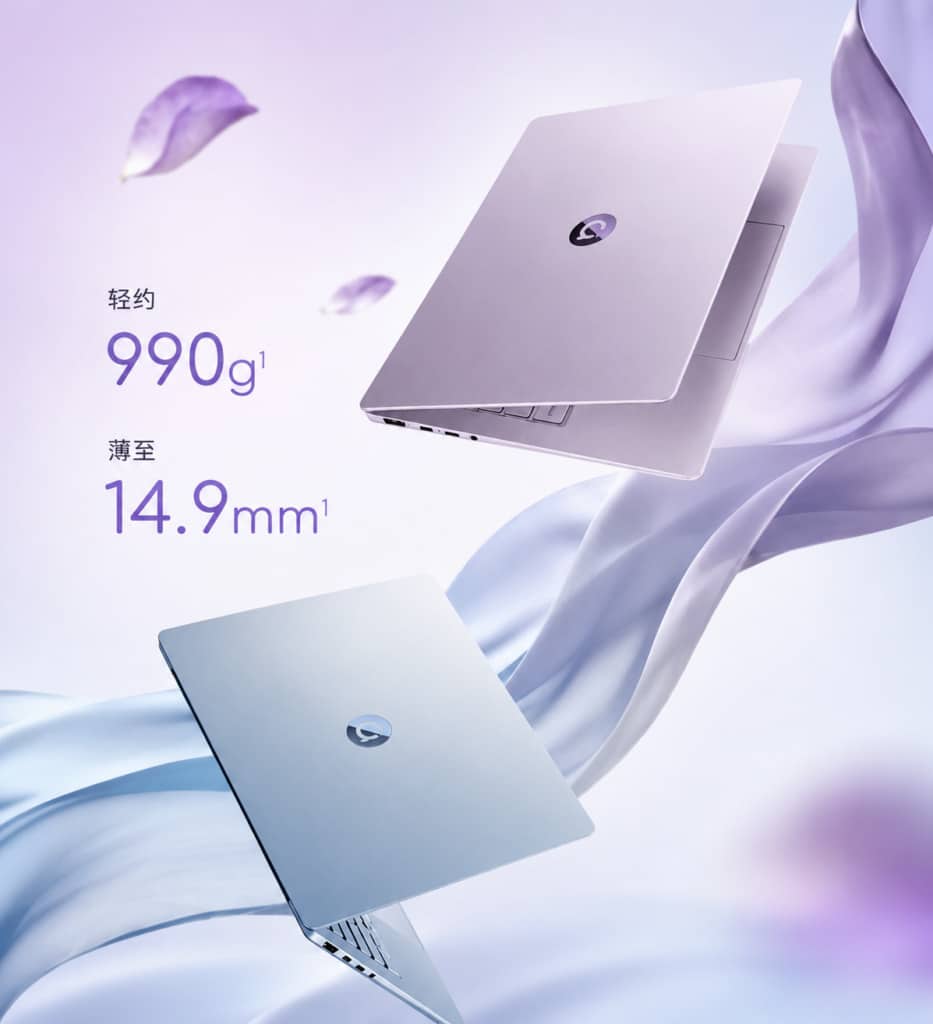
That combination — high resolution, high refresh, wide colour gamut — usually shows up on laptops twice this weight. Asus built the chassis from a magnesium-aluminium alloy, just 14.9mm thick and 990 grams, with a hinge that opens flat to 180 degrees.
Pricing and China-Only Availability

Buyers in China can choose between two configurations. The 16GB RAM, 1TB SSD model starts at CNY 6,799 (roughly $1,003), while the 32GB RAM variant costs CNY 7,599 (about $1,121). Colour options include Hyacinth Blue and Iris Purple, with the purple finish carrying a small premium on both tiers.
Asus has not confirmed pricing or availability outside China. Given the company’s pattern with recent launches, an international release — likely rebranded under the Zenbook line — remains the most probable path, though no date has been set.
Don’t Confuse It: A14 Air vs Zenbook A14 vs TUF Gaming A14
Here’s where buyers researching this laptop often get tripped up. Asus currently sells three distinct “A14” laptops, and they are not interchangeable:
- A14 Air 2026 — AMD Ryzen 9 8945H, 120Hz 2.8K OLED, China-only, built for a mix of productivity and light gaming
- Zenbook A14 (2026) — Snapdragon X2 Elite chip, 60Hz OLED at lower resolution, sold internationally, focused on battery life and Windows-on-ARM efficiency
- TUF Gaming A14 (2026) — AMD Ryzen AI Max+ 392 with Radeon 8060S graphics, priced near $2,199, aimed squarely at gaming performance
Reviewers testing the Zenbook A14 internationally have praised its endurance but flagged the refresh rate as a step behind rivals. The A14 Air 2026 effectively fixes that gap — on paper, at least — by shipping the faster panel Asus reserved for its gaming line.
Why This Launch Matters for the Ultraportable Segment
Sub-1kg laptops with high-refresh OLED screens used to be a contradiction in terms. Manufacturers built light machines with modest displays, or capable displays bolted onto heavier frames. Asus is betting that better thermal engineering — two fans, two heat pipes, a 45-watt ceiling — can close that gap without adding bulk.
If the cooling holds up under sustained load, the A14 Air 2026 could pressure rivals like Acer’s Swift series and Lenovo’s slim Yoga lineup, both of which have leaned on similar high-refresh OLED panels to differentiate in a crowded field.
What Comes Next for Global Buyers
For now, the Asus A14 Air 2026 remains a China-exclusive product, and Pakistani or South Asian buyers hoping to get one will likely need to wait for a rebranded Zenbook release — or rely on grey-market imports, which typically carry no local warranty support.
Asus has a track record of eventually bringing its lightest laptops westward, so a global debut isn’t unlikely. Whether it arrives with the same aggressive pricing, however, is far less certain.