
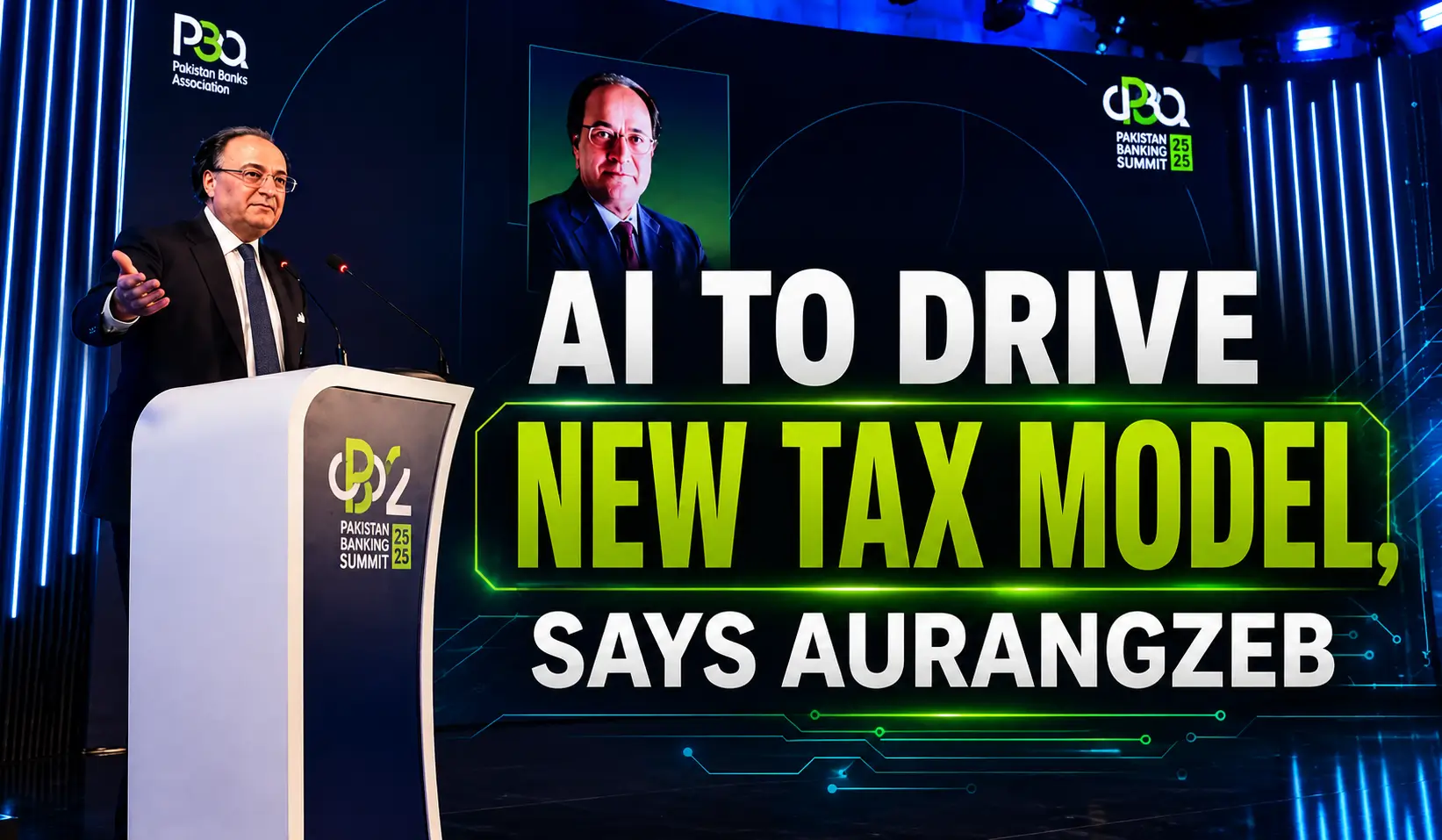

Pakistan’s tax officers are about to lose a lot of discretion — to a machine. Finance Minister Muhammad Aurangzeb has confirmed that parliament has approved a new tax administration model built to rely on artificial intelligence and technology, cutting down human contact between tax officials and taxpayers, with notices now issued through the system itself. It’s a rare admission from Islamabad the state is deliberately removing itself from the process.
What Aurangzeb Announced About the AI-Led Tax System Pakistan Is Building
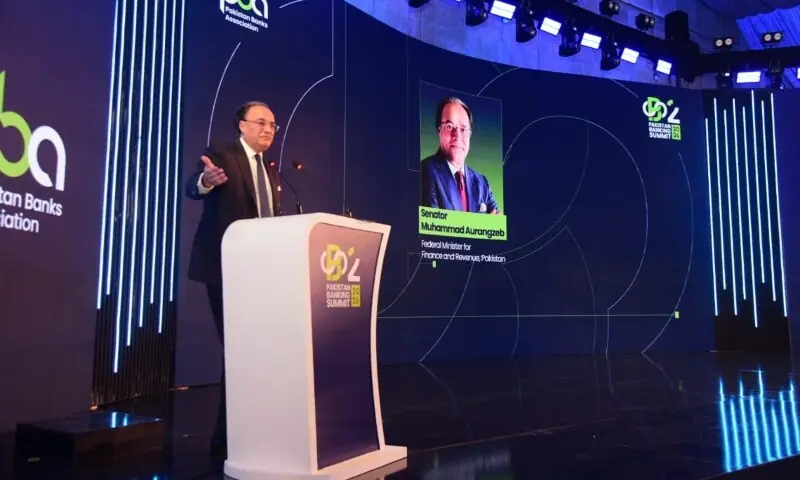
Speaking at the second Pakistan Banking Summit 2026 in Karachi, the AI-led tax system Pakistan is rolling out was described by Aurangzeb as nothing short of transformational. He said notices to taxpayers would now be generated through the new AI and technology-powered structure.
The minister didn’t hedge on intent. “It is a very fundamental change because this is a model which is AI and technology-led, and notices will be issued by it,” Aurangzeb told the summit audience directly.
How the New System Changes FBR-Taxpayer Contact
- Notices generated automatically, not drafted by tax officers
- Minimal direct human intervention in taxpayer engagement
- A separate medium-term tax strategy to follow the rollout
- Structure already cleared by parliament, not just proposed
Aurangzeb framed the new administration framework as a landmark reform meant to modernise tax collection, automate taxpayer interactions and significantly cut manual intervention. That’s a direct pitch to a public long frustrated with FBR discretion and alleged harassment complaints.
Minimal Human Intervention, Maximum Automation
The minister explained that most interactions between taxpayers and the Federal Board of Revenue will now be handled automatically, with FBR staff stepping back from direct involvement. On paper, that’s meant to shrink room for negotiation, delay, or informal settlement at the officer level.
Whether that removes corruption risk or simply relocates it into algorithmic opacity is a separate question — one Factfile.pk will be watching as rollout details emerge over coming months.
Background: From Islamabad Pilot to National Rollout

This isn’t a standalone announcement. Back in June, Prime Minister Shehbaz Sharif had already directed the launch of an AI-driven automated tax system pilot in the federal capital, chairing a review meeting on FBR reforms.
That briefing outlined a proposed framework built around a National Faceless Audit Wing, a National Assessment Wing, and a Field Operations Wing, designed to sharpen efficiency and tighten compliance. Tuesday’s Karachi announcement effectively confirms that pilot has now cleared parliament as formal policy.
Officials had earlier said the proposed system would be able to flag under-declared income and assets using data drawn from property records, vehicle registrations, and bank information. That’s the enforcement backbone the AI-led tax system Pakistan is now formalising nationally.
The Bigger Economic Picture Behind Pakistan’s Tax Reform
Aurangzeb didn’t announce this in isolation — he tied it to a broader economic narrative. He said Pakistan’s current account performance remained strong, supported by record remittance inflows, adding that remittances for the current fiscal year were expected to close between $41 billion and $42 billion.
READ MORE: easypaisa Digital Bank Credit Rating Soars to AA- in 2026
He also said foreign exchange reserves were projected to reach nearly $18.4 billion by the close of the fiscal year, ahead of earlier estimates. On the budget side, Aurangzeb noted this year’s budget was, for the first time, led by the Tax Policy Office after its move into the Finance Division.
Expert and Market Reaction to the AI-Led Tax System Pakistan Has Approved

Independent tax analysts haven’t yet issued detailed technical assessments of the parliamentary structure, since the model was only confirmed publicly this week. That silence is itself notable — Pakistan’s tax-to-GDP ratio has hovered stubbornly below regional peers for years, and previous digitisation drives at FBR have struggled with implementation gaps, not policy intent.
Aurangzeb also urged banks to significantly expand lending toward SMEs, exporters, agriculture, manufacturing, construction, and the information technology sector, signalling the AI tax push is meant to sit alongside a wider credit-expansion agenda, not replace it.
What This Means for Taxpayers and Businesses
For salaried individuals and small businesses, the practical shift is this: expect notices to arrive faster, driven by cross-matched data rather than officer judgment. That cuts both ways — less room for informal negotiation, but potentially less room for genuine clerical error correction too.
Larger firms should watch the promised medium-term tax strategy closely. Aurangzeb confirmed the government would unveil that strategy alongside the AI rollout, which likely means compliance requirements will keep evolving through the fiscal year, not settle immediately.
The Execution Question Nobody’s Answered Yet
Pakistan has announced digitised, “faceless” tax systems before. What’s different this time is the parliamentary backing and the explicit Faceless Audit Wing structure inherited from June’s pilot directive. Still, algorithms are only as fair as the data feeding them — and FBR’s underlying data quality has long been a weak point.
If the system genuinely reduces discretionary contact without simply shifting disputes into an opaque appeals backlog, it could mark a real turning point for Pakistan’s tax culture. If it doesn’t, it risks becoming another rebranded promise.