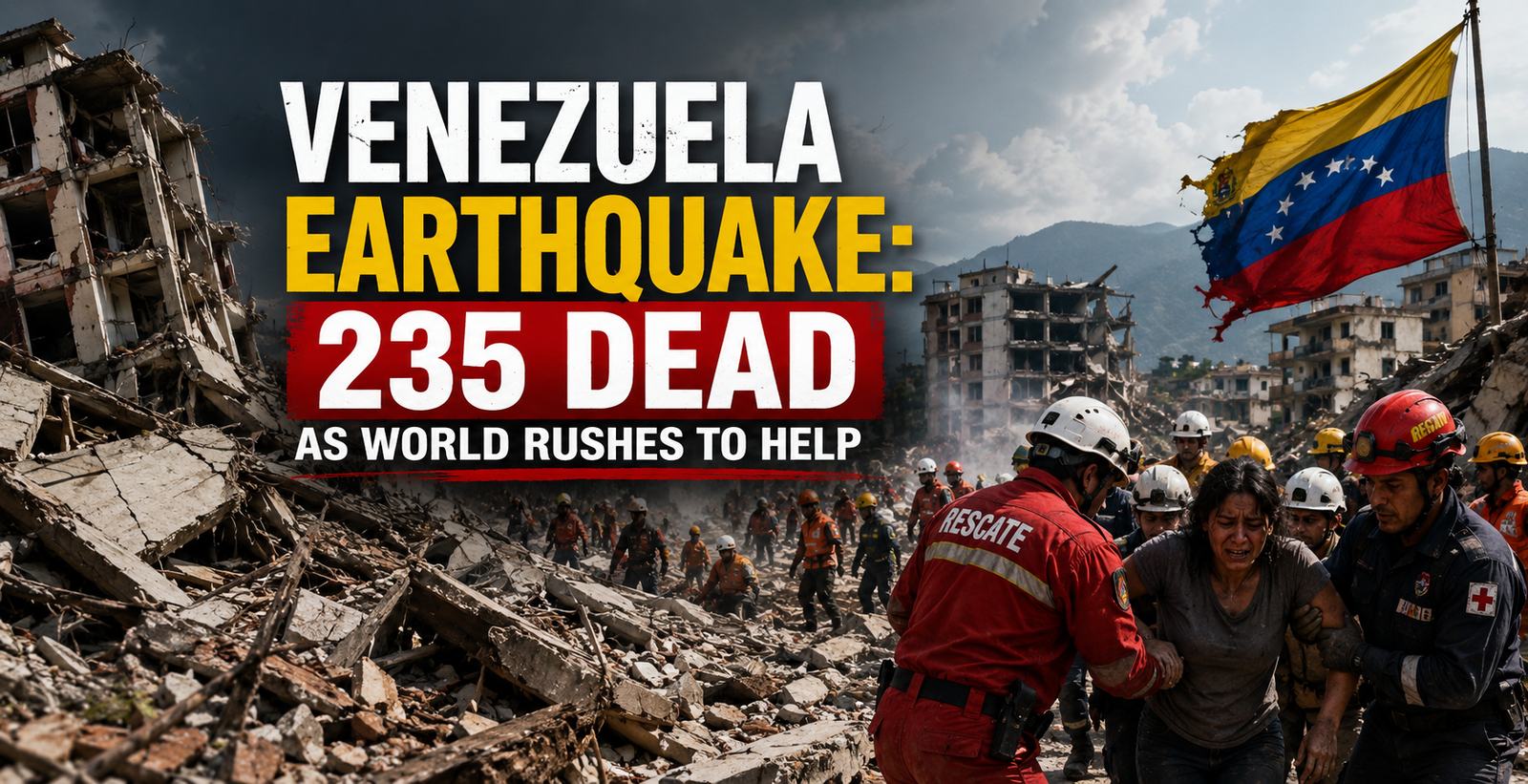

Venezuela Earthquake Kills 235 — Rescue Teams Race Against Time
Twin earthquakes of devastating power have left Venezuela reeling this week. At least 235 people are confirmed dead, thousands more are injured, and rescue workers from around the world are now on the ground searching through rubble for anyone still alive.
For a country already struggling under the weight of political turmoil and economic collapse, this disaster could not have come at a worse moment.
Twin Quakes in Minutes — Venezuela’s Worst in Over a Century
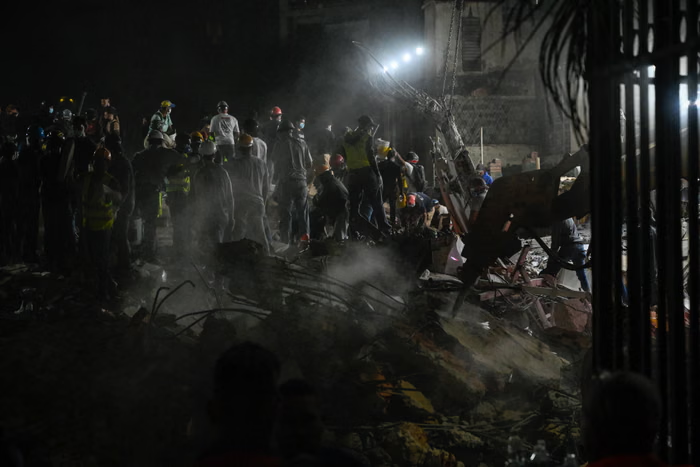
Two powerful quakes struck the Venezuelan coast on Wednesday evening — a magnitude 7.2 foreshock, followed within seconds by a magnitude 7.5 tremor. Together, they knocked down buildings in the capital Caracas and sent residents sprinting into the streets in panic.
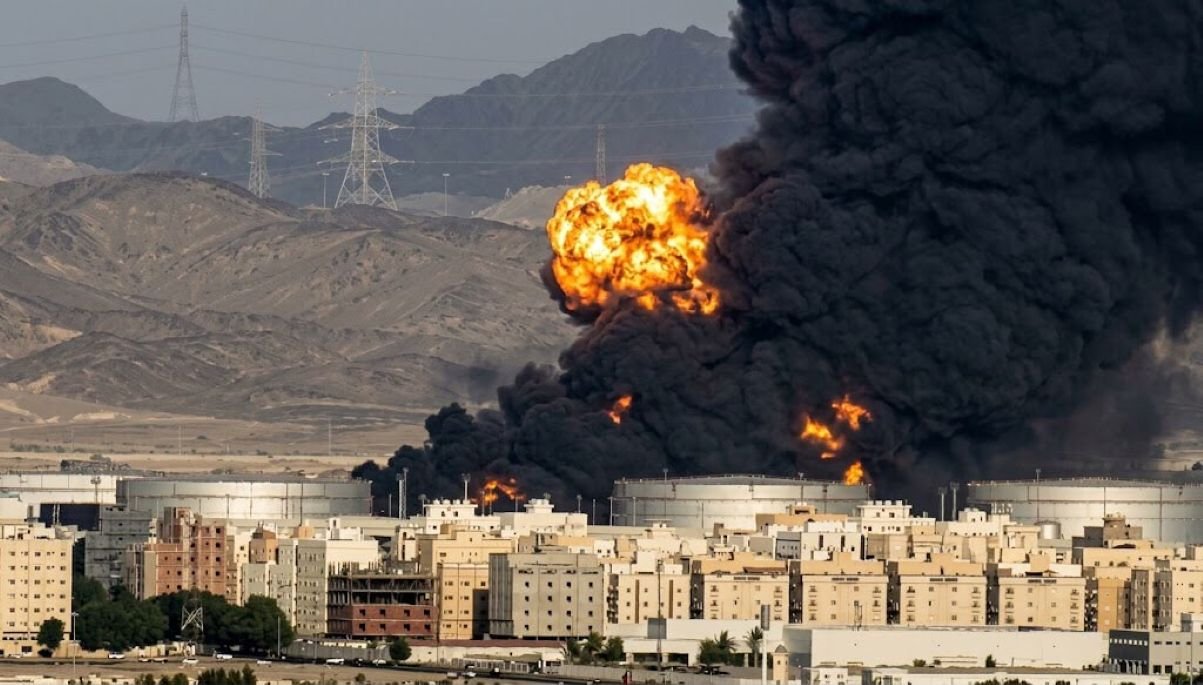
The epicentre was roughly 160 miles west of Caracas. The state of La Guaira, sitting along the northern coast just above the capital, took the heaviest blow. Entire residential blocks were reduced to rubble. Satellite images later confirmed widespread structural collapse across both Caracas and La Guaira.
Acting President Delcy Rodríguez described the scale of the damage in stark terms, saying the two simultaneous earthquakes caused widespread destruction primarily in the Greater Caracas area and the state of La Guaira, while also affecting Aragua, Carabobo, and other states across the country.
This was Venezuela’s most powerful earthquake in over a hundred years — and the human cost is still being counted.
Death Toll at 235 — With Fears It Could Go Far Higher
Venezuela’s Health Minister Carlos Alvarado confirmed Thursday evening that the death toll had climbed to around 235, with more than 4,300 people injured. Speaking on state television, he said most injuries were minor but that moderate and serious cases were also recorded, and that many patients had required surgical intervention.
However, the figure of 235 may be far from the final toll. The US Geological Survey estimates the death toll could ultimately reach into the thousands — possibly beyond 10,000 — given the extent of structural damage across the country.
Health Minister Alvarado confirmed that the highest concentration of casualties was in La Guaira state, where hospitals were operating beyond capacity and field hospitals had been set up to handle the overflow.
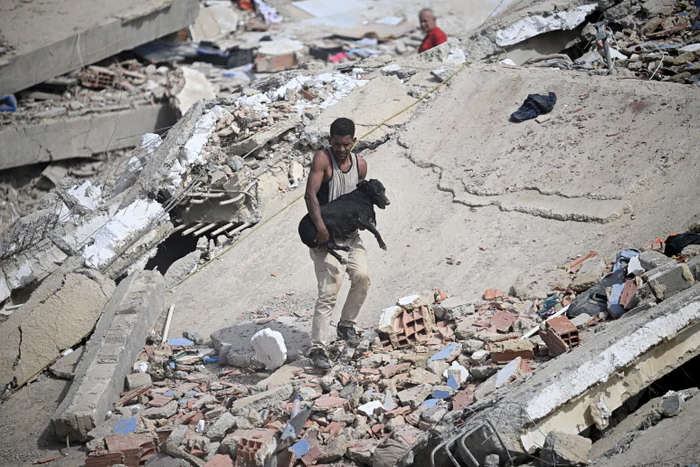
Across the city, scenes of grief and desperation unfolded. Families dug through concrete with bare hands. Others stood at the edge of collapsed buildings, calling out names, waiting for any sound from below.
Rescue Operations Underway — But the Clock Is Ticking
Responding to the crisis, acting President Rodríguez said rescuers were conducting “intensive rescue operations,” searching for people believed to still be trapped beneath the rubble. Emergency teams have described the next 24 to 72 hours as critical — the so-called “golden window” during which the chances of finding survivors alive begin to drop sharply.
In the Los Palos Grandes neighbourhood in east Caracas, residents and rescue teams were working side by side at a damaged apartment block where at least four young men remained unaccounted for. Families stood nearby, unable to leave, unwilling to give up hope.
Power cuts caused by the Venezuela earthquake left elderly residents trapped in their apartments, with no lifts and no way to call for help. With mobile networks also disrupted, people had no way of knowing whether their relatives were safe.
“There was a lot of people really worried about family members still stuck in buildings,” said British national Dan Baker, speaking to Reuters from his home in Caracas.
International Community Responds with Aid and Rescue Teams
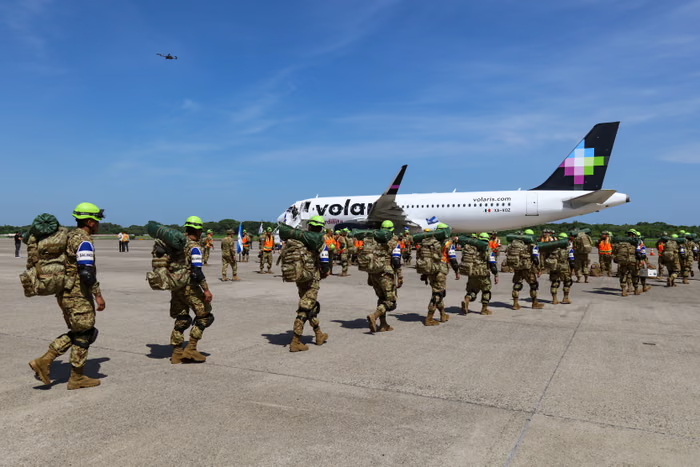
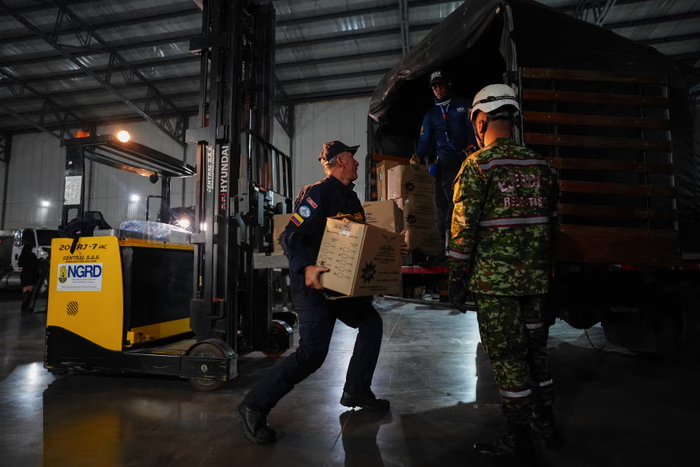
The world moved quickly to help. Within hours of the earthquakes striking, pledges of support began arriving from across the globe.
The US deployed Urban Search and Rescue teams from Fairfax County, Virginia, and Los Angeles County, California, as part of the State Department’s disaster response. Transport aircraft and helicopters were also sent to assist with mobility and logistics on the ground.
The US committed $150 million in total aid — $100 million directed to a UN humanitarian fund for Venezuela, and a further $50 million to aid organisations already operating inside the country.
US Marine Major General Kevin Jarrard was sent to Caracas to oversee the Pentagon’s earthquake relief efforts on behalf of US Southern Command.
Beyond Washington, the response was broad:
- Pope Leo sent an initial emergency donation of €100,000 through the Vatican, with more assistance promised as needs were assessed on the ground.
- The European Union said it stood ready to mobilise assistance as soon as a formal request was received.
- Iran expressed readiness to contribute to relief and rescue operations, while China — a close ally of Venezuela — said it was willing to provide assistance within its capabilities.
- The UN’s OCHA rapidly deployed Urban Search and Rescue teams through the International Search and Rescue Advisory Group, with the UN Under-Secretary-General for Humanitarian Affairs confirming he was in close contact with teams in Caracas to ensure a full emergency response.
3.9 Million Children at Risk — UNICEF Responds
Among the most heartbreaking elements of this crisis is the scale of risk facing the youngest victims.
UNICEF estimates that approximately 3.9 million children live in the areas affected by the Venezuela earthquake, putting thousands of families at immediate risk. The earthquakes struck communities across Caracas and the states of Aragua, Carabobo, Falcón, La Guaira, Miranda and surrounding areas, with children reported among the casualties.
A UNICEF supply flight from Copenhagen was being prepared, carrying 48 metric tonnes of medical equipment and water and sanitation supplies, estimated to arrive on 29 June.
UNICEF Executive Director Catherine Russell said the images and accounts coming from Venezuela were “heartbreaking,” adding that the agency remained committed to supporting national efforts on behalf of the most vulnerable children and families.
Tragically, UNICEF’s 2026 humanitarian appeal for Venezuela — already underfunded at just 35 per cent before the earthquakes — now faces an even steeper gap as demand surges.
A Nation Already on Its Knees
This disaster has struck a country with virtually no safety net to absorb the blow.
Venezuelan economist Jorge Jraissati told CNN that the earthquake response was already being hampered because the country does not have a functioning state — lacking the technical capacity, financial capacity, or institutional willingness to respond adequately to a disaster of this scale.
The Venezuela earthquake has also struck at a deeply sensitive political moment. With more than 1,400 protests recorded in the first half of 2026 alone — more than double the total for all of 2025 — the country was already experiencing significant civil unrest following the fall of Nicolás Maduro.
The near two-year ban on X (formerly Twitter) was partially lifted in the aftermath of the quakes, as authorities appeared to recognise that Venezuelans needed access to information — though some users were still unable to load images or videos due to incomplete unblocking of the platform’s domains.
For those living abroad, the wait for news has been agonising. Jesuska Inciarte, a Venezuelan living in Kentucky, had heard from some relatives in Caracas but was still awaiting word about her cousin Victoria Campos and Victoria’s one-month-old baby Ailany, last known to be in La Guaira when the earthquakes struck.
State of Emergency Declared — Airports and Schools Closed
Acting President Delcy Rodríguez declared a national state of emergency following the Venezuela earthquake, announcing the closure of Caracas airport, the suspension of train services, and the cancellation of school for several days.
Rodríguez visited the town of Macuto in La Guaira state as rescue efforts continued, calling on the nation to stand together. She appealed for calm and national unity, saying — as quoted in translated remarks broadcast on state media — that Venezuela would overcome the tragedy together.
The government has yet to provide a comprehensive assessment of infrastructure damage, but early satellite imagery points to catastrophic losses across coastal communities north of the capital.
What Happens Next
Rescue teams are now racing to reach anyone still trapped before that critical survival window closes. The true death toll from the Venezuela earthquake will only become clear once teams can access the most badly damaged zones — and in some areas, the rubble itself is blocking access.
Medical resources are stretched to breaking point. Field hospitals are running. International flights carrying supplies and personnel are inbound. But the scale of what Venezuela now faces — compounded by political instability, a broken economy, and an already overstretched health system — means the road to recovery will be long and difficult.
The world is watching. And for now, the only priority is finding those still alive.
Final Thought!
The Venezuela earthquake of 24 June 2026 has become one of the country’s deadliest natural disasters in living memory. With 235 confirmed dead, over 4,300 injured, and thousands still unaccounted for, the full human toll has yet to be established. International rescue teams are on the ground, aid is arriving, and organisations from UNICEF to the US military are mobilising — but every hour matters.
Stay with Factfile for the latest updates on the Venezuela earthquake and all breaking international news. If you found this article helpful, share it to help spread awareness of the ongoing relief effort.