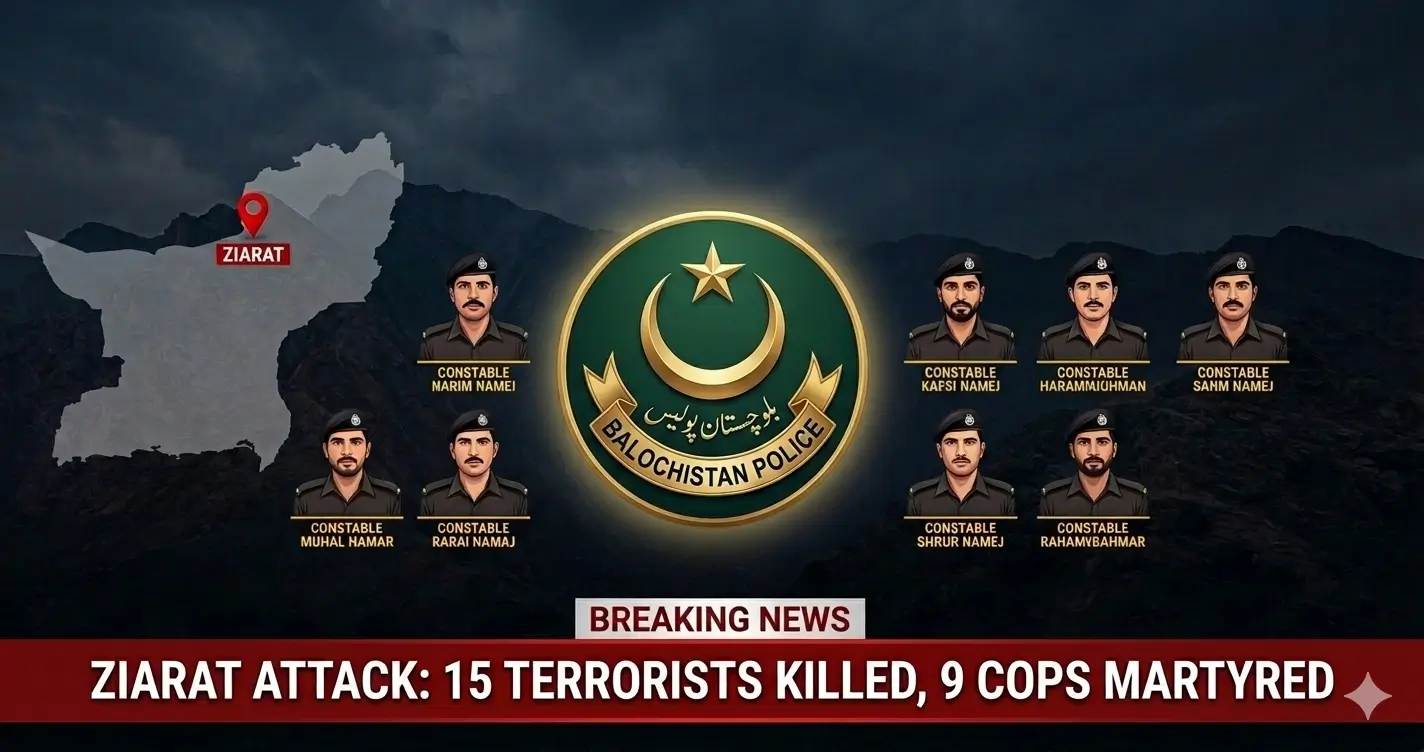

The Ziarat attack turned a quiet tourist district in Balochistan into a battlefield overnight. Heavily armed militants stormed a police checkpoint in the Kach Mangi Phase III area late Monday, igniting an hours-long firefight that stretched into Tuesday morning.
Ziarat Superintendent of Police Abdul Qadoos Dehwar said the gunmen specifically targeted officers on duty at the post. What followed was described by police as one of the fiercest exchanges the district has witnessed in years.
Nine Officers Martyred, Five Missing After Ambush

At least nine police personnel were martyred in the assault, including two station house officers. The dead included SHO Mangi Muhammad Hussain, SHO Kawas Sohbat Khan, and Anti-Terrorist Force in-charge Head Constable Saifullah, according to officials.
Five other policemen were reported missing after the attack, with authorities later confirming they had been abducted by the assailants. Bodies of the martyred were shifted to the District Headquarters Hospital in Ziarat as search teams fanned out across the area:
- 9 police officers martyred, including 2 SHOs
- 5 personnel abducted, later subject of a recovery search
- Gunfight lasted several hours through the night
- Attack site: Kach Mangi Phase III, Ziarat district
Joint Clearance Operation: How 15 Terrorists Were Killed
Following the assault, security forces launched an immediate response. The Frontier Corps, Balochistan Police, Counter Terrorism Department, Special Security Wing, and Anti-Terrorist Force conducted a coordinated sweep of the area.
Balochistan government spokesperson Shahid Rind confirmed the outcome in a statement posted on X: the clearance operation against the terrorists of Fitna al-Khawarij in Ziarat had been completed, with all 15 terrorists killed. He added that intelligence-based operations would continue.
Who Is Fitna al-Khawarij?
Pakistani officials have blamed the Ziarat attack on Fitna al-Khawarij — the state’s designated term for militants belonging to the banned Tehreek-e-Taliban Pakistan. The label distinguishes TTP-linked fighters from separatist outfits like the Baloch Liberation Army.
READ MORE: Lawyers Demand FTO Appointment Process in Pakistan
The group is widely believed to operate from sanctuaries near the Pakistan-Afghanistan border. Islamabad has repeatedly accused Kabul’s Taliban administration of tolerating, if not enabling, cross-border militant movement — a charge Afghan authorities routinely deny.
Balochistan’s Bloody 2026: A Pattern of Attacks
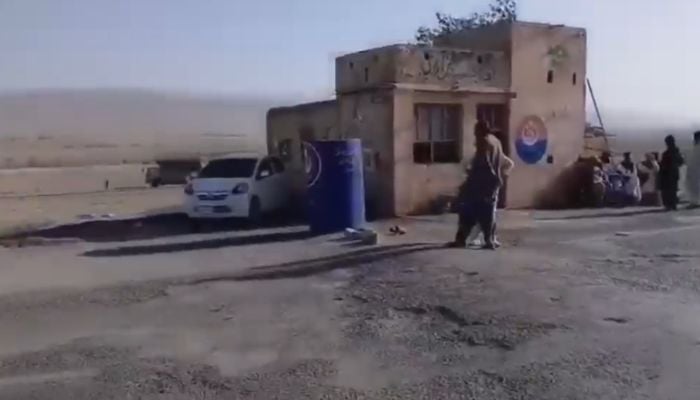
This is far from an isolated incident. Balochistan has endured a punishing year, with militant violence striking multiple districts in overlapping waves:
- January 31: Coordinated BLA assaults across Quetta and nine other districts left dozens dead
- May 24: A blast near Chaman Phatak railway track killed at least 14, including three FC personnel
- June 25–26: Eight Fitna al-Hindustan militants killed in Kharan and Mastung IBOs
- July 6–7: Ziarat checkpoint attack, followed by the 15-militant clearance operation
Analysts tracking the insurgency note that Ziarat itself has a grim history — a lieutenant colonel was abducted and killed near Mangi Dam in the same district back in 2022, underscoring how this pocket of Balochistan remains a persistent flashpoint.
Official Reaction: Islamabad and Quetta Respond

Reaction from the state was swift and pointed. Rind said the militants had paid a heavy price for attempting to undermine peace in Balochistan, insisting there would be no safe haven for terrorists in the province.
Prime Minister Shehbaz Sharif went further, saying the attack proved that these elements are enemies of the development, peace and prosperity of the people of Balochistan, and commended security forces for the clearance operation. Interior Minister Mohsin Naqvi added that cowardly attacks could not sabotage peace or weaken the country’s resolve against terrorism, calling the fallen officers “the pride of our nation.”
Protests Erupt as Highways Are Blocked
Grief quickly spilled onto the streets. Residents of Ziarat blocked the national highway at Ziarat Cross, disrupting traffic and stranding vehicles for hours in protest against the killings.
The demonstrations echoed unrest just a day earlier in Quetta, where locals blocked Airport Road after a separate clash in Hanna Urak left four dead. Both protests reflect growing public frustration in Balochistan over recurring attacks and demands for stronger, more permanent security measures.
What This Means for Pakistan’s Security Strategy
The Ziarat clearance operation fits a broader pattern: swift, forceful retaliation rather than prolonged sieges. Officials say intelligence-based operations (IBOs) will intensify, alongside action against local facilitators accused of sheltering militants.
Yet each successful clearance is quickly followed by another attack elsewhere in the province — a cycle security analysts say reflects the resilience of networks operating from cross-border safe havens rather than any single tactical failure by Pakistani forces.
For residents of Ziarat and beyond, the question isn’t whether the state can win individual firefights. It’s whether Balochistan can finally break the cycle of attack, retaliation, and mourning that has defined the province for years.