

Pakistan’s SIM registration system has run on fingerprints for over a decade. That may be about to change. PTA facial verification for SIM issuance is now formally on the table, after the telecom regulator told Parliament it has completed a working proof of concept with NADRA.
The proposal, submitted in a written report this week, targets a problem thousands of Pakistanis run into every year: fingerprints that simply won’t scan.
What PTA Has Actually Proposed
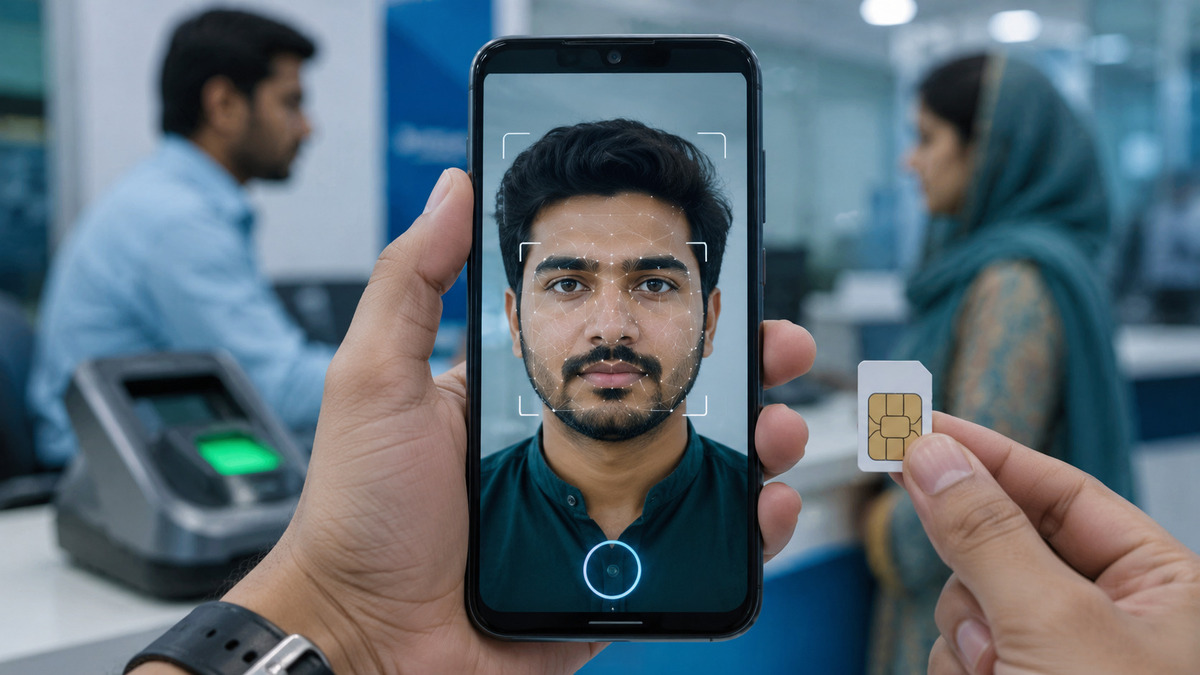
The Pakistan Telecommunication Authority has asked NADRA to formally permit facial biometric verification through the Pak ID app, alongside the existing fingerprint system, for SIM issuance. This is not yet a confirmed rule.
According to the written report submitted to the government and Parliament, PTA says a proof of concept for facial verification through the Pak ID app has already been completed successfully with NADRA and mobile network operators.
- Proposal covers new SIM issuance at customer service centers and authorized franchises
- Final approval rests with NADRA, not PTA alone
- Telecom operators say they’ve finished the technical groundwork needed to support it
Why Fingerprint Verification Is Failing So Many Pakistanis
Mandatory biometric fingerprint matching has been the backbone of SIM issuance since 2014. But it doesn’t work equally well for everyone, and PTA’s report spells out exactly who gets left behind.
Elderly citizens, manual laborers, amputees, and people with diseases that erode fingerprint ridges are the groups most affected. Their prints often fail to register against NADRA’s stored biometric templates, blocking them from getting a working connection.
- Manual laborers develop worn or damaged fingerprint ridges from years of physical work
- Citizens above 60 (men) and 55 (women) already qualify for an alternate process when scans fail
- Medical conditions and age-related skin changes are cited as recurring causes in the report
How the Facial Verification System Would Work

Under the proposed system, an applicant unable to pass fingerprint verification would instead be authenticated through facial recognition inside NADRA’s Pak ID app, matched against their existing CNIC photograph on file.
READ MORE: Pakistan Wildlife Protection Awards 2026 Finalized
PTA describes the app as capable of providing secure and reliable customer authentication. Once NADRA grants regulatory sign-off, operators say they could roll out facial verification quickly, since the technical build is reportedly already finished on their end.
- Facial data would be matched against NADRA’s existing CNIC photo, not a new enrollment
- Operators are also discussing letting customers apply for SIMs via their own mobile apps
- Implementation timeline depends entirely on NADRA issuing formal instructions to franchises
The Existing Fallback: NADRA’s Facial-Recognition Certificate
Facial verification for SIM issuance isn’t a completely new idea. NADRA already introduced a facial-recognition certificate in late January 2026 as a stopgap when fingerprint scanning fails at the counter.
That certificate costs Rs. 20, stays valid for seven days, and lets an applicant complete SIM biometric verification at a franchise despite a failed fingerprint scan. It’s evidence the groundwork for wider facial verification has been building for months.
- Rs. 20 facial-recognition certificate, introduced January 2026, valid for 7 days
- Functions as a bridge document franchises can accept in place of a fingerprint match
- Separate from the newly proposed Pak ID app-based system, which would be built into the verification flow itself
A Regulator Under Pressure: The Rs. 740 Million Fine

This proposal doesn’t arrive in a vacuum. Just days earlier, PTA fined Pakistan’s four mobile operators a combined Rs. 740 million over SIM issuance violations, including unauthorized activations and biometric verification failures.
Jazz alone was fined Rs. 116.7 million after PTA found a SIM activated against a subscriber’s CNIC through an authorized franchise without her consent. Investigators recovered over 12,600 active SIMs and biometric devices during related raids, exposing how fragile the current verification chain can be.
- Rs. 740 million in cumulative penalties issued to four major operators
- PTA rejected arguments that successful biometric matching alone excuses unlawful issuance
- Franchise-level fraud, not just technology failure, is driving regulatory scrutiny
What Happens Next — And What’s Still Unconfirmed
Several outlets have described facial verification as already “mandatory.” That’s premature. PTA’s own report frames this as a formal request awaiting NADRA’s approval, not a finalized policy with an announced rollout date.
Successful trials, completed technical preparations on the operator side, and a written commitment from PTA to pursue the change. What remains open is the timeline, the exact franchises that will get equipment first, and whether facial verification becomes optional or a parallel requirement alongside fingerprints.
What This Means for SIM Applicants
For now, nothing changes at the counter. Fingerprint verification remains the default, with the Rs. 20 facial-recognition certificate as the existing fallback for people who fail it.
If NADRA approves the request, applicants who’ve struggled for years to get a working SIM laborers, senior citizens, people with medical conditions stand to benefit most. That translates into a smoother experience at franchise counters across Pakistan is a question only implementation will answer.