

Rs. 1 Lac in National Savings Now Earns Less Than Rs. 1,000 per Month
A National Savings Rs 1 Lac monthly profit that once comfortably crossed the Rs 1,000 mark has now slipped under it. A fresh notification issued by the Central Directorate of National Savings has trimmed returns across several of Pakistan’s most-used savings instruments, and the change lands directly in the pockets of pensioners, widows and small investors who depend on monthly payouts to get by.
The revision, dated this past weekend, is the latest in a string of adjustments this year that have pushed rates up and down in step with the State Bank’s shifting monetary stance. For ordinary savers, the direction this time is down.
National Savings Cuts Profit Rate: What Changed
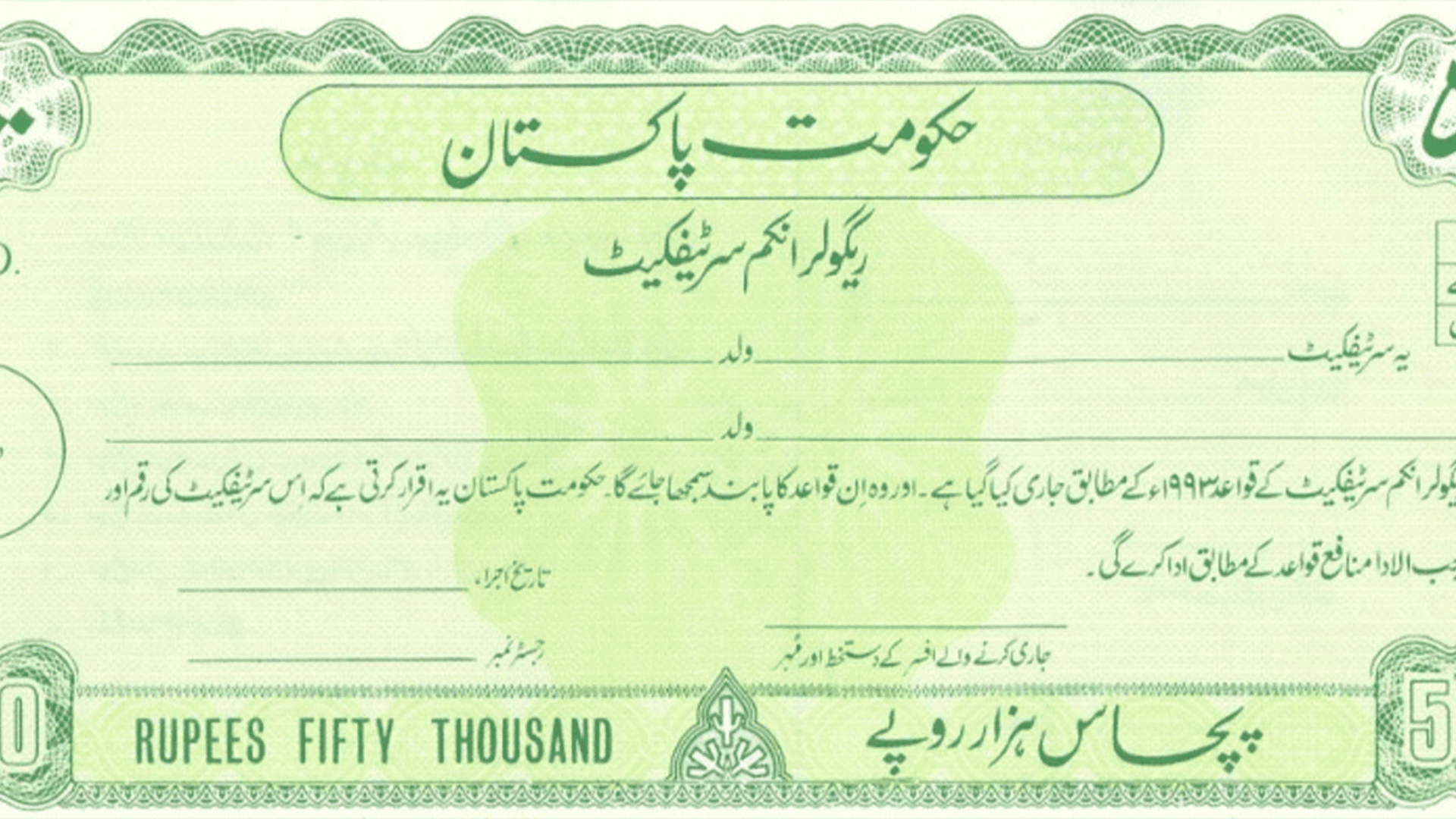
The National Savings Rs 1 Lac monthly profit picture shifted the moment the Central Directorate of National Savings issued its updated notification. The Regular Income Certificate, long a favourite for retirees needing steady cash flow, saw its annual profit rate revised to 11.52 percent.
That single-digit shift matters more than it looks. RIC holders are typically people who structured their entire monthly budget — utility bills, groceries, medicine — around a fixed government-backed payout. A downward revision, even a modest one, forces recalculations for households with no other income stream.
Rs 1 Lac Now Earns Under Rs 1,000 a Month — The Numbers

Here’s where the National Savings Rs 1 Lac monthly profit story becomes concrete. Under the revised rate, an investment of Rs100,000 in a Regular Income Certificate will now generate a monthly profit of Rs960 — down from the Rs985 many investors were earning just weeks earlier.
- Previous monthly payout on Rs100,000: roughly Rs985
- New monthly payout on Rs100,000: Rs960
- Difference: Rs25 less per lac, per month
- Annual rate applied: 11.52 percent, down from 11.82 percent
For someone with Rs10 lac parked in RICs, that’s roughly Rs250 less landing in their account every single month — a small number on paper, but a real dent for fixed-income households already squeezed by inflation.
Behbood, Pensioners and Shuhada Accounts Also Take a Hit
The cut wasn’t limited to the Regular Income Certificate. Behbood Savings Certificates and Pensioners Benefit Accounts — schemes specifically designed for senior citizens and widows — now carry an annual profit rate of 12.96 percent, a reduction from the previous rate.
READ MORE: Big Relief: PTA Facial Verification for SIM Issuance
The Shuhada Family Welfare Account, which supports families of martyrs, has been revised to the same 12.96 percent. These three schemes typically offer the highest returns in the National Savings lineup precisely because they target the most financially vulnerable segments, so even a modest trim carries outsized social weight.
Special Savings Certificates: A Mixed Picture

Special Savings Certificates weren’t spared either, though their structure softens the blow slightly. The scheme now offers 11.2 percent for the first six months of holding, stepping up to 12.6 percent for the remaining six months.
- First six months: 11.2 percent annualised return
- Final six months: 12.6 percent annualised return
- Payout frequency: profits disbursed every six months
- Net effect: a blended return lower than the previous cycle, but still front-loaded toward the back half of the year
Investors renewing existing certificates should note the blended rate before assuming last cycle’s numbers still apply.
Updated National Savings Profit Rates (July 2026)
Scheme | Previous Rate | Revised Rate | Monthly Profit on Rs100,000 |
|---|---|---|---|
| Regular Income Certificate | ~11.82% | 11.52% | Rs960 |
| Behbood Savings Certificate | Higher | 12.96% | ~Rs1,080 |
| Pensioners Benefit Account | Higher | 12.96% | ~Rs1,080 |
| Shuhada Family Welfare Account | Higher | 12.96% | ~Rs1,080 |
| Special Savings Certificate (1st half) | — | 11.2% | Semi-annual payout |
| Special Savings Certificate (2nd half) | — | 12.6% | Semi-annual payout |
Figures reflect the latest official notification; investors should confirm exact figures at their nearest National Savings Centre before transacting.
Why Rates Are Falling — The SBP Connection
National Savings rates don’t move in isolation. They typically track the borrowing cost the government pays on Treasury Bills and Pakistan Investment Bonds, which in turn follows the State Bank of Pakistan’s policy rate. The SBP has held its benchmark rate at 11 percent through several consecutive reviews this year, after briefly raising it to 11.5 percent in April amid inflation concerns.
Headline inflation touched 11.7 percent in May, its highest level since mid-2024, driven partly by regional instability and fuel price pressure. When the central bank keeps its rate steady or trims it, the debt instruments underpinning National Savings schemes reprice accordingly — and savers feel it on their next certificate renewal.
What This Means for Pensioners and Small Savers
For retirees who built their monthly budgets around fixed National Savings income, the revision is more than a rounding error. Public reaction on social platforms and news comment sections has already flagged the mismatch between falling profit rates and persistently high living costs for senior citizens.
- Households relying solely on RIC or Pensioners Benefit Account income face immediate budget gaps
- Reinvestment decisions at maturity now carry lower guaranteed returns
- Savers with amounts split across multiple schemes may see uneven impact depending on which certificates mature next
- Financial advisors generally recommend reviewing total portfolio allocation rather than reacting to a single rate change
Tax and Zakat Deductions Still Apply
Even before the rate cut, take-home profit from National Savings schemes was never the full advertised figure. Withholding tax applies at 15 percent for active tax filers and considerably higher for non-filers, while a 2.5 percent zakat deduction applies where relevant under standard rules.
That means the real, in-hand monthly profit on Rs1 lac in a Regular Income Certificate — after tax — falls meaningfully below the headline Rs960 figure for many investors. Filers should confirm their status is updated with the National Savings Centre to avoid the steeper non-filer deduction.
Alternatives Savers Are Considering
With Regular Income Certificate and pension-linked schemes offering less than before, some investors are weighing other government-backed options within the same system rather than exiting altogether.
- Defence Savings Certificates, offering returns that compound toward higher cumulative payouts over a longer five-to-ten-year horizon
- Sarwa Islamic Savings and Term Accounts for Shariah-compliant investors seeking similar security
- Short Term Savings Certificates for those wanting liquidity without locking in for years
- Diversifying between schemes to balance monthly income needs against longer-term growth
None of these fully offset a rate cut, but spreading holdings across instruments with different maturity profiles can cushion the impact of any single revision.
The Bigger Picture
National Savings remains one of the most trusted, government-guaranteed investment vehicles in Pakistan, built on a legacy stretching back more than 140 years and serving millions of small investors nationwide. That trust is precisely why every rate revision draws such close public attention these aren’t speculative instruments; they’re where pensioners, widows and cautious savers park money they can’t afford to risk.
The current downward revision reflects broader monetary tightening rather than any weakness in the institution itself. But for a retiree counting on that Rs960, the macroeconomic explanation offers little comfort when the grocery bill doesn’t shrink to match.