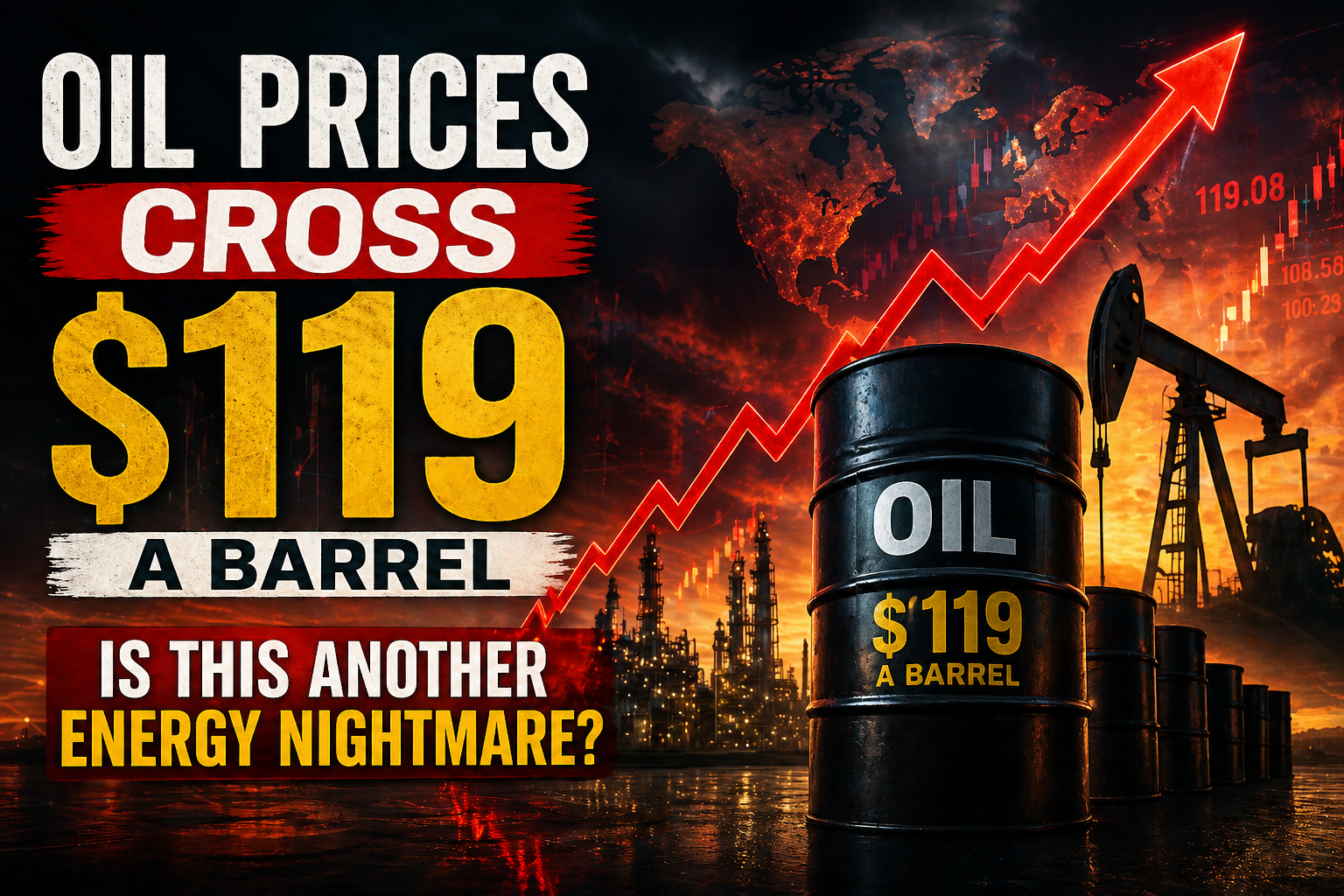

Global oil markets went into full panic mode this week as Brent crude smashed past $119 a barrel — a price level the world hasn’t seen since the darkest days of 2022 when Russia invaded Ukraine. The trigger this time? A direct military confrontation between the United States and Iran, escalating under the Trump administration’s aggressive foreign policy posture and sending shockwaves from Wall Street trading floors all the way to petrol pumps in Pakistan, London, and Lagos.
In less than 48 hours, crude oil prices climbed nearly 18%, marking the steepest single-week rally in over four years. Analysts are now openly using the words “supply crisis” — and this time, they are not being dramatic.
How Did Oil Suddenly Jump to $119?
The chain of events began when Washington announced direct strikes on Iranian military infrastructure, citing Iran’s alleged support for regional militant groups. Iran responded swiftly — not just on the battlefield, but in the Strait of Hormuz, the narrow waterway through which nearly 20% of the world’s oil supply passes every single day.
Tehran’s naval forces began what officials described as “defensive maneuvers,” but traders interpreted them as a deliberate move to threaten oil tanker traffic. Within hours of that news breaking, buy orders flooded commodity markets, and oil prices crisis 2026 became the most searched term on financial terminals worldwide.
“You’re looking at a market that was already tight on supply,” said one senior commodities analyst at a major European bank. “Adding a potential Hormuz blockade on top of that — even a partial one — and you get a price spike that goes vertical.”
The Strait of Hormuz: The World’s Most Dangerous Oil Chokepoint
To understand why markets reacted so violently, you need to understand just how critical the Strait of Hormuz really is. This narrow passage — at its tightest, just 33 kilometres wide — is the only sea route out of the Persian Gulf for major oil exporters including Saudi Arabia, Iraq, Kuwait, and the UAE.
There is simply no easy bypass. Alternative pipeline routes exist but cannot handle anywhere near the volume needed to compensate for a Hormuz shutdown. Even a 10% disruption in throughput would be catastrophic for global supply chains — and right now, market participants are pricing in a scenario far worse than that.
Trump’s Iran Policy: Bold Strategy or Reckless Gamble?
The Trump administration had been signalling a tougher line on Iran for months. After ripping up the remnants of the 2015 nuclear deal and reimposing the harshest sanctions Washington had ever placed on Tehran, military action was presented internally as the “next logical step.”
Supporters of the policy argue that Iran’s nuclear programme and its support for proxy forces across the Middle East posed an existential threat to US allies. Critics, however, point to the oil market carnage as proof that the administration severely underestimated the economic blowback.
“You can’t go to war with an OPEC nation sitting on the world’s most critical oil chokepoint and expect markets to stay calm,” one former US energy secretary told reporters on the sidelines of an emergency G7 call convened Wednesday. “This was foreseeable. It was foreseen. And it happened anyway.”
Who Gets Hurt the Most by the Oil Prices Crisis 2026?
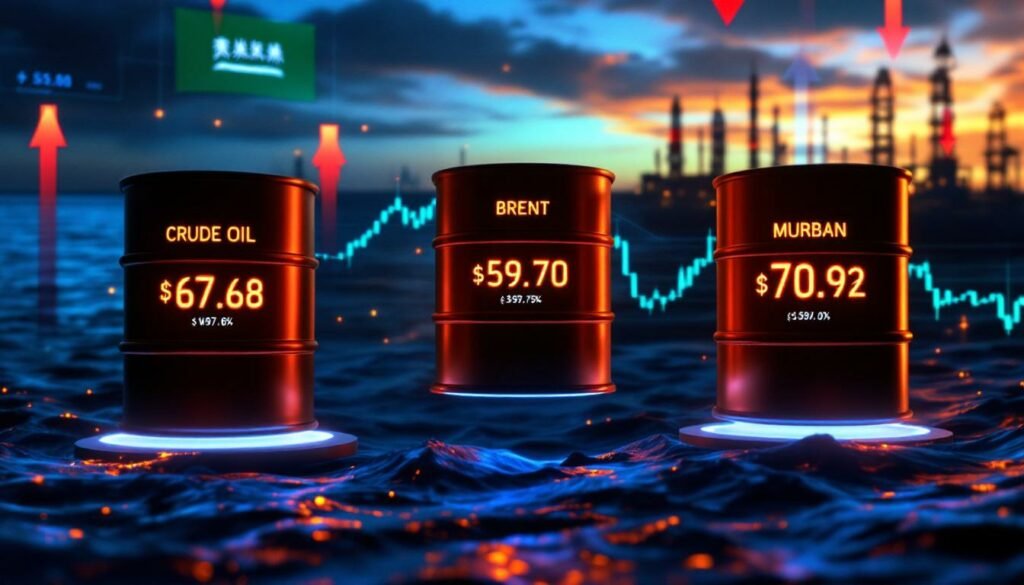
The crude oil surge is not abstract — it hits real people in real and immediate ways. Here is who is feeling the pain first and hardest:
Developing economies in Asia and Africa
Countries like Pakistan, Bangladesh, Sri Lanka, and most of sub-Saharan Africa import the vast majority of their oil. A jump to $119/barrel can blow out their current account deficits overnight and force painful fuel subsidy cuts that hit the poorest the hardest.
Airlines and shipping companies
Jet fuel and marine fuel costs are spiking in tandem. Major carriers have already begun issuing profit warnings, and freight surcharges are being quietly added to supply chain invoices across every major industry.
Everyday consumers at the petrol pump
Retail fuel prices typically lag crude moves by a week or two. Drivers in Europe and North America should expect noticeable hikes at the pump within the next 10–14 days if oil prices stay elevated.
Central banks fighting inflation
An oil-driven inflation spike is the nightmare scenario for central banks that spent years trying to tame prices. Rate cut expectations in the US, UK, and eurozone are already being dialled back on the news.
Flashbacks to 2022: Is This Really That Bad?

When Russia invaded Ukraine in February 2022, oil briefly spiked above $130 a barrel. The fallout was severe — a global energy crisis that sent European nations scrambling for alternative gas supplies, triggered painful recessions in smaller economies, and pushed inflation to 40-year highs across the Western world.
The current oil prices crisis 2026 shares some similarities but also has key differences. In 2022, the shock was primarily a European gas problem layered onto an oil shock. This time, the disruption targets the Persian Gulf — the very heartland of global crude production — making the potential supply disruption broader and more structurally dangerous.
On the other hand, the US strategic petroleum reserve — badly depleted during the Biden years and only partially refilled — gives Washington limited room to intervene with emergency releases. OPEC+ is now in a complicated position: its Gulf members want stability, but some have long-standing tensions with Washington that complicate rapid cooperation.
What Are Energy Markets Watching Next?
Traders and analysts say the next 72 hours are critical. Key things to watch:
- Whether Iran formally closes or mines the Strait of Hormuz — that would be a true red-line event pushing oil toward $140+.An emergency OPEC+ meeting.
- Saudi Arabia has reportedly been on the phone with US counterparts. Any signal of a production boost could cap prices quickly.Diplomatic back-channels.
- Qatar and Oman, which have historically played mediator roles between Washington and Tehran, are reportedly active behind the scenes.
- US strategic petroleum reserve releases. The White House has signalled it is “considering all options” — market language for a release that could shave $5–10 off the barrel price temporarily.
Russia and China Are Watching Closely — and Saying Little
Two major powers are sitting back and letting the situation develop. Russia, still under Western sanctions and selling its oil at a discount, actually benefits from a high global oil price — every dollar added to Brent crude helps Kremlin revenues. Moscow has issued a muted statement calling for “restraint” without explicitly condemning Tehran or Washington.
China, the world’s largest oil importer, is in a trickier spot. Beijing has deep trade ties with Tehran and significant economic interests in Gulf stability. Chinese state media has been notably careful in its coverage, avoiding any framing that could be seen as taking sides. Privately, Beijing is said to be furious at the disruption to its energy security, but its public stance remains measured.
The Bigger Picture: A World Still Addicted to Gulf Oil
This crisis is, at its core, a reminder that despite years of talk about energy transition and renewables, the global economy remains deeply and dangerously dependent on Middle Eastern oil. Solar and wind capacity has grown enormously, but global oil demand is still near record highs, and there is no short-term substitute for the crude oil supply that flows through the Persian Gulf.
The global energy crisis that began with Russia’s invasion of Ukraine accelerated investments in alternatives — but not fast enough. Policymakers who argued that energy security required both faster decarbonisation and smarter geopolitical risk management are now pointing at $119 oil as validation. Unfortunately, they are right at exactly the wrong moment.
The oil prices crisis 2026 is real, it is severe, and its trajectory depends almost entirely on political decisions being made right now in Washington, Tehran, and Riyadh. The market is not overreacting — if anything, traders are still pricing in a scenario where diplomacy finds a way. If it doesn’t, the numbers get much uglier.
What Should You Do Right Now?
For ordinary people, the immediate steps are practical: expect higher fuel bills within the next two weeks, brace for a second wave of food price inflation (since farming, processing, and shipping are all oil-intensive), and watch for central banks to delay any planned interest rate cuts.
For investors, energy stocks are surging — but this is the kind of rally that can reverse violently if a ceasefire is announced. Playing the volatility is a professional game right now, not one suited to retail portfolios.
Final Words!
The world has been through oil shocks before — 1973, 1979, 1990, 2008, 2022. Each time, the eventual resolution came through some combination of diplomacy, market adjustment, and painful economic adaptation. This time will likely be no different. But the road there could be rough.
Read More! Who Is Threatening Trump? Inside the Growing Security Concern