
There is a quiet but serious conversation happening inside Pakistan’s sarafa markets right now — and it is not about gold.
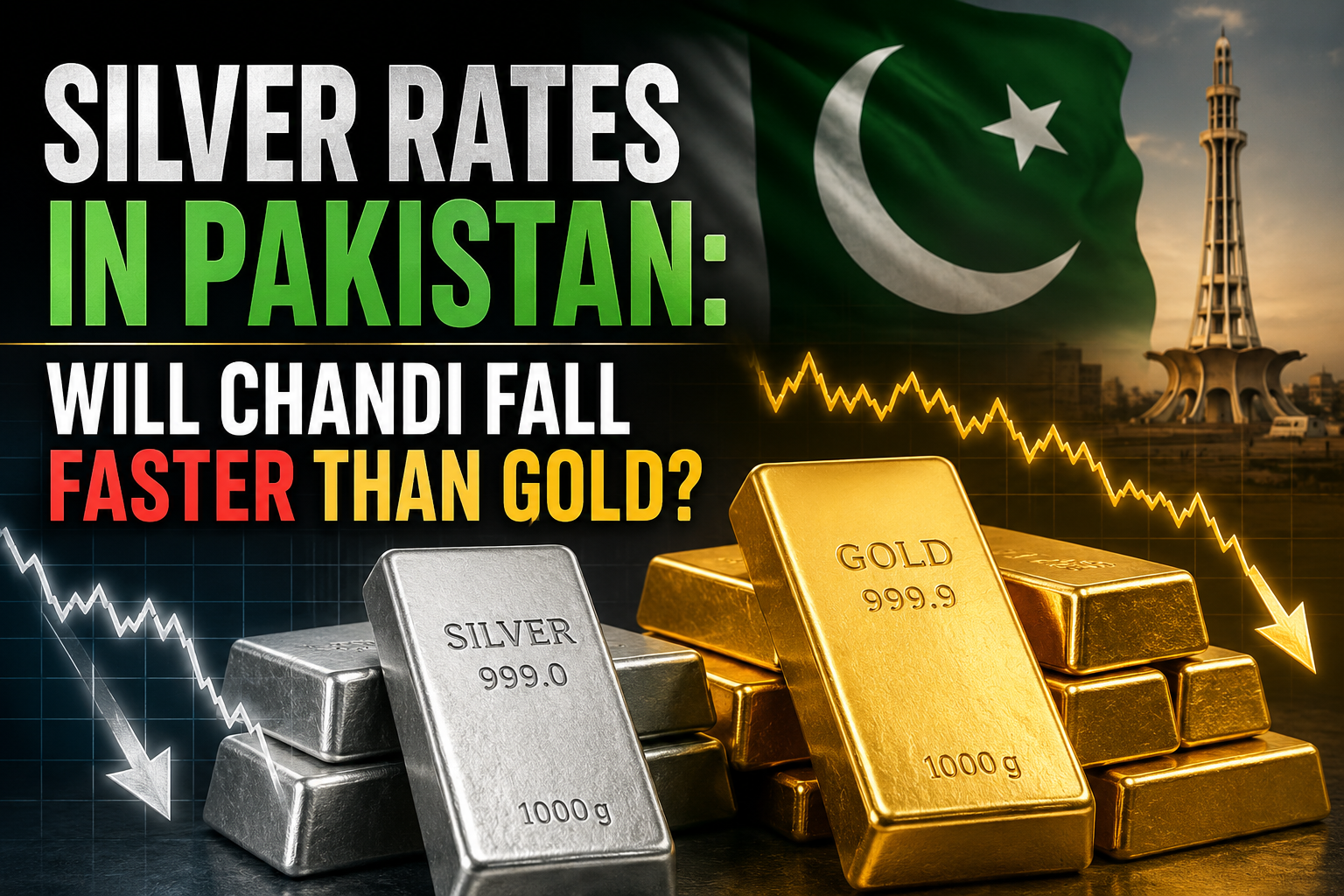
As the dust begins to settle after the latest military escalation between India and Pakistan, precious metal traders across Karachi, Lahore, and Islamabad are watching silver rates with unusual concern. While gold has held up relatively well during the tension — as it typically does — analysts are warning that silver may be on the edge of a sharper and faster fall, one that gold is unlikely to mirror.
This is not just market speculation. There is real data behind the concern.
What Is Happening With Silver Rates in Pakistan Right Now?
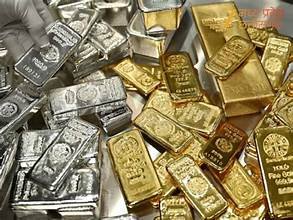
As of mid-May 2026, silver rates in Pakistan are sitting around Rs 9,010 per tola in the local sarafa market. Gold, by comparison, is hovering near Rs 469,700 per tola — still elevated but stabilizing after weeks of wild swings.
The gap between how gold and silver are behaving tells a bigger story.
On May 12, gold in Pakistan was priced at Rs 4,94,250 per tola while silver stood at Rs 9,023.5, with international gold at $4,733.5 and silver at $86 per ounce. Just a few weeks prior, silver per tola had fallen by Rs 65 to Rs 7,849, and gold per tola dropped by Rs 3,800 to Rs 479,962 — tracking a broader bearish mood in global bullion markets.
But here is what the raw numbers do not immediately reveal: silver’s decline has been proportionally steeper than gold’s on multiple occasions throughout this volatile period. And the reason has everything to do with how differently these two metals behave in times of geopolitical crisis.
Why Silver Falls Harder Than Gold During Crises
Gold is a monetary metal. When wars break out, when governments shake, when currencies wobble — investors run to gold. It is the oldest safe-haven asset in the world, and that status does not change overnight.
Silver is different. While it shares gold’s safe-haven reputation to some extent, a significant portion of silver’s demand is industrial. It is used in solar panels, electronics, electric vehicles, military hardware, and increasingly in artificial intelligence infrastructure.
During the March 2026 US-Iran tensions, silver failed to benefit from war-related industrial demand. Gold’s monetary characteristics supported demand during uncertainty, while silver’s industrial exposure became a liability when growth prospects deteriorated. The supply deficit conditions that had characterised silver markets for years became less relevant when industrial demand faced structural headwinds.
That is the crux of the issue. When a regional crisis unfolds — like the current India-Pakistan situation — trade slows, factories idle, and industrial demand contracts. Silver suffers more. Gold does not.
India Crisis and Its Direct Impact on Pakistan’s Bullion Market
The recent escalation of military hostilities between India and Pakistan, dubbed Operation Sindoor, was triggered by a deadly attack in Indian-administered Kashmir, which India blamed on Pakistan-based militants. The conflict saw cross-border strikes, artillery exchanges, and diplomatic ruptures — and marked India’s most assertive military action since the 1971 war.
For Pakistan’s economy, the timing could not have been worse. Pakistan’s foreign exchange reserves stood at roughly $16 billion — barely covering three months of imports — leaving little cushion against external shocks.
When geopolitical tension rises this sharply, Pakistani investors tend to react in two ways: a portion rushes into gold as a protective store of value, while silver — viewed as more speculative and volatile — often gets dumped. This selling pressure can send silver rates in Pakistan falling faster and deeper than gold, even within the same news cycle.
In India, a similar pattern played out around the same period. Silver depreciated Rs 250 per kg even as gold managed to stabilize and later rally. Analysts noted that safe-haven demand easing was the primary trigger — not a fundamental shift in silver’s value proposition.
Gold vs Silver: How the Numbers Have Moved
Here is a quick look at how gold and silver rates in Pakistan have shifted during the crisis-driven volatility of early-to-mid May 2026:
Date | Gold per Tola (PKR) | Silver per Tola (PKR) |
|---|---|---|
| May 9, 2026 | Rs 493,662 | Rs 8,513 |
| May 11, 2026 | Rs 479,962 | Rs 7,849 |
| May 12, 2026 | Rs 494,250 | Rs 9,023 |
| May 14, 2026 | Rs 492,362 | Rs 8,232 |
| May 16–17, 2026 | Rs 469,700 | Rs 9,010 |
What this table shows is that silver’s swings — both up and down — have been proportionally wider than gold’s. Gold moved roughly 4–5% in either direction during this period. Silver moved by as much as 8–10% within the same window.
This higher volatility is the hallmark of silver during uncertainty. It amplifies moves in both directions, but when fear dominates, it almost always falls harder than gold.
What Analysts Are Saying
The broader analyst community has been watching this divergence closely.
Market observers note that if a regional conflict concludes quickly, gold’s uptrend could taper off in the short term — but silver’s correction could be sharper and faster due to its dual role as both an industrial and investment metal.
Meanwhile, global forces are adding another layer of complexity. Gold has been trading above $4,400 per ounce globally, pushing Pakistan’s gold market into uncharted territory, with some analysts projecting it could surpass PKR 550,000 per tola during 2026 if macroeconomic pressures persist. Silver, however, is being pulled in two directions — upward by industrial demand forecasts, and downward by crisis-driven selling.
Some analysts argue that gold’s rise is primarily a sign of gradual currency depreciation, and that tomorrow, it could rise further as a safe-haven asset amid systemic uncertainty. Silver, by contrast, does not enjoy that same immunity.
The Rupee Factor: Making Silver More Vulnerable
There is one more variable that does not get enough attention in coverage of chandi rates in Pakistan: the Pakistani rupee.
When the rupee weakens against the US dollar — which tends to happen during any external shock, including military crises — the cost of importing silver (and gold) rises automatically. But here is the subtle difference: gold’s dollar price tends to rise during those same moments of global fear, partially offsetting the currency hit for gold holders in Pakistan.
Silver’s dollar price often falls during regional crises, as we have already discussed. That means Pakistani silver holders can get hit from both sides — a weaker rupee AND a lower international silver price in dollar terms. Gold holders, by contrast, often see the two forces partially cancel each other out.
The price of silver in Pakistan may fluctuate more or less than in other countries due to changes in the exchange rate for the Pakistani rupee — a point that is easy to overlook but matters enormously when both the dollar and silver are moving against you simultaneously.
Should You Buy Silver or Wait?
This is not financial advice. But if you are watching silver rates in Pakistan and wondering whether this is a buying opportunity or a warning signal, here are the key things to track:
- De-escalation signals: If India-Pakistan tensions ease, silver could bounce quickly — possibly faster than gold — because fear selling would reverse.
- Global industrial demand data: If factory output from China, the EU, and the US holds steady, silver’s industrial demand support remains intact.
- Rupee stability: Any improvement in Pakistan’s foreign exchange reserves or IMF-backed stability measures could reduce the rupee pressure on silver imports.
- Gold-silver ratio: When this ratio spikes sharply (gold becomes much more expensive relative to silver), it has historically preceded a silver recovery.
With gold at elevated levels and silver at relatively modest per-tola rates by comparison, some experts forecast silver could deliver 70–80% gains over a longer horizon if industrial demand recovers. But that is a long-game view — and the short-term picture remains clouded.
Final Thought!
Pakistan’s bullion market is at a genuinely interesting crossroads. Recent geopolitical tensions have resulted in above-average price volatility for gold and silver — the prices in Pakistan are experiencing frequent fluctuations based on international market trends.
Gold has the stronger floor right now, backed by its safe-haven status and a global investor base that reflexively buys it when things get scary. Silver has the bigger upside if things calm down — but also the bigger downside if the India crisis deepens or if industrial demand softens further.
For ordinary Pakistanis tracking the sarafa market — whether you are a buyer of chandi jewellery, an investor watching rates, or a trader trying to time the market — the message from analysts is consistent: do not treat silver like gold right now. It is more volatile, more vulnerable to the current situation, and likely to move faster in whichever direction the next major headline pushes it.
Keep an eye on the sarafa market daily updates, watch the international silver price in dollars, and factor in the rupee. This is not a time to assume silver and gold move together — because right now, they clearly are not.