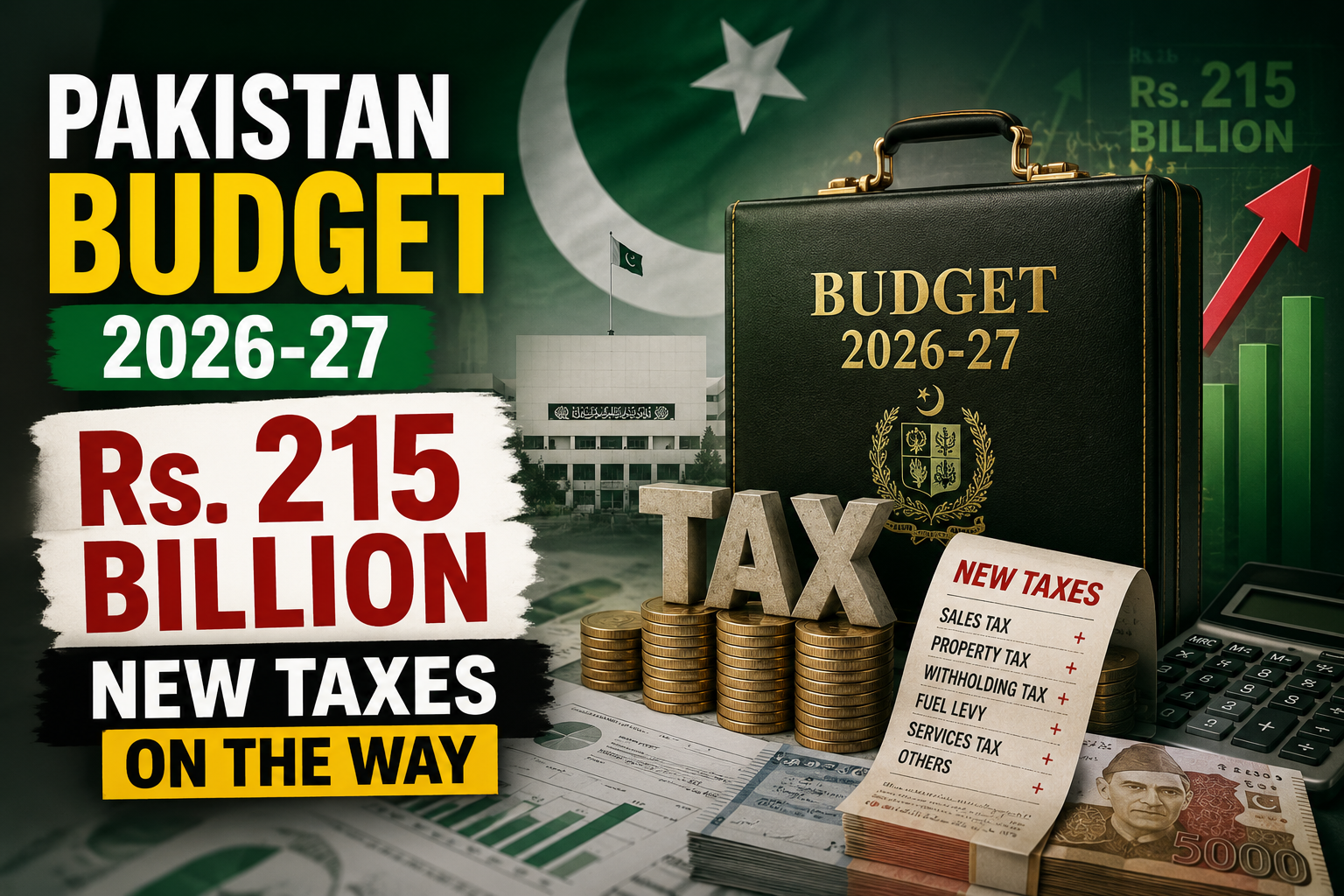

Pakistan’s federal government is preparing to impose at least Rs. 215 billion in new taxes in the upcoming Budget 2026-27, primarily to meet its commitments under the International Monetary Fund (IMF) programme. The decision has effectively been handed to Deputy Prime Minister Ishaq Dar, who will lead a specially constituted high-level committee to review and finalize the tax proposals before the budget is presented in the National Assembly — likely after Eid holidays.
This is not a minor fiscal adjustment. Combined with another Rs. 215 billion worth of enforcement and compliance actions, the government is looking at a total fiscal package of around Rs. 430 billion — a significant undertaking that will directly affect businesses, salaried workers, and the broader economy.
Why the Government Needs Rs. 215 Billion in New Taxes
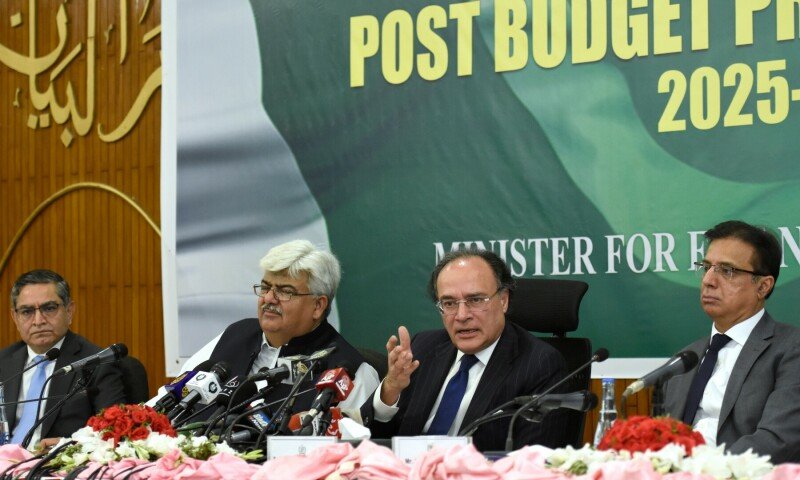
The short answer: the IMF says so.
Under Pakistan’s ongoing programme with the International Monetary Fund, Islamabad has committed to introducing approximately Rs. 430 billion in fiscal measures during FY2026-27. This includes at least Rs. 215 billion through fresh taxation measures and another Rs. 215 billion through improved enforcement, anti-evasion steps, and administrative reforms within the Federal Board of Revenue (FBR).
The broader goal is to push Pakistan’s total tax collection to Rs. 15.3 trillion in the next fiscal year — up from the current year’s target of Rs. 14.1 trillion. Authorities believe that a combination of new taxes, stronger enforcement, and digital systems can get them there, though it won’t be easy.
Pakistan has struggled for years to widen its tax net, and the pressure from the IMF has only made the task more urgent. With every review cycle, Islamabad finds itself having to demonstrate fiscal discipline in exchange for continued access to bailout funds.
Ishaq Dar Put in Charge — What Does That Mean?
One of the most notable aspects of this development is that Prime Minister Shehbaz Sharif has shifted the core budget-making responsibility away from the Ministry of Finance to Deputy Prime Minister Ishaq Dar, a veteran politician who has served as Finance Minister four times.
The PM formed the committee after multiple briefings from the Tax Policy Office — the body tasked with preparing budget proposals under the Finance Division — left him unsatisfied with the quality and justification of the proposed measures.
The committee has been tasked to “review, analyse and present tax policy proposals” formulated by the Tax Policy Office working under the Finance Division.
Finance Minister Muhammad Aurangzeb has also been included as a member of the Dar-led committee.
Other members include:
- Ahsan Iqbal — Planning Minister
- Bilal Azhar Kayani — Minister of State for Finance
- Imdad Ullah Bosal — Finance Secretary
- Rashid Langrial — FBR Chairman
- Hamid Atiq — FBR Member
- Dr. Najeeb — DG Tax Policy Office
- Asim Zulfiqar — Tax expert from PwC
The Finance Division, however, was quick to push back against media reports suggesting that budget-making had been taken away from the finance ministry. The ministry termed such claims “misleading and speculative,” stressing that the committee serves only as a consultative forum reviewing tax proposals before finalization.
Regardless of how it’s framed institutionally, the practical reality is clear: Dar is now the central figure in shaping Pakistan’s fiscal direction for FY2026-27.
A Separate Committee for Tax Enforcement
In parallel, Prime Minister Shehbaz Sharif has also formed an enforcement committee headed by Minister for Economic Affairs Ahad Khan Cheema, tasked specifically with tightening tax collection and compliance mechanisms — separate from new tax imposition.
Key proposals discussed in the enforcement committee’s first meeting included the introduction of digital monitoring mechanisms and AI-based systems to detect false data in tax returns, strengthen monitoring of under-reporting and curb tax evasion.
The government is also considering an electronic auction system for confiscated customs goods to bring more transparency into how seized items are disposed of — a move that could plug longstanding leakages in the system.
Cheema made it clear that the government does not want these enforcement measures to choke economic activity. The stated intent is to collect more from those who are already evading taxes rather than burdening compliant taxpayers further.
How Much Will This Cost Pakistani Taxpayers?
That depends heavily on which sectors the new taxes end up targeting.
Sources indicate that the budget may introduce new taxes totaling Rs. 215 to 230 billion, while providing some relief as well. The government is walking a tight rope — it needs to extract more revenue from the economy without triggering a public backlash or undermining the very growth it’s trying to sustain.
Based on earlier budget trends and the proposals currently on the table, here are the areas being closely watched:
- Digital transactions and e-commerce — Pakistan’s online economy has grown rapidly but remains under-taxed
- Non-filers and tax evaders — stricter documentation and withholding rules expected
- High-income individuals and corporations — super tax adjustments under consideration
- Sectors with informal activity — agriculture, retail, and construction often discussed in reform talks
- Import duties and customs — adjustments to protect local industry while meeting revenue targets
The Rs. 15.3 trillion FBR target for FY2026-27 represents a significant jump and will require measures that go well beyond routine adjustments.
IMF Is Watching — Closely
The timing of this development matters. While Pakistan’s domestic committees are being set up, an IMF mission is already in Islamabad reviewing Pakistan’s proposed tax measures for the next fiscal year.
Finance Minister Aurangzeb briefed the visiting IMF delegation on Pakistan’s macroeconomic outlook, fiscal strategy, and reform priorities. According to the Finance Ministry, both sides discussed maintaining reform momentum, preserving macroeconomic stability, and advancing structural reforms to support investment and export-led growth.
In other words, the IMF isn’t just watching from a distance — it is actively involved in evaluating what Pakistan proposes to do before the budget is even formally presented.
This level of engagement underscores just how tightly Pakistan’s fiscal policy is linked to its IMF programme, and how limited the government’s room really is to deviate from agreed targets without putting the programme at risk.
Budget to Be Presented After Eid
The government plans to present the federal budget in the National Assembly after Eid holidays, once discussions with the IMF are finalized.
This suggests the review committees are working against a reasonably tight timeline. With the fiscal year ending June 30, the budget window is narrow, and getting IMF clearance on the tax proposals before formally presenting them to parliament adds another layer of complexity.
The coming weeks will be critical. How the Dar-led committee shapes the final tax proposals — and whether the IMF signs off on them — will determine how heavy the fiscal burden on Pakistanis will be in the year ahead.
What This Means for You
Whether you are a salaried employee, a business owner, or a consumer, the upcoming budget will matter:
- Salaried individuals may see mixed outcomes — relief was provided in the 2025-26 budget, but new enforcement rules could tighten take-home pay dynamics for those in certain income bands.
- Business owners in under-taxed sectors should expect more documentation and withholding requirements.
- Online shoppers and freelancers are increasingly in the government’s crosshairs as digital taxation frameworks continue to expand.
- Non-filers face stricter restrictions — the government has already limited their ability to buy vehicles, property, and securities, and further curbs are likely.
The Bigger Picture
Pakistan is not the first country to face this situation, and it won’t be the last. Governments under IMF programmes routinely have to make fiscal choices they would prefer to avoid. The challenge for Islamabad is ensuring that the Rs. 215 billion in new taxes is collected efficiently and fairly — without placing the entire burden on the same narrow segment of compliant taxpayers who already bear most of the load.
The formation of a high-powered committee under Ishaq Dar signals that the government recognizes the stakes. Whether it delivers on both the revenue targets and the promise of a more equitable tax system remains to be seen.
As the budget date draws closer, other outlets will be tracking every development. Stay tuned for more updates on Pakistan’s Budget 2026-27 new taxes, enforcement measures, and what the final numbers actually mean for the economy.
Have questions about how the upcoming budget might affect your taxes or business? Share your thoughts in the comments below.