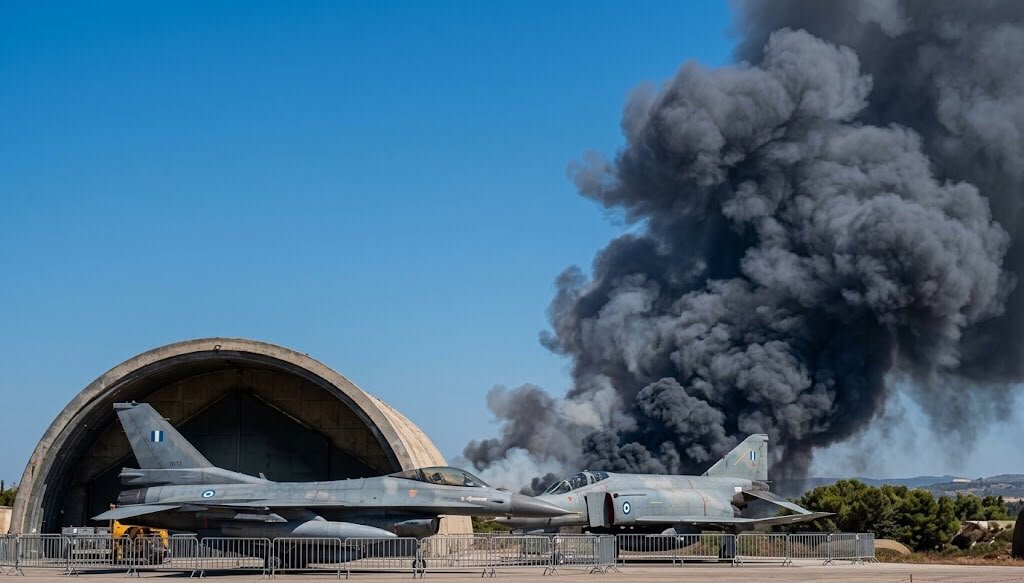

A fragile ceasefire is unravelling fast. Over the past week, the United States and Iran have exchanged four separate rounds of strikes, sending Brent crude swinging wildly and reviving fears of a full-blown closure of one of the world’s most important oil arteries.
Strait of Hormuz tensions reignited on July 7 when Iran’s Islamic Revolutionary Guard Corps (IRGC) struck three commercial tankers, including the Qatari LNG carrier Al Rekayat. By July 12, the IRGC had declared the strait “closed until further notice” after allegedly firing on a Cyprus-flagged container ship, the GFS Galaxy, whose crew abandoned ship after an engine-room fire.
What Sparked the Latest Strait of Hormuz Tensions

Strait of Hormuz tensions trace back to a June 17 memorandum of understanding, signed by President Donald Trump and Iranian President Masoud Pezeshkian, that was meant to end the wider US-Israel-Iran war and reopen the waterway. That truce barely held a month.
The trigger came when the US Treasury revoked its temporary licence permitting Iranian crude sales, just weeks after granting it. Tehran called the move a violation of the agreement. Days later, IRGC forces began firing on tankers again, and Washington responded with strikes it says are meant to protect “freedom of navigation.”
US Launches Fourth Round of Strikes in a Week
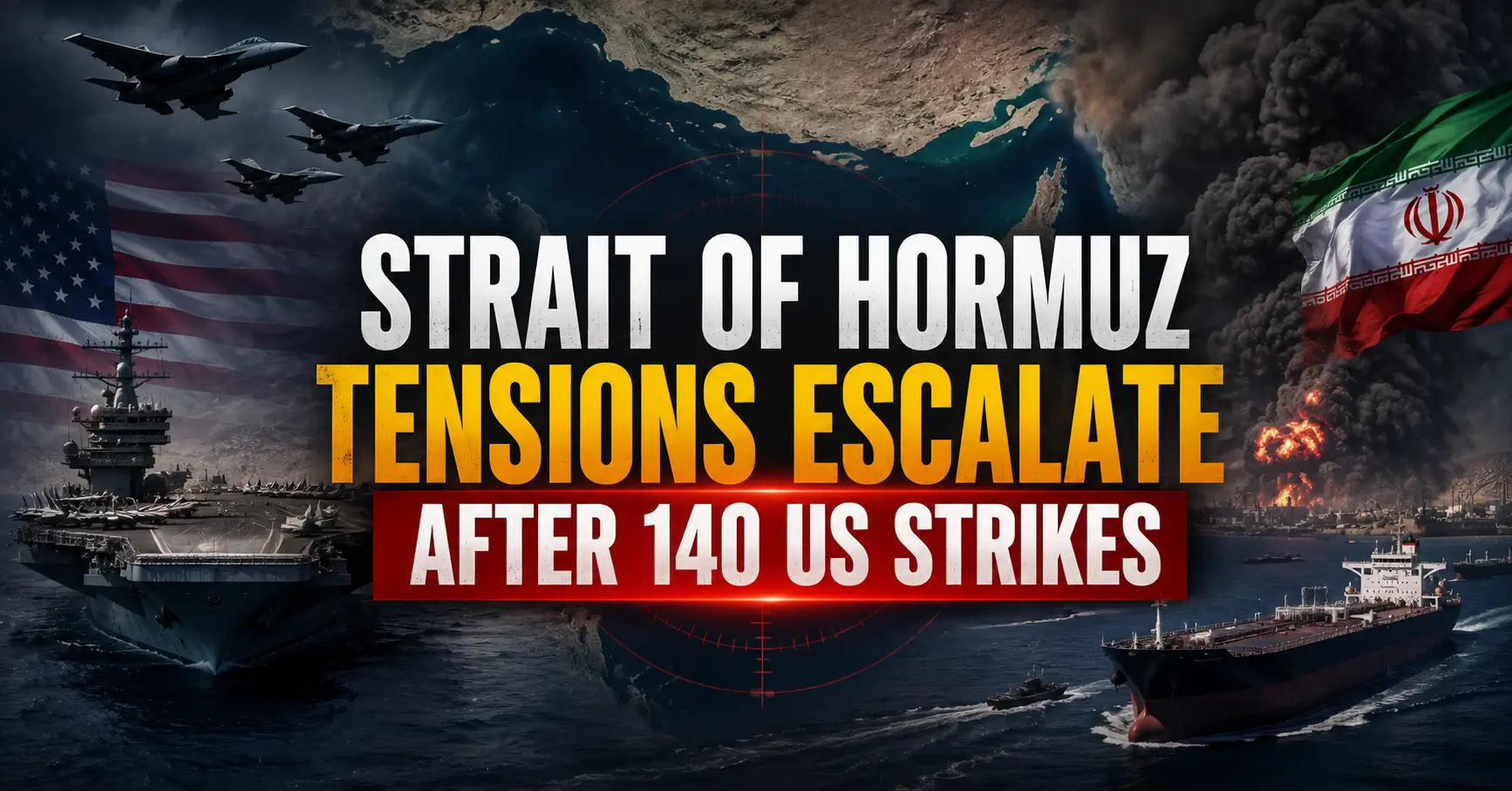
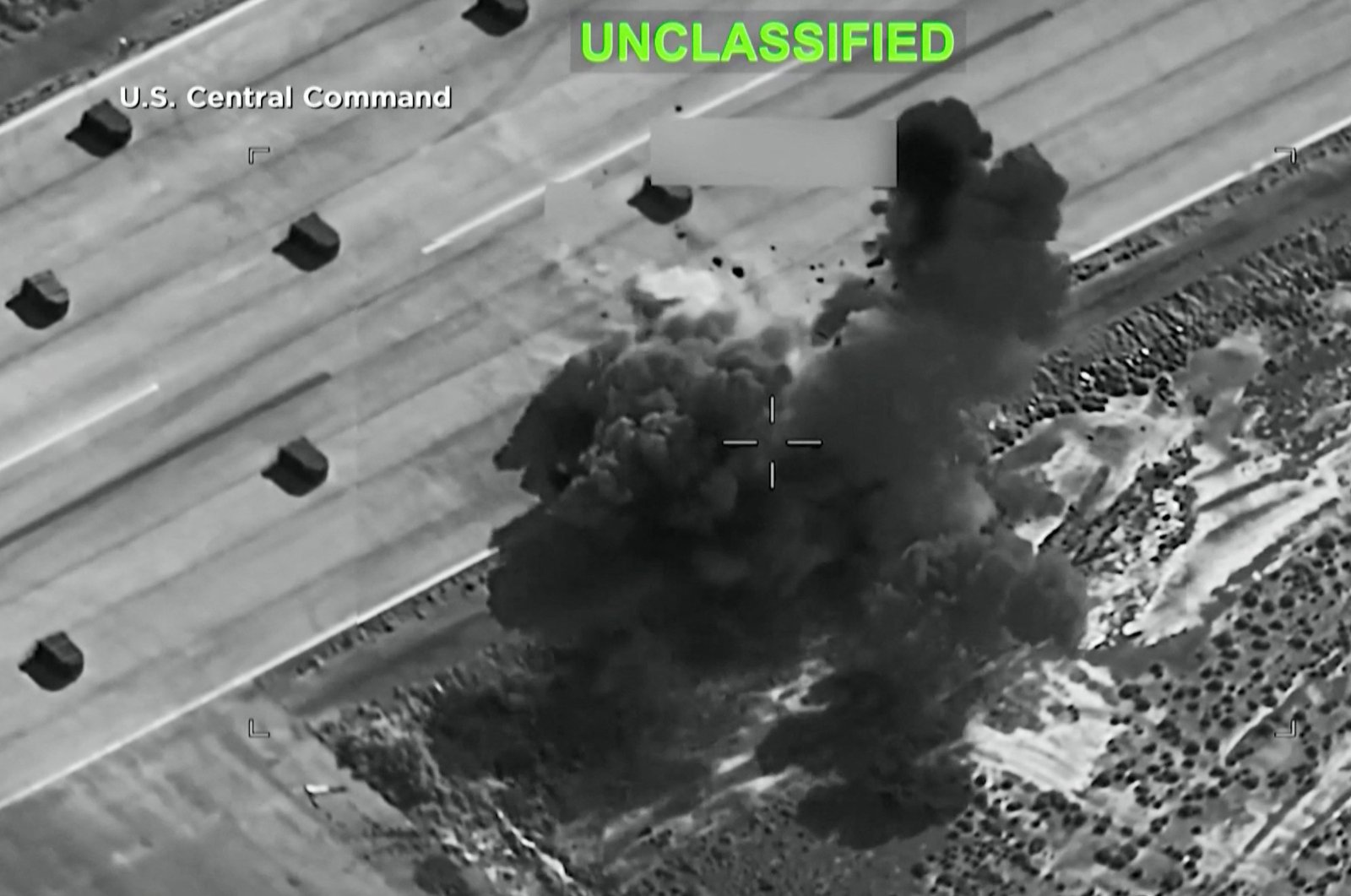
US Central Command (CENTCOM) confirmed its most recent wave hit roughly 140 Iranian military targets overnight into July 12 — the third and largest round in a matter of days. Officials say the strikes are aimed squarely at Iran’s ability to threaten shipping near the strait.
CENTCOM has been blunt about its position. “The Strait of Hormuz is a vital maritime corridor for global trade. Iran does not control it,” the command said in a statement, adding that its forces are “postured and prepared to ensure that freedom of navigation remains available.”
Key strikes and incidents this week include:
- July 7: US hits over 80 targets after tanker attacks; Washington reimposes oil sanctions.
- July 9: A second wave hits roughly 90 sites, including more than 60 IRGC boats.
- July 11–12: A third and fourth round targets around 140 sites; Iran declares the strait closed.
- Ongoing: US aircraft report intercepting Iranian cruise missiles and drones near the waterway.
Iran’s Response — Missiles, Drones and a “Crushing” Warning

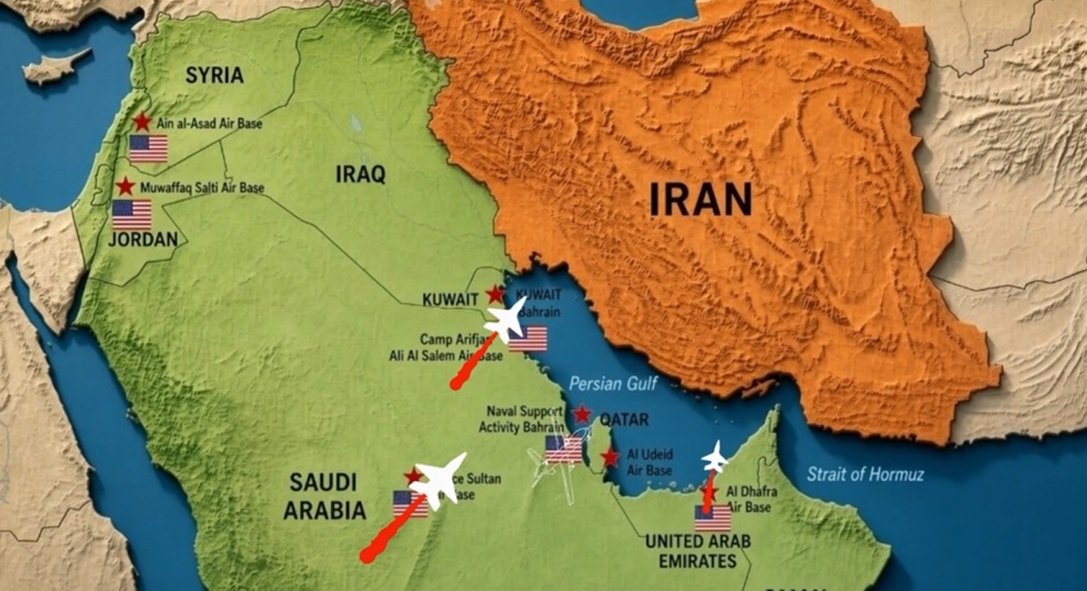
Iran has not stayed quiet. The IRGC has launched missiles and drones at US-linked sites across Bahrain, Kuwait, Qatar, Jordan and the UAE, triggering air-raid sirens in Manama and Doha and reports of injuries in Qatar, including a child hurt during interception efforts.
Mohammad Bagher Ghalibaf, Iran’s parliamentary speaker and chief negotiator, delivered one of the sharpest warnings yet. “America still hasn’t learned that bullying and breaking promises are no longer cost-free,” he wrote, adding that the strait “will only open with Iranian arrangements, not American threats.”
Global Oil Markets React to Strait of Hormuz Tensions
Strait of Hormuz tensions are once again moving energy markets. Brent crude climbed roughly 4% to near $79 a barrel this week, clawing back losses from earlier in July when prices had briefly dipped toward $70 amid hopes the June ceasefire would hold.
Shipping data tells its own story. Maritime intelligence firm Windward reported that daily crossings through the strait fell to just six or nine vessels over the weekend, compared with 18 to 22 crossings earlier this month — a sign that the “reopening” following June’s deal is now effectively reversing.
READ MORE: Trump DOJ Subpoenas 4 NYT Reporters Over Air Force One
Analysts remain divided on how far this goes. Andy Lipow of Lipow Oil Associates suggested markets are pricing in “a new normal” of intermittent skirmishes rather than a total shutdown. Others, including Vandana Hari of Vanda Insights, have warned that renewed geopolitical shocks were “not being adequately factored in” by traders betting on a quick de-escalation.
Roughly 20% of the world’s oil and gas supply — around 20 million barrels a day — normally moves through this 21-mile-wide waterway between Iran and Oman. Even a partial slowdown ripples through fuel prices from Karachi to California.
Pakistan and Oman Push for De-escalation
Pakistan has taken on a visible mediating role throughout this crisis, alongside Oman and Qatar. Islamabad expressed concern over the weekend’s escalation, urging “all sides to exercise restraint” and honour the commitments made under June’s memorandum of understanding.
Iran’s Foreign Minister Abbas Araghchi has kept Pakistan in the loop directly, reportedly warning against further US “adventurism” in a phone call with Pakistan’s army chief. For Pakistan, which relies heavily on Gulf oil imports, sustained closure risk carries direct economic consequences at home.
Why the Strait of Hormuz Still Matters for the World
The Strait of Hormuz is barely 21 miles wide at its narrowest point, yet it remains the single most consequential chokepoint in global energy trade. Roughly a fifth of the planet’s oil and a similar share of its liquefied natural gas pass through it daily.
China, India, Japan and South Korea together absorb the bulk of that flow, but price shocks travel far beyond Asia. Earlier disruptions this year pushed Brent above $100 a barrel, spiked fertiliser costs tied to Gulf urea exports, and forced countries including Pakistan, Bangladesh and Zimbabwe to grapple with fuel shortages.
What Happens Next in the US-Iran Standoff
Diplomats haven’t given up. Citibank analysts told clients this week that both Washington and Tehran “have too much to lose” from unchecked escalation, predicting a return to negotiations within weeks rather than months. Qatar and Pakistan are reportedly working to restart direct talks.
Trump, for his part, insists the strait remains functionally open despite Iran’s declarations, telling traffic hasn’t actually stopped. That claim holds depends on what happens over the next few days — and whether either side blinks before a fifth round of strikes begins.