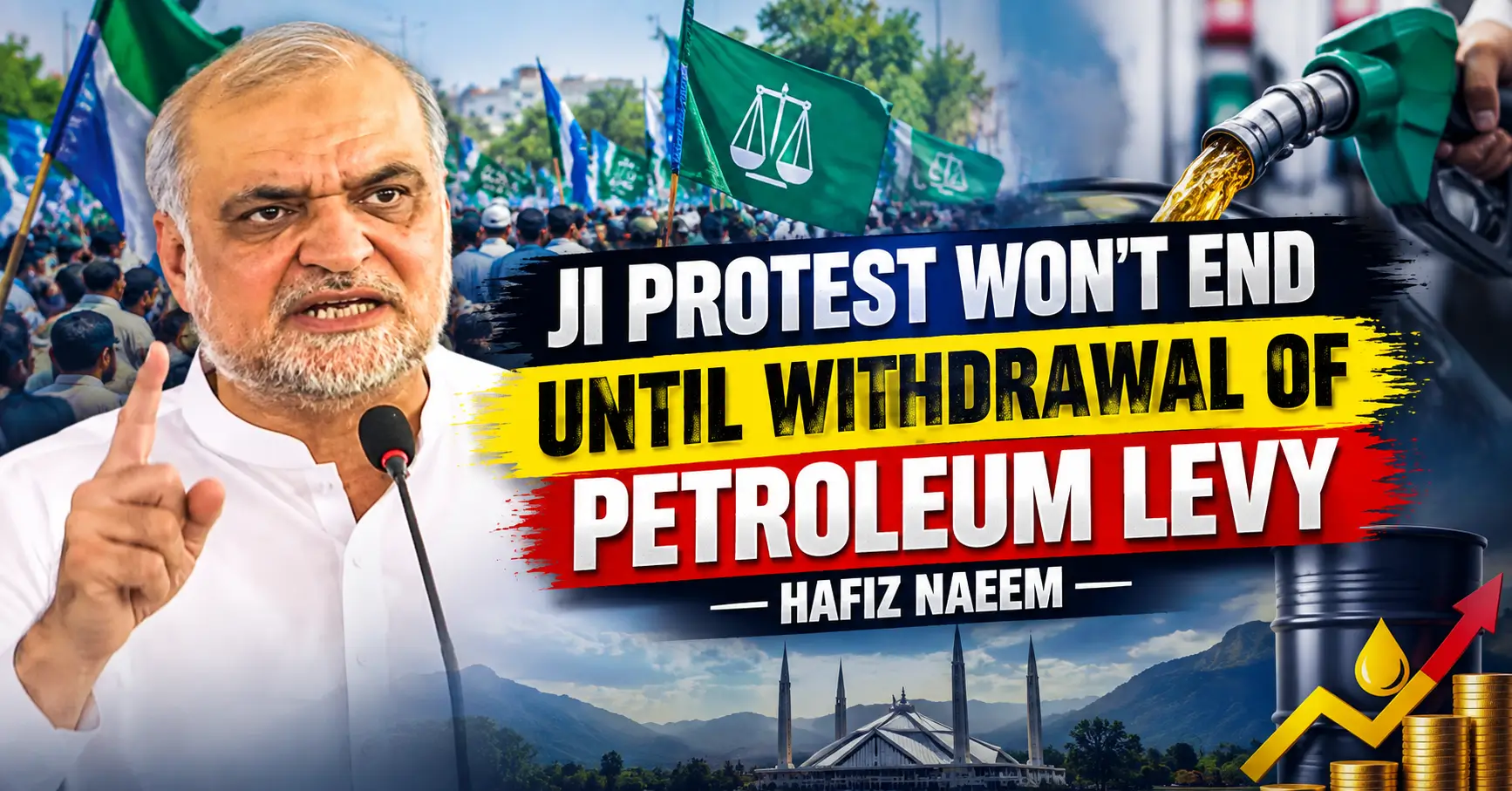

Petroleum levy withdrawal has become the single non-negotiable demand behind Jamaat-e-Islami’s nationwide protest movement, and its chief says the pressure will not let up until the government blinks. Hafiz Naeem ur Rehman made that position unmistakably clear this week, rejecting the government’s latest relief offer as a distraction from the real issue.
Talks are ongoing. Sit-ins are continuing. And a long march on the federal capital is now just days away. Here’s where things actually stand.
JI Protest Won’t End Until Petroleum Levy Withdrawal, Says Hafiz Naeem
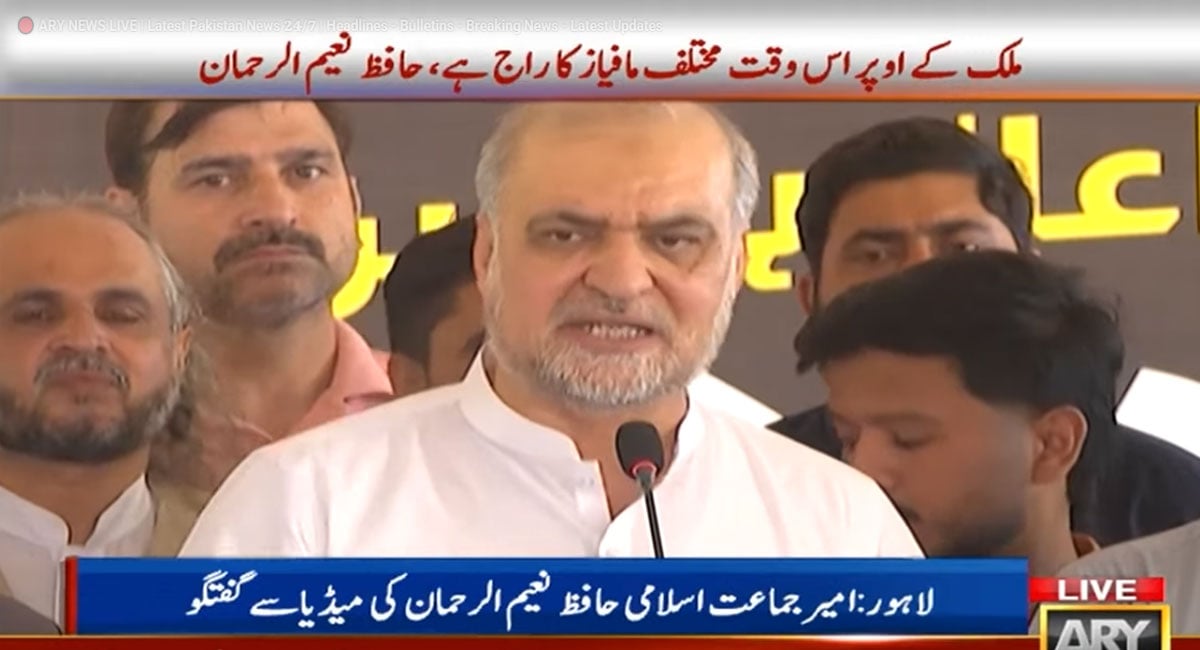
Petroleum levy withdrawal, not partial relief, is what JI says it’s fighting for. Speaking to media on Tuesday, Hafiz Naeem said protest sit-ins and the planned march would continue regardless of any interim concessions the government floats.
He was blunt about the government’s Rs25 billion monthly relief offer, calling it a diversion. “They are offering Rs25 billion monthly relief but avoiding to take the levy back,” he said, adding that officials weren’t willing to cut their own perks even as citizens absorbed fuel costs.
Government’s Rs25 Billion Relief Scheme vs JI’s Core Demand
The government’s counteroffer centres on a targeted subsidy rather than a tax rollback. Petroleum Minister Ali Pervaiz Malik confirmed the scheme would cost roughly Rs25 billion per month and extend to motorcycles, three-wheelers, and low-income commuters.
READ MORE: JI unveils six-point plan to end levy, save over Rs.6 trillion
JI isn’t buying it as a substitute. The party argues a subsidy for a narrow beneficiary group does nothing for the broader public still paying elevated pump prices because of the levy itself — a structural charge JI wants scrapped entirely, not offset.
Quick comparison:
| Measure | Government’s Offer | JI’s Demand |
|---|---|---|
| Approach | Targeted monthly subsidy (~Rs25 billion) | Full withdrawal of petroleum levy |
| Beneficiaries | Motorcycles, three-wheelers, registered users | All fuel consumers nationwide |
| Levy status | Remains in place | Must be abolished |
| Duration | Until “a solution is found,” per PM’s office | Immediate and permanent |
How the Petroleum Levy Standoff Escalated

The dispute didn’t erupt overnight — it built through weeks of strikes, negotiations, and shifting deadlines.
- Early September: JI holds a nationwide strike; markets partially shut in Sindh and KP
- September 7: First round of formal talks; JI submits six proposals to a government committee led by Ahsan Iqbal
- September 10: JI’s original deadline for levy withdrawal passes without resolution
- September 12: Party announces the Islamabad long march for September 20
- September 15: Third round of negotiations held after a government-requested postponement
Six Proposals JI Submitted to the Government
JI’s technical team, led by Vice Emir Liaquat Baloch, didn’t just protest — it tabled a formal package during the first negotiation round on September 7.
The proposals reportedly include phasing out the Rs80-per-litre levy, cutting non-development government spending, revisiting IMF-linked tax targets, and taxing landlords and high-net-worth segments instead of fuel consumers. Baloch said the levy “directly inflates transport costs and the prices of everyday consumer goods.”
What Hafiz Naeem Is Saying — Key Statements

Hafiz Naeem’s rhetoric has sharpened with each passing week, framing the levy as an extortion-style tax rather than routine fiscal policy.
- “The people cannot accept this bhatta (extortion) tax”
- The government collected Rs1,567 billion in petroleum levy over the past year
- Removing the levy and related taxes could cut petrol prices by roughly Rs106 per litre
- “Do the rulers seek the IMF’s permission before using their aircraft, expensive vehicles and other luxuries?”
He’s also floated that a 3% cut in the policy rate could generate over Rs1,600 billion in relief — an alternative he says the government hasn’t seriously explored.
Government’s Transparency Defence on Fuel Pricing
Officials aren’t conceding the argument. Ali Pervaiz Malik insists every component of the fuel pricing formula, including the levy itself, is published on OGRA’s website for public scrutiny.
He pointed to Prime Minister Shehbaz Sharif’s intervention on refinery pricing as evidence relief is already happening, noting diesel prices have eased partly because of a revised crude-based formula. The government maintains it’s balancing IMF commitments with genuine efforts to soften the blow on consumers.
September 20 Islamabad March: What Comes Next
With the deadline for petroleum levy withdrawal already lapsed once, the September 20 march has become the movement’s next real pressure point.
JI says sit-ins are running at 35 to 40 locations nationwide, and caravans from across Pakistan will converge on Islamabad. The government has begun placing containers along likely routes — a signal it’s bracing for disruption even as talks continue in parallel.
Economic and Political Stakes of the Levy Dispute
The petroleum levy generates a significant share of federal non-tax revenue, and Islamabad has repeatedly cited IMF-linked fiscal targets as a reason for keeping it intact.
For JI, though, the political calculus is different: framing itself as the loudest voice against inflation could reshape its standing ahead of any future electoral contest, especially if opposition parties heed Hafiz Naeem’s call to join the movement.
Which ever side blinks first, the outcome will directly affect what millions of Pakistanis pay at the pump for months to come.