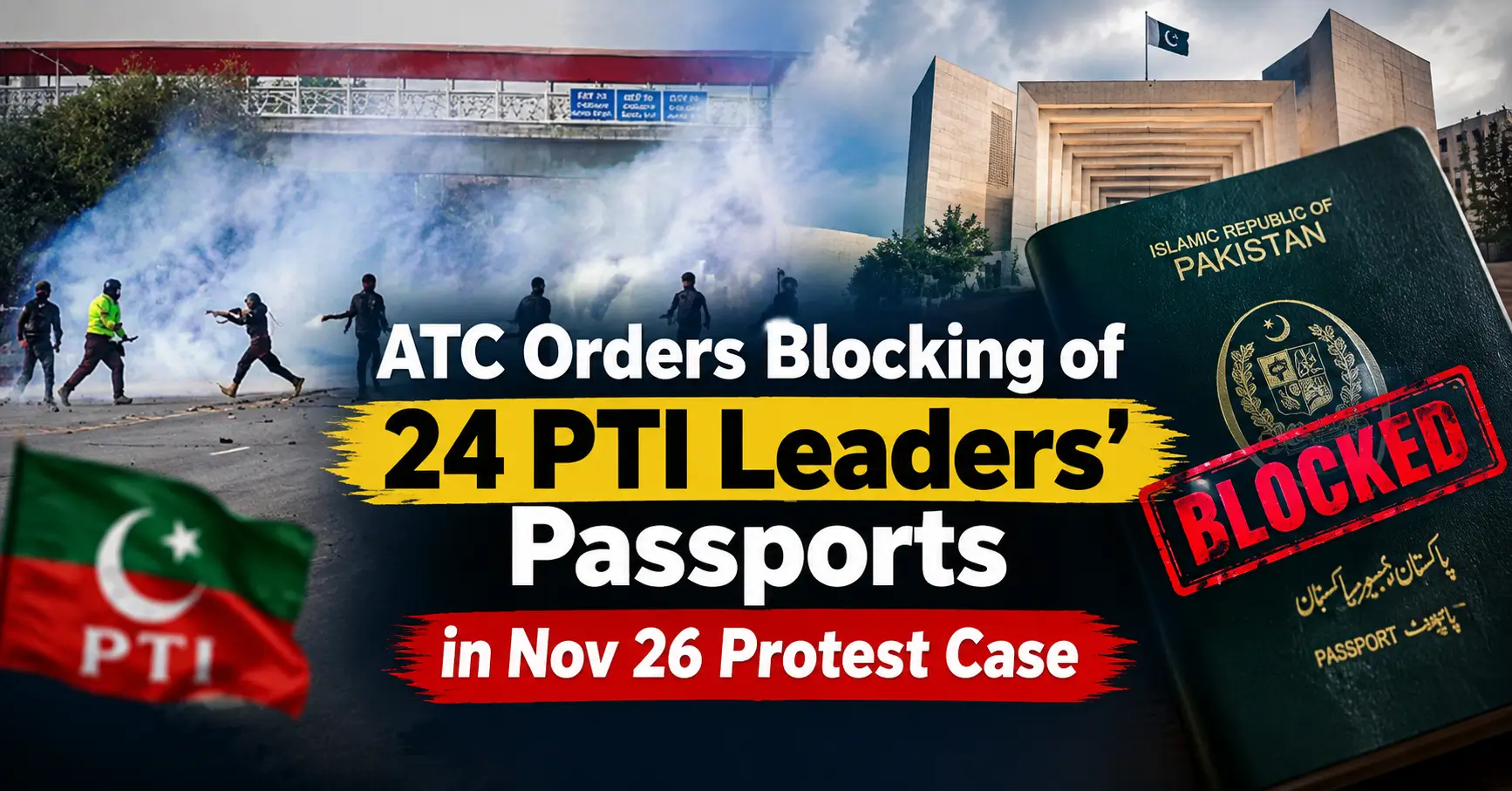

PTI leaders passports blocked — that’s the headline out of Islamabad on Monday, after an anti-terrorism court moved against 24 Pakistan Tehreek-e-Insaf lawmakers just two weeks before the party’s planned September 27 long march.
The order hit some of PTI’s most senior names, including sitting Khyber Pakhtunkhwa Chief Minister Sohail Afridi. It didn’t come out of nowhere. It came out of a case tied to violence that Islamabad has still not fully closed the book on.
What the Court Order Says

The PTI leaders passports blocked order was issued by ATC Judge Abul Hasnat Muhammad Zulqarnain, acting on a request from the investigating officer at Kohsar Police Station. The judge directed the Federal Investigation Agency to act immediately and keep the restriction in place “until further orders.”
The court’s reasoning was procedural rather than dramatic. Investigators told the bench several of the accused had skipped hearings entirely, while others who secured interim bail never showed up to join the investigation. That combination, the court held, created a real flight risk.
Who Is on the List
Beyond Afridi, the order names a wide cross-section of PTI’s parliamentary bench — both National Assembly and provincial lawmakers. Reporting across multiple outlets shows some variation in the exact 24 names, but the core list is consistent.
| Name | Role |
|---|---|
| Sohail Afridi | KP Chief Minister |
| Asad Qaiser | Former NA Speaker |
| Umar Ayub | Former Leader of Opposition, NA |
| Junaid Akbar | MNA |
| Shahid Khattak | MNA |
| Sher Ali Arbab | MNA |
| Muhammad Iqbal Afridi | MNA |
| Dr Amjad Ali | MPA |
| Zubair Wazir | MPA |
| Babar Saleem Swati | KP Assembly Speaker |
- Several names carry additional charges of attempted murder alongside terrorism sections
- A handful of those listed had already obtained interim bail in related FIRs
- The order applies until the court decides otherwise — it isn’t a fixed-term restriction
The Legal Basis — Why Passports Can Be Blocked

PTI leaders passports blocked orders like this one rest on a fairly routine tool in Pakistan’s criminal procedure: courts can direct FIA and NADRA to freeze travel documents when an accused is deemed a flight risk in an active case.
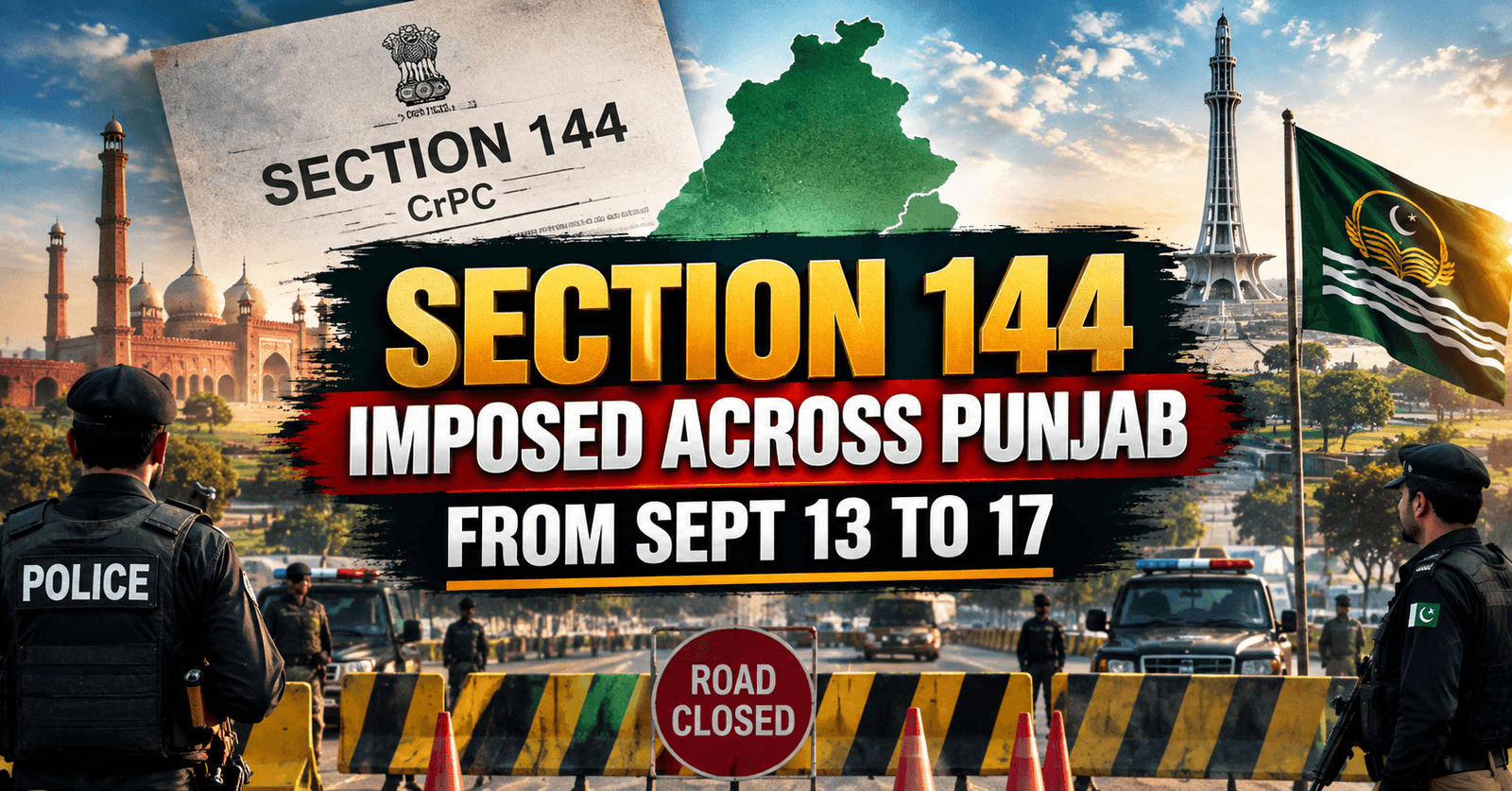
READ MORE: Section 144 imposed across Punjab from Sept 13 to 17
It’s not a conviction, and it’s not automatic. A judge has to be satisfied — usually on the investigating officer’s word — that the person named might leave the country to dodge trial. Non-appearance, as seen here, is typically the trigger that tips a court toward approving it.
The November 26 Protest Case
This case traces back to PTI’s protest in Islamabad on November 26, 2024, which turned violent near Jinnah Avenue. Officials say a vehicle rammed into a crowd, killing several people, including security personnel, while clashes involving tear gas and rubber bullets left many injured.
The Kohsar Police Station FIR — one of several registered after that night — invokes terrorism and rioting provisions. It alleges PTI’s leadership defied Section 144 and led supporters into the capital despite court restrictions, with damage to a police vehicle and Safe City infrastructure among the listed offences.
Timing — Why This Order Lands Now

The passport order isn’t happening in isolation. It arrives as the Islamabad High Court just disposed of a separate petition challenging PTI’s September 27 march, ruling that no party — and no public office-holder — can shut down the capital’s roads for political activity.
CM Afridi has publicly insisted September 27 is a “firm date,” talking about mobilising millions from Peshawar toward Islamabad. Government lawyers, meanwhile, cited 2022 and 2024 footage in court to argue the party’s past marches turned destructive rather than peaceful.
A Pattern, Not an Isolated Order
PTI figures have faced this exact restriction before. Aleema Khan, Imran Khan’s sister, had her passport and CNIC blocked over repeated no-shows in a related protest case, later triggering a contempt warning when authorities delayed restoring her bank account.
- Omar Ayub was separately declared a proclaimed offender with his passport blocked in a Noon Police Station case
- ATC benches issued non-bailable warrants for 13 PTI leaders just days before this latest order
- The overlap of names across multiple FIRs suggests prosecutors are building parallel pressure ahead of the march
What Happens Next
For now, the 24 named leaders cannot travel abroad, and FIA has been instructed to enforce the block “until further orders” — meaning it stays live unless a higher court intervenes or the accused join the investigation.
With the IHC’s ruling on road-blocking now public and September 27 fast approaching, the coming two weeks will likely bring more court activity, not less. PTI’s leadership treats this as legal harassment or a genuine flight-risk finding will shape how the party frames its march to supporters.