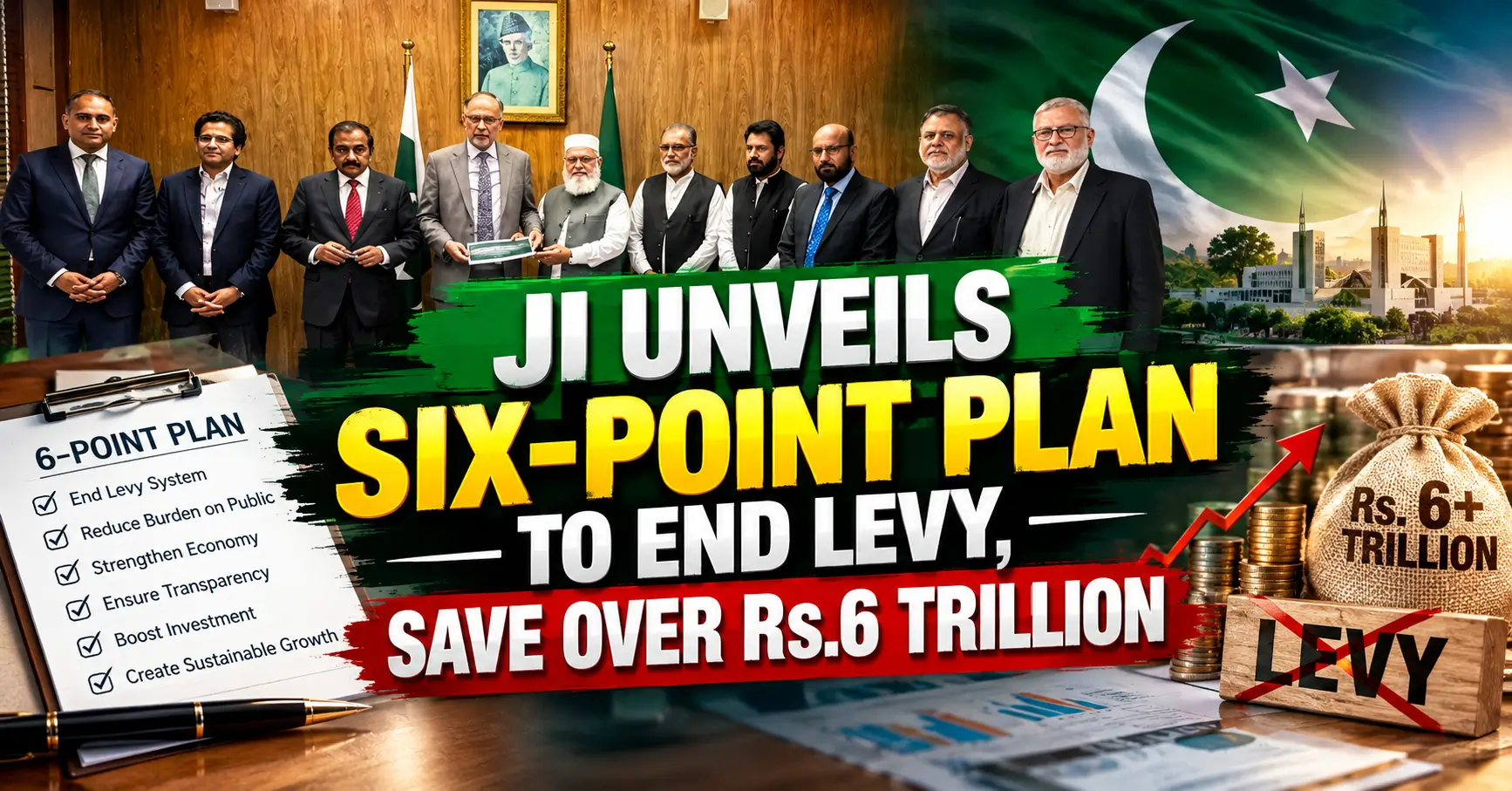

The JI petroleum levy plan has landed on the government’s table with a bold promise: end the Rs80-per-litre levy on petrol and diesel while saving the state more than Rs6 trillion a year. Jamaat-e-Islami says the arithmetic works. The government hasn’t said no — yet.
The proposals came out of the first formal round of talks between JI and a federal negotiating team in Islamabad on September 7, 2026, with a follow-up session held this week. Both sides describe the meetings as serious. Neither has confirmed a firm timeline for implementation.
Six Proposals, One Target: Ending Pakistan’s Petroleum Levy
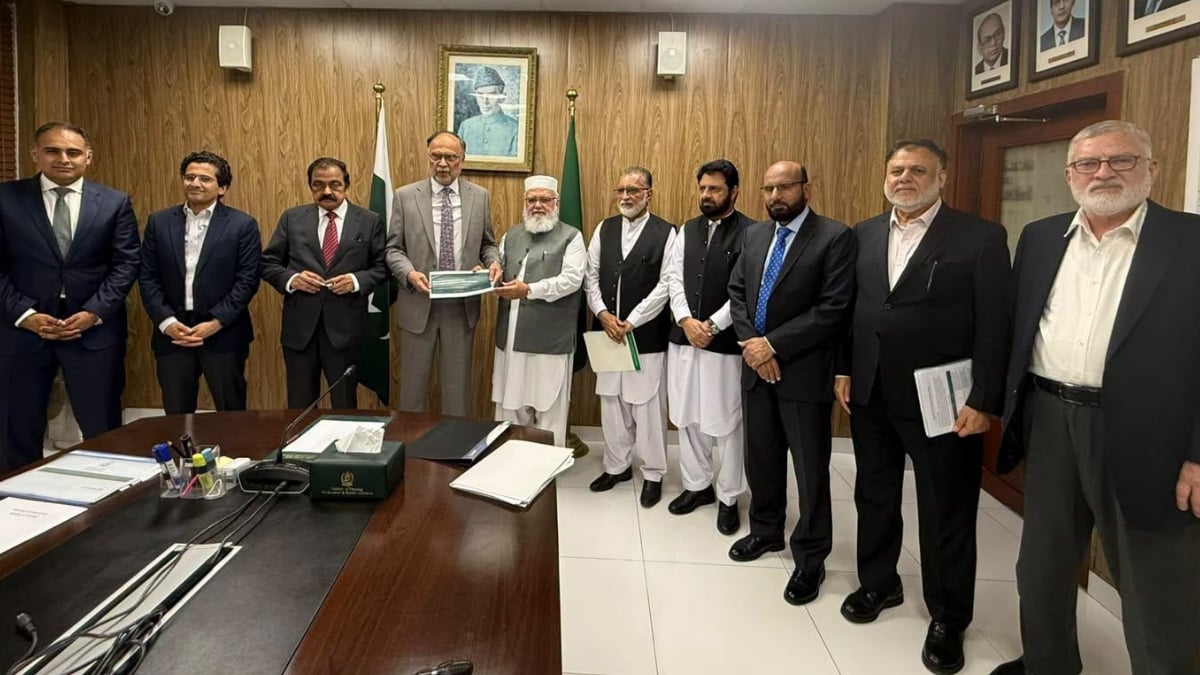
At the centre of the JI petroleum levy plan are six specific fiscal fixes, not vague demands. Naveed Ali Baig, a member of JI’s negotiating team, laid out each one with rupee figures attached — a departure from the party’s earlier, broader complaints about fuel costs.
READ MORE: JI Sit-Ins Against Petroleum Levy Spark Massive Anger
The six measures cover: correcting local oil pricing, trimming refinery margins, lowering government borrowing costs, renegotiating remaining IPP contracts, eliminating unnecessary subsidies, and reforming FBR’s tax collection. Together, JI says, they could offset the entire revenue the levy currently generates.
Breaking Down the Rs.6 Trillion Savings Claim
| Proposal | Estimated Annual Saving |
|---|---|
| Correcting local oil pricing mechanism | Rs120 billion |
| Reducing refinery margin gap (~Rs21/litre) | Rs185 billion |
| Cutting borrowing rate from 11.5% to 9% | Rs1 trillion |
| Renegotiating remaining IPP agreements | Rs400 billion |
| Ending unnecessary subsidies | Rs1.1 trillion |
| Improving FBR tax collection | Rs3.4 trillion |
Add up JI’s own figures and the total clears Rs6 trillion — comfortably more than the roughly Rs1.567 trillion the levy raised over one year, according to JI chief Hafiz Naeemur Rehman. That gap is the crux of the party’s argument: the levy isn’t necessary if the state stops leaking money elsewhere.
Fixing Local Oil Pricing and Refinery Margins

Pakistan consumes about 16 billion litres of petrol and diesel annually, roughly 4 billion litres of which are produced domestically. Baig argues this local output is wrongly priced at international rates, inflating costs unnecessarily.
- Local crude priced as if imported at global rates
- Refinery margin gap of about Rs21 per litre between imported and locally refined fuel
- Combined correction estimated to save Rs305 billion a year
“If Pakistan is buying oil from abroad at $100 a barrel, the locally produced oil should not be valued at the same international price,” Baig said, framing the mismatch as an easy, near-immediate fix requiring no new legislation.
Cutting Borrowing Costs and Renegotiating IPP Deals
Debt servicing eats an enormous share of the federal budget — around Rs8 trillion annually, Baig said, much of it tied to domestic bank borrowing. JI wants the government to push interest rates down from 11.5 percent to 9 percent, a move it says would free up roughly Rs1 trillion a year.
On power producers, JI points to progress already made: agreements with 15 to 20 independent power producers have reportedly been renegotiated, cutting electricity costs by 10 to 15 percent. Extending that renegotiation to remaining IPPs, Baig said, could add another Rs400 billion in annual savings.
Subsidy Cuts and the Tax Base Problem
JI’s remaining two proposals hit the structural side of Pakistan’s fiscal problem — subsidies and tax collection, both flagged repeatedly by international lenders. The party cites World Bank findings on subsidy inefficiency as backing for eliminating “unnecessary” support across sectors, worth an estimated Rs1.1 trillion.
- FBR criticised for relying on automatic collection (withholding tax, customs duties)
- Under-taxed sectors could yield Rs3.4 trillion, per JI’s estimate
- IMF and World Bank have separately flagged the same tax gap
“The FBR has failed,” Baig said bluntly, arguing the agency collects revenue passively rather than pursuing evasion in sectors that remain largely outside the tax net.
The Political Pressure Behind the Numbers

This isn’t purely a technical negotiation. JI has kept sit-ins running in multiple cities while talks continue, and Hafiz Naeemur Rehman has threatened a long march if the government doesn’t respond meaningfully. He has also pointed to a recent Rs12.90 per litre petrol hike as proof the levy structure needs urgent revision.
Planning Minister Ahsan Iqbal has responded more cautiously, saying JI’s proposals were forwarded to relevant ministries for review and should be adopted “without delay if found feasible” — language that commits to evaluation, not action.
What Happens Next in the Levy Talks
JI has reportedly told the government it expects a response within days, not months, and has not called off its protest activity while waiting. A second round of talks has already taken place, though JI itself has said the government “had no answer” to several of its points during that session.
Whether the arithmetic behind the JI petroleum levy plan survives contact with the finance ministry’s own calculations — and IMF conditions attached to Pakistan’s ongoing loan programme — remains the open question. For now, both sides say talks continue.