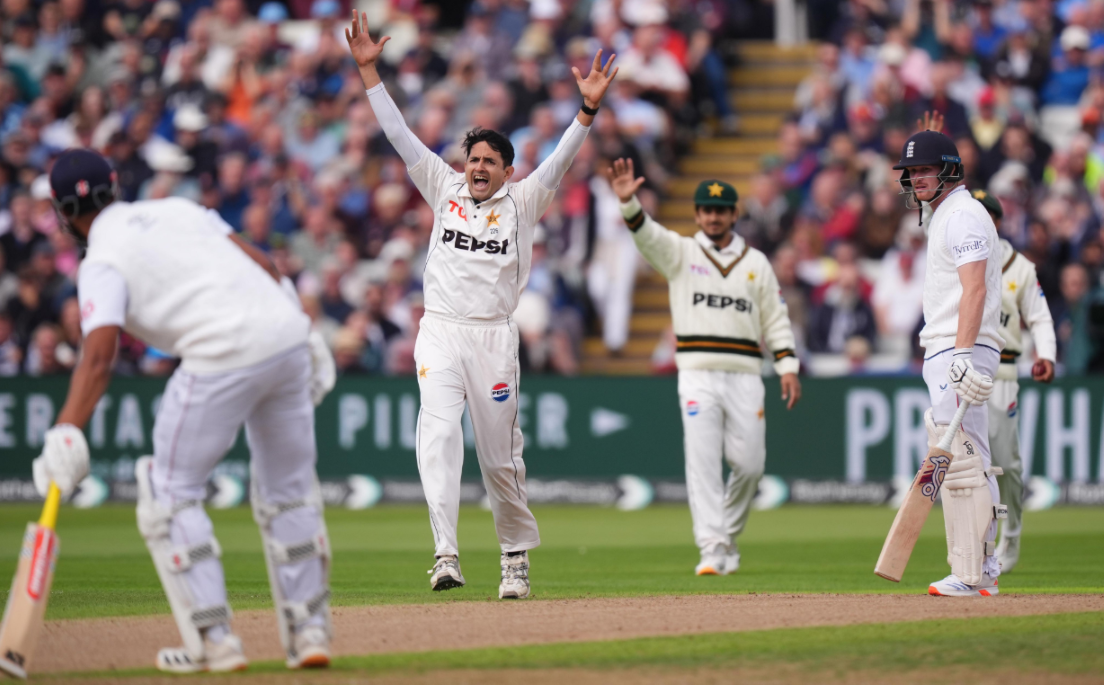

Pakistan cricket fans woke up to yet anotther disappointing scorecard on Wednesday. Their side was bowled out for just 133 on the opening day of the third and final Test against England at Edgbaston. It is a number that is becoming painfully familiar this series. England finished the day firmly on top at 156 for 4.
With the series already lost 2-0, this was supposed to be about pride. But the old problems resurfaced almost immediately.
How Pakistan’s Innings Fell Apart
Pakistan arrived at Edgbaston with a reshuffled squad, hoping fresh faces might spark something different. Three debutants walked out for their first Test appearance. New coaches stood on the sidelines after the team sacked both head coach Sarfaraz Ahmed and assistant Umar Gul following a heavy 194-run defeat at Lord’s.
None of it mattered once play began. England captain Joe Root won the toss and chose to field, banking on overcast conditions to help his pace attack. That decision paid off almost instantly. Recalled batter Saim Ayub was trapped lbw for a duck early on, handing Ollie Robinson his 100th career Test wicket in the process.
From there, the collapse followed a script Pakistan fans have seen far too often lately. Josh Tongue was the standout destroyer, finishing with figures of 4 for 42. Ollie Robinson and Jofra Archer chipped in with three wickets apiece, sharing the damage between them almost evenly. Robinson’s spell was particularly tidy, conceding just 15 runs across 11 overs.
Only Saud Shakeel offered any real resistance with the bat, scoring 43 off 47 balls before eventually falling to Tongue. Everyone else around him struggled to build anything meaningful. Pakistan folded inside just 33.5 overs, their fifth consecutive innings below 200 runs this series, a statistic that says everything about how tough this tour has been.
England’s Reply and the Fight Back From Trouble
Chasing a modest target did not mean England had things entirely their own way either. Pakistan’s bowlers struck early, reducing the hosts to 39 for 3 inside the first hour. For a brief moment, there was a tiny hope that Pakistan might make their way back into the contest.
That hope faded quickly once Emilio Gay and Harry Brook came together at the crease. The pair built a commanding 104 run partnership for the fourth wicket. Batting with a level of comfort that Pakistan’s own top order simply could not match earlier in the day. Both batters brought up well earned half centuries as England steadily pulled away.
England stood at 156 for 4, a lead of 23 runs with six wickets still in the bank. It was a position built almost entirely on the strength of Gay and Brook’s partnership, after their side had looked shaky in the opening exchanges.
Key Numbers and What This Means Going Forward
Some statistics from the day put Pakistan’s struggles into sharper focus. Their total of 133 marks the second lowest score they have ever recorded at Birmingham in Test cricket, behind only their infamous 72 all out back in 2010. It also became the 17th time in history that English pace bowlers have claimed all ten wickets in a Pakistan innings, with three of those instances now having happened specifically at this venue.
For England, individual milestones like Robinson’s wicket count moved him to 102 for his career, and his bowling average of 19.1 now stands as the best figure among any bowler with more than 100 Test wickets.
Joe Root’s personal form remains a talking point too, having now been dismissed lbw for the tenth time in his last thirteen innings, a pattern opposition bowlers will surely keep targeting.
With Pakistan already trailing 2-0 in the series and now facing a first-innings deficit heading into Day 2, the pressure on this reshuffled squad has only intensified. A repeat batting collapse in the second innings could turn this final Test into a formality rather than a fight. For a touring side already dealing with coaching changes and a shaken team structure, protecting the remaining pride from this series now depends heavily on how quickly their batters can find some fight of their own.