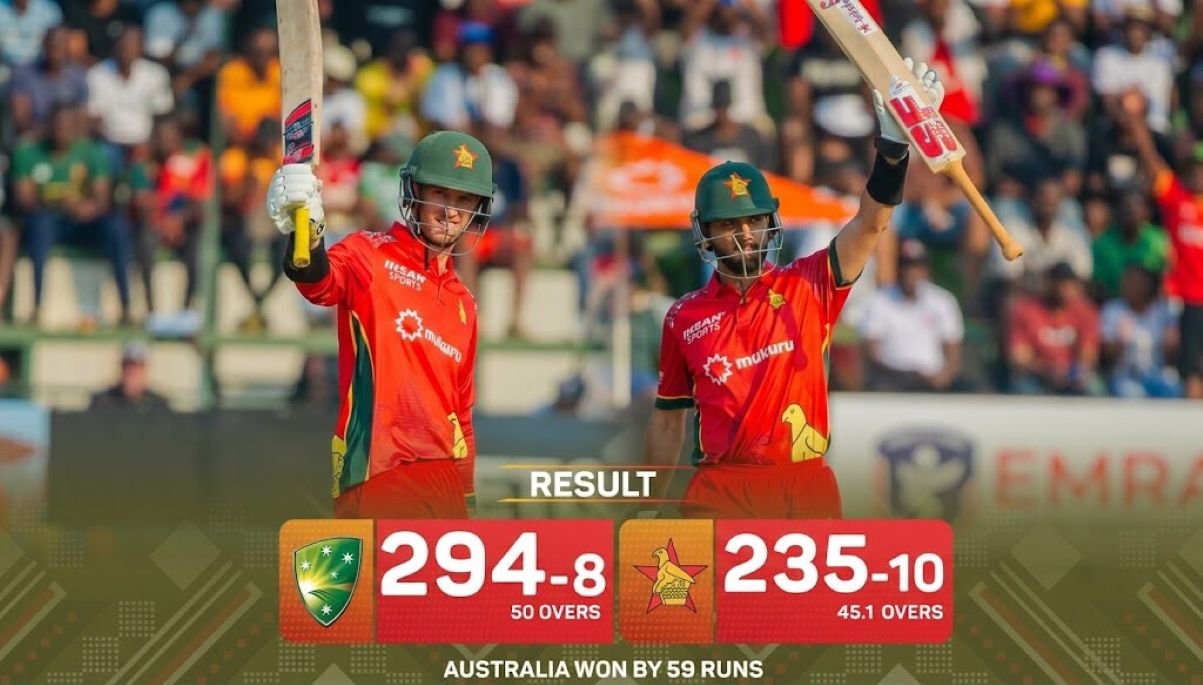

Australia’s road to defending their ODI World Cup title officially began on Tuesday in Harare. The current champions Australia are going to have a three match series against Zimbabwe. It has been twelve years since these two sides last met in an ODI on Zimbabwean soil, and plenty has changed for both teams since then.
Why This Series Matters for Both Sides
Australia captain Mitchell Marsh who is a substitute for Captain Pat Cummins remains the only player still around from that last meeting in Zimbabwe over a decade ago. His side arrived missing two frontline pace options, with neither Pat Cummins nor Mitchell Starc included in the squad, giving other players like Xavier Bartlett and Cameron Green genuine opportunities to press their case for World Cup selection.

Zimbabwe walked into this series with real confidence. They had just beaten Bangladesh 2-1 in their previous ODI series, and memories of stunning Australia at this year’s T20 World Cup remain fresh in everyone’s minds. Regular captain Richard Ngarava missed out through a lower back injury, handing the leadership reins to the experienced Sikandar Raza instead.
Adding extra plan, Zimbabwe recalled veteran wicketkeeper batter Brendan Taylor alongside spinner Graeme Cremer for this series, blending experience with the promising younger talent that has emerged in Zimbabwean cricket recently. Both sides also came into the contest missing key pace bowling options through injury, Ngarava for Zimbabwe and Tanaka Chivanga also sidelined.
How the Match Has Unfolded So Far
Mitchell Marsh won the toss and elected to bat first at Harare Sports Club, a fairly standard decision on what looked like a good batting surface. Travis Head and Marsh opened the innings, looking to set an aggressive tone from the very first over.
Marsh got things moving nicely before eventually falling for 36 off just 28 balls, striking six fours and a six at an impressive strike rate above 128. He was caught by Bennett off Newman Nyamhuri, edging a length ball with a firm drive that carried straight to the fielder positioned at cover. It was a promising cameo cut short, though it did give Zimbabwe’s bowling attack a genuine breakthrough moment early in the innings.
Cooper Connolly also took charge of the innings alongside his partners, working the ball around confidently and finding boundaries at regular intervals. Connolly brought up a well constructed half century, striking the ball cleanly through the covers and over the ropes at key moments to keep Australia’s run rate ticking comfortably above five an over throughout the middle overs.
Josh Inglis also made a mark in this match, and Brad Evans emerged as one of Zimbabwe’s good key bowlers, keeping things tight during a spell that included one crucial wicket. With Australia looking to push toward a competitive total befitting their World Cup preparation mission, both sides fought hard for early momentum throughout the innings.
What Comes Next in the Series
This opening match sets the tone for what promises to be a competitive series stretching across Harare. Two more ODIs follow in quick succession, with the second match scheduled for September 18 and the series finale on September 20, both matches would occur at the same venue.
For Australia, results here matter less than combinations. With the World Cup still a year away, coaches will be watching closely how players like Connolly, Green, and Matt Renshaw perform under pressure. Filling gaps left by senior players in years past has become an ongoing priority as Australia shapes its squad heading toward the title defence.
For Zimbabwe, every match against Australia offers a chance to build belief. Having already stunned bigger opponents this year at the T20 World Cup, Raza’s side will fancy their chances of causing at least one upset across these three matches, particularly with home conditions and a crowd firmly behind them.