
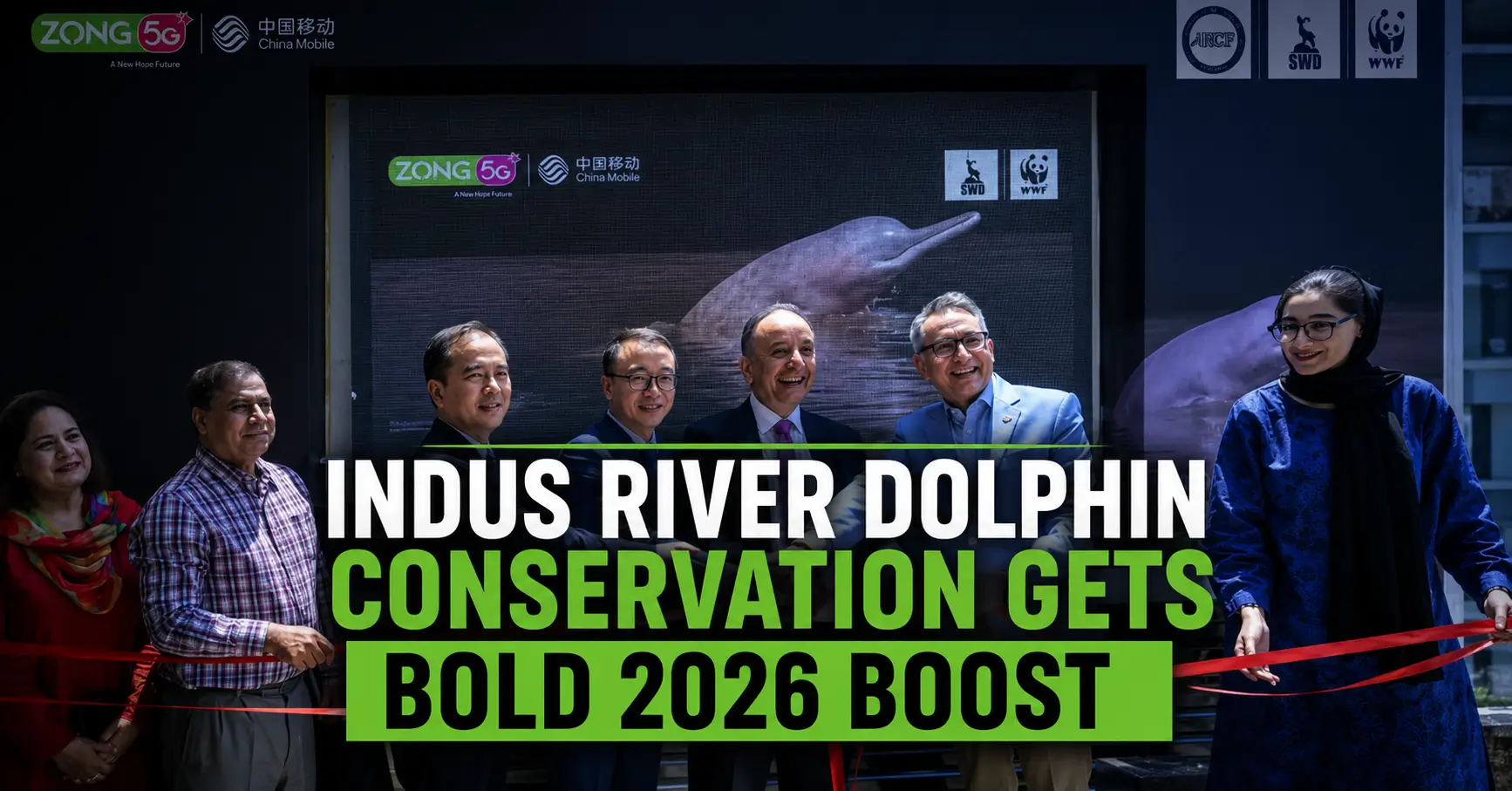

Indus River dolphin conservation just got a new, custom-built vehicle — literally. On July 14, 2026, Zong and WWF-Pakistan unveiled a specialised rescue ambulance in Islamabad, aimed squarely at one of the world’s rarest freshwater mammals.
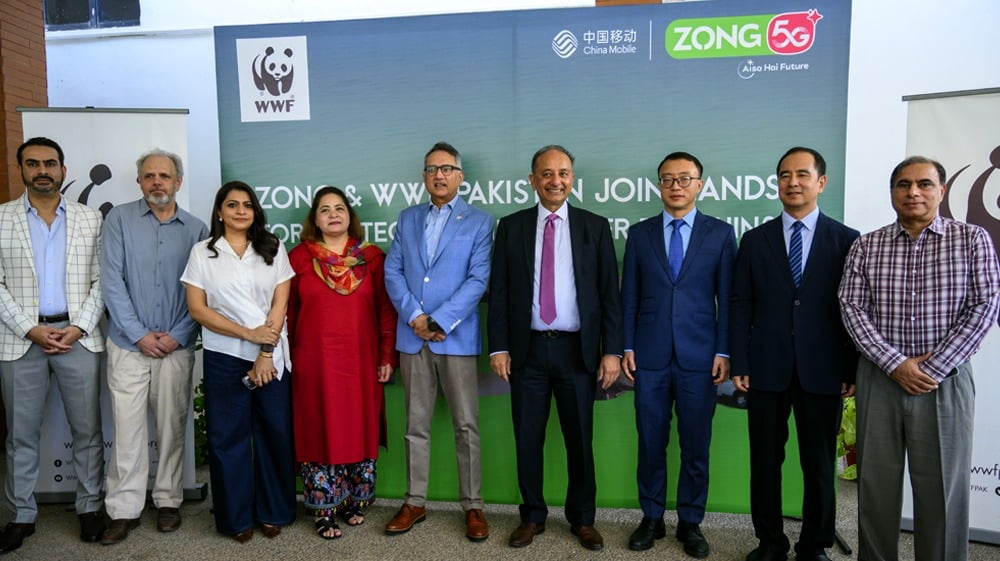
The ceremony, held at WWF-Pakistan Islamabad office, drew Federal Minister for Climate Change and Environmental Coordination Dr. Musadik Malik, Zong Chairman and CEO Huo Junli, WWF-Pakistan Director General Hammad Naqi Khan, and Chinese Embassy representative Yang Guangyuan. It wasn’t a routine photo-op. It marked the formal start of a partnership Zong says will run for years, not months.
- Zong is Pakistan’s leading technology services enterprise, active in the country for nearly two decades.
- The Indus River dolphin (Platanista minor) is found nowhere else on Earth outside the Indus system.
- The species is listed as endangered, and remains one of the most threatened cetaceans globally.
What the New Dolphin Rescue Ambulance Actually Does

At the centre of this Indus River dolphin conservation drive sits a single, purpose-built vehicle: the Indus Dolphin Rescue and Mobile Awareness Ambulance. It’s not a converted van. It’s engineered specifically for an animal that can weigh over 100 kilograms and cannot survive long outside water.
The unit will patrol the stretch between the Guddu and Sukkur barrages in Sindh — home to the single largest concentration of Indus dolphins anywhere. That corridor sees repeated strandings whenever canal gates close and water levels drop unexpectedly.
Key functions of the mobile unit include:
- Faster detection and monitoring of dolphins stranded in irrigation canals
- Safe, low-stress translocation back to the main river channel
- Direct engagement with more than 1,500 fisherfolk and riverine community members as frontline reporters
- Delivery of roughly 50 awareness sessions across remote riverside settlements
Why the Indus River Dolphin Keeps Ending Up in Canals
To understand why this ambulance matters, you need to understand the plumbing. Six barrages — starting with Sukkur in 1932, followed by Guddu, Kotri, Taunsa, Chashma and Jinnah — now break the Indus into disconnected pockets. Dolphins that once ranged over 3,400 kilometres of river now survive in roughly a fifth of that stretch.
READ MORE: EWG Project Empowers Over 1 Million Women in Pakistan
Dolphins routinely swim through barrage gates into irrigation canals while chasing fish. When maintenance crews shut those gates, water levels collapse fast, trapping the animals in shrinking pools with no way back.
Left alone, most die within days. Blind and reliant entirely on echolocation, the species is also vulnerable to fishing-net entanglement and industrial pollution along the river.
A Population Recovery Decades in the Making
Here’s where the story gets genuinely encouraging — and it’s the context most coverage of this launch has skipped entirely. In 1960, Pakistani authorities believed the Indus dolphin was already extinct. A small group of fisherfolk proved otherwise, spotting survivors that researchers later confirmed numbered around 150.
The rebound since has been steady, if slow:
- 617 dolphins counted in a 2001 Sindh Wildlife Department survey
- Roughly 1,800 by 2017, according to WWF assessments
- An estimated 2,000–2,100 individuals today, per WWF-Pakistan and Sindh Wildlife Department figures
WWF-Pakistan and provincial wildlife departments have run a joint rescue programme since 1992, and have safely relocated more than 200 stranded dolphins over that period. It’s one of the rare wildlife recovery stories out of South Asia with numbers to back it up.
Officials and Experts Weigh In

Dr. Musadik Malik framed the dolphin’s survival as a lesson in resilience, noting the species predates the civilisations that grew up along the Indus. “Though blind, it reminds us that living in harmony with nature does not always require sight,” he said at the launch.
Zong’s Chief Regulatory Officer, Kamran Ali, tied the initiative to the company’s broader sustainability commitments, calling the ambulance a concrete step rooted in the company’s long presence in Pakistan.
WWF-Pakistan’s Hammad Naqi Khan described the roughly 2,000-strong population as a genuine conservation success story, while stressing that decades of work with Sindh and Punjab wildlife departments made it possible.
Independent conservationists caution against declaring victory too early. Population figures still hinge on periodic surveys rather than continuous monitoring, and threats like canal stranding, bycatch, and shrinking freshwater flows haven’t gone away — they’ve simply been managed.
What This Partnership Means Going Forward
Corporate-funded conservation in Pakistan has a mixed track record, often heavy on launch events and light on follow-through. This deal’s real test will be whether the ambulance stays operational, staffed, and funded well past its inauguration date.
For now, the metrics are concrete: one dedicated vehicle, a defined patrol corridor, over 1,500 community partners, and roughly 50 planned awareness sessions. Those numbers translate into fewer dolphin deaths in the Guddu-Sukkur corridor will only become clear over the next few flood and canal-maintenance seasons — the periods when strandings spike.