
Cricket is about to get a new home in the Gulf. Pakistan and Saudi Arabia have signed off on plans for an international-standard stadium in Jeddah, marking the first formal partnership of its kind between the two nations’ cricket authorities.
The Pakistan Cricket Board (PCB) and the Saudi Arabian Cricket Federation (SACF) inked the agreement on Thursday, July 2, during a ceremony that brought together officials from both boards. It’s a moment years in the making, and one that signals Riyadh’s growing ambitions in a sport it has quietly been building toward since 2020.
Who Signed the Deal and Where

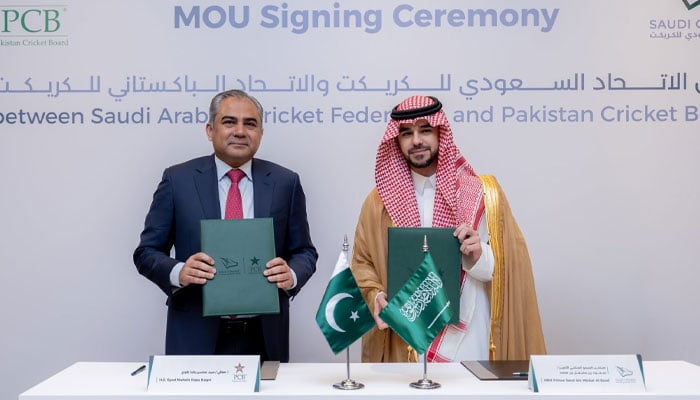
PCB Chairman Mohsin Naqvi and SACF Chairman Prince Saud bin Mishal Al Saud put pen to paper on the Memorandum of Understanding in Jeddah.
Naqvi, whose full name is Syed Mohsin Raza Naqvi, exchanged the signed documents with the Saudi federation president during an official ceremony that followed weeks of high-level discussions between cricket officials from both sides.
The PCB described it as historic in its own right, noting on social media that this marks the first time a strategic agreement of this nature has been signed between the two boards for the construction of a cricket stadium.
Naqvi’s trip to Saudi Arabia wasn’t solely about cricket. He is also Pakistan’s interior minister, and he arrived in Riyadh earlier in the week for talks with Saudi leadership covering security, counter-narcotics efforts, and broader institutional cooperation.
A separate security MoU was signed alongside the cricket deal, with Naqvi meeting his Saudi counterpart, Interior Minister Prince Abdulaziz bin Saud bin Naif, to reaffirm cooperation between the two countries.
What the Stadium Will Include
This isn’t a bare-bones announcement. Under the partnership, the PCB will oversee development of the stadium, which will be built to standards set by the International Cricket Council.
The venue is meant to be equipped in line with every ICC requirement, positioning Saudi Arabia to eventually host international matches and major tournaments on home soil.
The scope goes well beyond bricks and mortar. Both boards will collaborate on wider infrastructure development, technical expertise, stadium planning, and operational standards to support cricket’s growth across the Kingdom more broadly.
That includes venue design and operational management, all aimed at ensuring the facility meets global cricketing benchmarks rather than just regional ones.
Cricket’s Quiet Rise in the Kingdom
Saudi Arabia isn’t new to cricket, even if its stadium ambitions are. The sport first arrived in the country in the early 1960s, brought by expatriate workers from Pakistan and India, and local clubs slowly took root from there.
The Kingdom joined the ICC as an affiliate member in 2003 and was upgraded to associate membership in 2016.
The real acceleration, though, came after the Saudi Arabian Cricket Federation was established in 2020.
Since then, the federation has rolled out a series of programmes to popularise the game domestically and sharpen its national teams for international competition. A Jeddah stadium would be the clearest physical marker yet of that push.
The Vision 2030 Connection

None of this sits in isolation from Saudi Arabia’s broader economic playbook. The project is expected to feed directly into the objectives of Saudi Vision 2030 by driving investment in sport, expanding sports tourism, and encouraging greater public participation in athletics.
Cricket joins football, golf, boxing, and Formula 1 on the list of sports Riyadh has been actively courting as part of that diversification drive.
READ MORE: Arslan Ash Wins 8th EVO Title at EVO 2026 Las Vegas
This also isn’t the first time Naqvi has floated Pakistani support for Saudi cricket. He offered comprehensive backing for cricket development and stadium construction back in December 2024, during an earlier visit to the Kingdom.
At the time, he invited his Saudi counterpart to Pakistan to watch Champions Trophy matches and proposed a player exchange programme under which emerging Saudi cricketers could train in Pakistan. Thursday’s signing effectively turns that earlier offer into a documented commitment.
What the Two Chairmen Said

Both sides leaned into the language of legacy-building rather than just logistics. Prince Saud bin Mishal Al Saud framed the agreement as reaching further than a single building, saying the partnership is about constructing a long-term future for cricket in Saudi Arabia through shared ambition, trusted partnerships and sustainable investment.
Naqvi, for his part, said the PCB was honoured to contribute to Saudi Arabia’s cricket journey, adding that the collaboration would strengthen the game, connect cricketing communities, and leave a lasting legacy.
In separate remarks, he called the agreement a milestone for the promotion of cricket in the Kingdom and said the partnership would tie cricket circles together in a way that endures.
Why This Matters Beyond the Pitch
A cricket stadium in Jeddah would do more than give Saudi Arabia a venue. It would give the ICC another candidate host in the Gulf region at a time when the sport is actively hunting for new markets, sponsorship pools, and broadcast audiences beyond its traditional strongholds of South Asia, Australia, and England.
For Pakistan, the arrangement extends its footprint as a technical partner rather than just a playing nation, an image the PCB has been keen to cultivate as it rebuilds credibility after a turbulent stretch of hosting and governance controversies at home.
There’s also a security and diplomatic layer running underneath the sport. The cricket MoU landed alongside a formal security cooperation agreement between Islamabad and Riyadh, reflecting how sports infrastructure has become one more thread in a broader relationship spanning defence, investment, and institutional ties.
No construction timeline, budget figure, or seating capacity has been made public yet. Those details will matter once ground actually breaks. For now, the agreement exists on paper — but it’s paper that both boards are treating as the start of something bigger.