
Pakistan’s Cybercrime Authority Investigates Fake Online Campaign Against easypaisa Bank
A coordinated wave of misleading content on Pakistani social media has triggered a formal government investigation — and the target was one of the country’s most widely used digital banks.
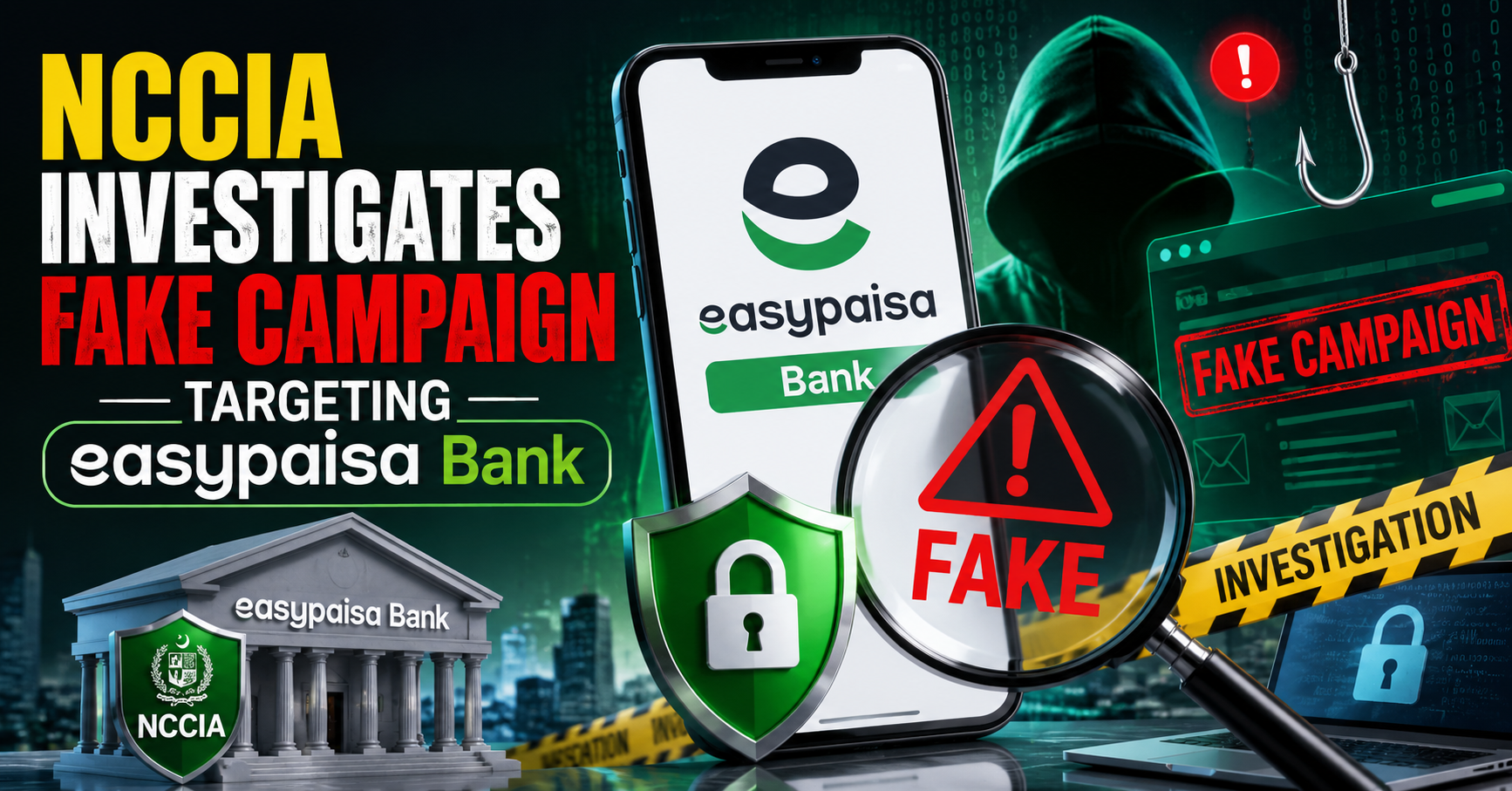
Pakistan’s National Cyber Crime Investigation Agency (NCCIA) has initiated an inquiry into the alleged spread of false and misleading information targeting easypaisa Bank Limited across social media and digital platforms over the past two weeks. The case raises urgent questions about accountability, financial disinformation, and how digital platforms are being weaponised to destabilise public trust in regulated institutions.
What Actually Happened — The Facts
Before examining the broader implications, it is worth establishing precisely what is known and what remains under investigation.
Numerous complaints were received over the past two weeks regarding online posts and content targeting easypaisa, including claims about the bank’s financial condition and operational activities that were described as exaggerated and misleading.
The complaint alleges that certain influencers and digital content creators circulated exaggerated and misleading claims regarding the bank’s financial stability and operational continuity, encouraging customers to withdraw funds and creating unnecessary panic.
At this stage, the specific identities of those accused have not been publicly disclosed. The investigation is ongoing and no charges have been formally filed. What has been confirmed is that the NCCIA treated the matter seriously enough to assign it to a senior officer and open proceedings under federal law.
Who Filed the Case and Under What Authority
The complaint was filed by Naresh Kumar Aruwani, Head of Country Litigation at easypaisa Bank Limited, seeking legal action against individuals accused of creating and amplifying content aimed at undermining public confidence in the bank.
According to sources, the inquiry has been assigned to a Senior Officer at NCCIA, who has initiated proceedings under the Prevention of Electronic Crimes Act, 2016 (PECA) to identify and proceed against all persons involved in the creation and dissemination of the content.
What Is PECA 2016?

PECA — the Prevention of Electronic Crimes Act — is Pakistan’s primary legal instrument for prosecuting digital offences. It covers a broad range of crimes including cyberstalking, data breaches, identity fraud, and critically, the intentional publication of false information online that causes harm to individuals or institutions. Penalties under the Act can include fines and imprisonment, depending on the nature and severity of the offence.
The law applies not just to original content creators but potentially to those who knowingly share or amplify harmful false material — a scope that could, in principle, extend to influencers who redistributed the claims without verifying them.
Easypaisa’s Position: What the Bank Says
Easypaisa Bank Limited strongly denied the allegations, calling the claims false, baseless, and fake news, and reaffirmed that its services remain fully operational and customer funds are secure.
Aruwani stated that the deliberate spread of false information against a regulated financial institution not only harms the institution but also risks undermining confidence in Pakistan’s broader banking ecosystem.
The bank has also issued guidance directly to its users: easypaisa urged customers to rely only on official information issued by the bank and authenticated regulatory announcements, while pledging to continue pursuing legal action against those responsible for spreading misinformation.
It is worth noting that easypaisa’s denial is unambiguous and public. Whether the underlying concerns that fed the social media panic had any basis — however small — is something the NCCIA inquiry may or may not address directly.
Putting easypaisa in Context: Why This Case Matters Globally
To understand the stakes here, some background on easypaisa is necessary.
As Pakistan’s first mobile wallet, launched in 2008, easypaisa has grown into the country’s leading digital bank, regulated by the State Bank of Pakistan, serving over 60 million registered users nationwide.
60 million users is not a small figure by any standard. For context, that is roughly the population of the United Kingdom. A disinformation campaign capable of triggering even a fraction of those users to withdraw funds simultaneously could theoretically cause a liquidity shock — a so-called “bank run” — with real economic consequences.
In the finance apps category, easypaisa remains the most downloaded app in Pakistan with 12.1 million downloads, which underscores how deeply embedded it is in everyday financial life, particularly for users in smaller cities and rural areas who may have limited access to traditional banking.
This is not merely a story about one company’s reputation. It is a case study in how digital misinformation, when targeted at a critical financial institution, can become a matter of systemic economic risk.
A Pattern of Disinformation Targeting easypaisa

This NCCIA inquiry does not exist in isolation. There is a documented history of false narratives circulating about easypaisa on Pakistani social media.
In December 2025, multiple Facebook users circulated posts claiming easypaisa had announced a “Birthday Fund” worth PKR 25,000, which anyone could receive by clicking on a link — a claim subsequently debunked as a scam website. Fact-checkers found no such announcement on easypaisa’s official channels and concluded the posts contained links to fraudulent websites.
READ MORE! SECP Barwaqt and UdharPaisa Notice: How to Settle Your Loan Now
That earlier episode was a scam designed to extract money from users. The current case appears to be the opposite in mechanism — content designed not to steal from users directly, but to frighten them into destabilising the bank itself. Both, however, exploit the same vulnerability: the tendency of social media users to share alarming financial content before verifying it.
The Role of Influencers in Financial Misinformation
The NCCIA complaint specifically names influencers and digital content creators as alleged participants in the campaign. This is significant.
In Pakistan, as in many countries, social media influencers have accumulated substantial audiences and, with them, considerable power to shape public perception. When an influencer with hundreds of thousands of followers posts content suggesting a bank is financially unstable, the impact on user behaviour can be immediate and measurable — even if the claim is entirely false.
The question of whether influencers bear legal responsibility for financial disinformation they spread — even without personal financial gain — is one that regulators globally are wrestling with. The NCCIA’s use of PECA in this case suggests Pakistan is taking a more assertive position.
What the NCCIA’s Broader Track Record Shows
The NCCIA has been increasingly active in pursuing digital financial crime. From April to July 2025, the agency reported 50,500 cybercrime complaints, filed 457 FIRs, and made 690 arrests — a significant rise in cybercrime activity across Pakistan.
The NCCIA has also proposed joint operations, rapid reporting frameworks, and enhanced evidence-gathering mechanisms to tackle rising online financial fraud and protect public trust.
This institutional momentum matters. The easypaisa inquiry is not a one-off response; it fits within a deliberate regulatory strategy to treat digital financial crime — including disinformation — as a serious enforcement priority.
Key Facts at a Glance
| Detail | Information |
|---|---|
| Agency | National Cyber Crime Investigation Agency (NCCIA) |
| Bank Targeted | easypaisa Bank Limited |
| Complaint Filed By | Naresh Kumar Aruwani, Head of Country Litigation |
| Legal Framework | Prevention of Electronic Crimes Act (PECA) 2016 |
| Alleged Action | Spread of false content about bank’s financial stability |
| Bank’s Response | Denied all claims; confirmed full operational status |
| easypaisa Users | 60+ million registered users |
| Regulated By | State Bank of Pakistan |
| Founded | 2008 (Pakistan’s first mobile wallet) |
People Also Ask
What is the NCCIA inquiry into easypaisa about?
The NCCIA has opened a formal investigation into a social media campaign that allegedly spread false information about easypaisa Bank Limited’s financial stability, causing unnecessary public alarm.
Is easypaisa Bank in financial trouble?
No. easypaisa Bank has categorically denied any financial difficulties, confirmed full operational continuity, and stated that all customer funds remain secure. The bank is regulated by the State Bank of Pakistan.
What law is the NCCIA using in the easypaisa case?
The inquiry is being conducted under PECA 2016, Pakistan’s primary digital crimes legislation, which covers the spread of harmful false information online.
Can influencers face legal action for sharing false content about banks?
Under PECA 2016, individuals who create or knowingly distribute false information that damages a regulated institution can face legal consequences. The investigation’s scope reportedly includes content amplifiers, not just original creators.
Has this happened to easypaisa before?
Yes. In December 2025, a separate scam involving fake easypaisa “Birthday Fund” posts was debunked by fact-checkers. The bank has faced a recurring pattern of false narratives circulating on social media.
The Verdict So Far
The NCCIA’s formal inquiry into the NCCIA easypaisa misinformation campaign is still in its early stages. No arrests have been announced, no charges formally filed, and the identities of those responsible remain undisclosed pending investigation.
What is clear is this: easypaisa Bank Limited remains financially stable and fully operational, the matter is being treated as a federal cybercrime case, and Pakistan’s regulatory apparatus appears committed to pursuing those responsible.
For readers elsewhere in the world, this case offers a useful lens on a challenge that is by no means unique to Pakistan — the use of social media to run coordinated disinformation campaigns against financial institutions. The methods may vary, but the potential for real economic harm is universal.
Factfile will continue to monitor developments in this inquiry as they emerge. If new information becomes available, this article will be updated accordingly.