
Crude Oil Tops $105 Again as Trump Calls Iran’s Ceasefire Offer “Totally Unacceptable”
Markets swung sharply on Monday after the U.S. president publicly dismissed Tehran’s counteroffer, sending both Brent and WTI into their sharpest single-day rally in weeks.

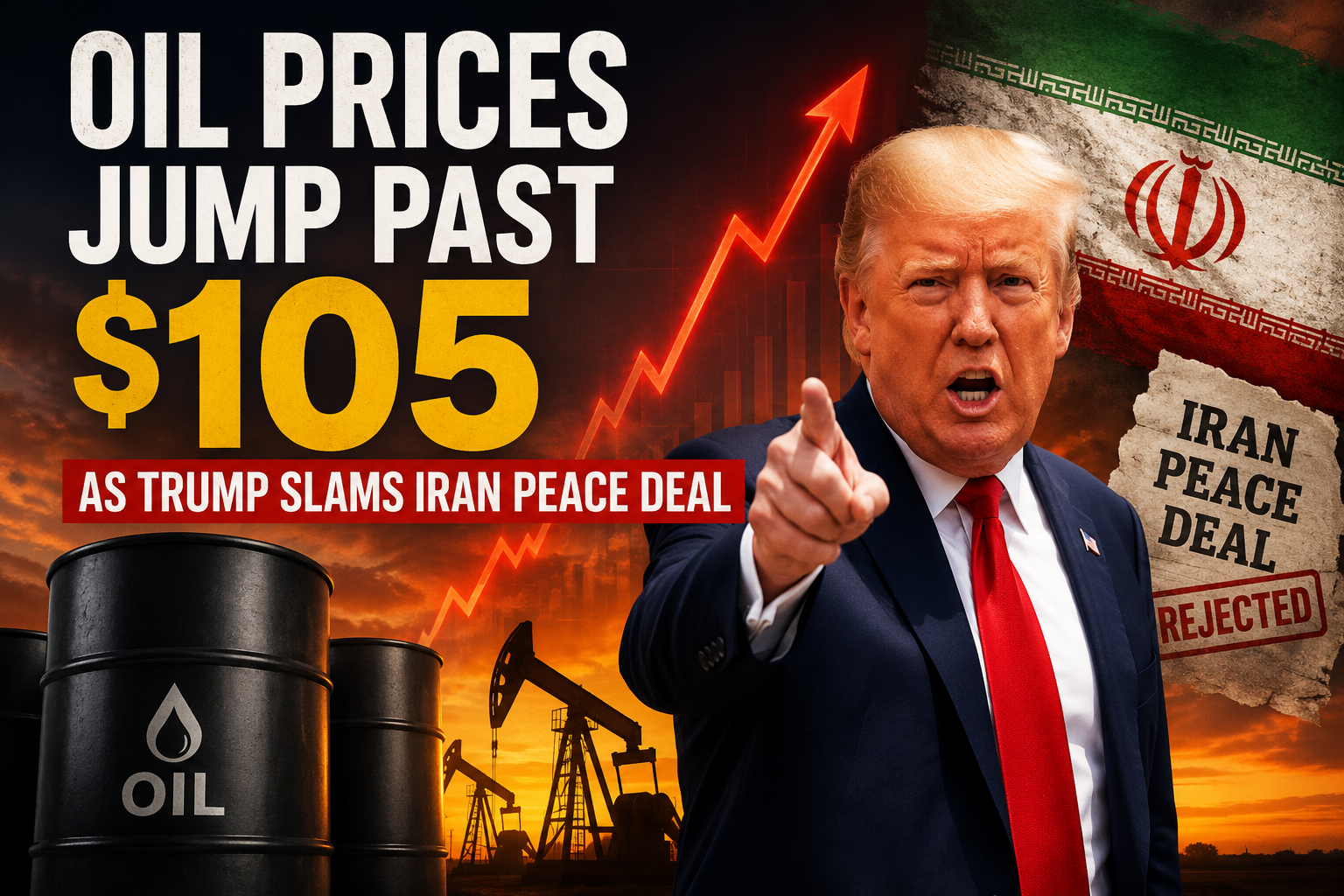
Oil prices jumped sharply on Monday morning, with the international benchmark Brent crude breaking back above $105 a barrel and West Texas Intermediate briefly touching $100.20 — its highest level in days. The catalyst was blunt and swift: U.S. President Donald Trump took to Truth Social on Sunday night and declared Iran’s latest response to an American peace proposal “TOTALLY UNACCEPTABLE,” instantly reversing the brief optimism that had pulled prices lower last week.
The move wiped out nearly all the gains made by hopes of a diplomatic resolution, pushing both major crude benchmarks up nearly 5% in Asian early trade. Energy markets, already on edge for more than two months since the conflict began on February 28, now face renewed uncertainty over whether the Strait of Hormuz — one of the world’s most critical oil chokepoints — will remain largely shut.
What Iran’s Proposal Actually Said
Iran’s response, submitted Sunday morning and broadcast on state television, was not a flat-out rejection of the U.S. framework. Tehran said it was open to ending the war on all fronts, including in Lebanon where Israeli forces are engaged with Iran-backed Hezbollah. But the proposal came with significant conditions that immediately raised red flags in Washington.
- Full lifting of U.S. sanctions on Iran
- An end to the U.S. naval blockade and guarantee of no further strikes
- Compensation for war damages suffered by Iran
- Iranian sovereignty and management of the Strait of Hormuz
- Removal of the U.S.-imposed ban on Iranian oil exports
That last demand — Iranian control over the Strait — was a non-starter for Washington and its regional allies. The narrow waterway normally carries roughly one-fifth of the world’s oil and liquefied natural gas shipments. U.S.-allied Gulf states made it immediately clear that any arrangement granting Tehran a toll or management role over the Strait would be entirely unacceptable. Within hours, Trump posted his now-viral rejection online.
“I have just read the response from Iran’s so-called ‘Representatives.’ I don’t like it — TOTALLY UNACCEPTABLE! Thank you for your attention to this matter.”— President Donald J. Trump, Truth Social, May 10, 2026
Why Oil Prices Are Reacting So Violently
The oil market has been in a state of near-constant whiplash since late February. Prices have climbed roughly 45% since the conflict began, driven primarily by the effective closure of the Strait of Hormuz and a series of Iranian attacks on key energy infrastructure across the Middle East.
Before the war, around 25 million barrels of oil per day — plus enormous volumes of LNG — passed through the Strait each day. That flow has been reduced to a trickle. Re-routing oil around the Arabian Peninsula adds days of sailing time and significant costs, and the shipping industry has been struggling to absorb the disruption.
Analyst note: Ipek Ozkardeskaya, senior analyst at Swissquote Bank, warns that in a worst-case scenario, oil could spike as high as $140 per barrel — though she expects demand destruction to act as a ceiling around the $120 mark. A credible peace deal, she says, could send Brent back below $80 almost immediately.
The market has essentially become a “geopolitical headline machine,” as Priyanka Sachdeva of Phillip Nova put it. Every social media post from Trump or statement from Tehran moves prices by several dollars in minutes. That kind of volatility is deeply unusual even by the standards of a commodity market known for sharp swings.
The Strait of Hormuz: Still the Central Pressure Point
Drone attacks resume despite ceasefire talk
Even as diplomacy was supposedly underway, the Gulf did not go quiet. On Sunday alone, the United Arab Emirates said it intercepted two drones originating from Iran, while Qatar condemned a drone strike that hit a cargo ship in its territorial waters. Kuwait reported dealing with “hostile drones” that had entered its airspace. These incidents underscore just how fragile the current situation is.
The ceasefire announced on April 16 was never fully observed. In southern Lebanon, clashes between Israeli forces and Hezbollah fighters have continued intermittently, and Israeli Prime Minister Benjamin Netanyahu was blunt on Sunday in a CBS “60 Minutes” interview: the war, he said, was “not over” because there was “more work to be done” on dismantling Iran’s enrichment sites and removing stockpiles of enriched uranium. He did not rule out using force.
Saudi Aramco CEO sounds the alarm
Saudi Aramco’s chief executive Amin Nasser added to the concern on Sunday, warning that the longer shipping through the Strait remains disrupted, the longer the global oil supply will feel the strain — potentially stretching well into next year. The world’s largest oil exporter has been quietly re-routing shipments around the Cape of Good Hope, but the delays and added costs are beginning to bite.
All Eyes on Trump’s Beijing Visit
With direct U.S.-Iran diplomacy now effectively stalled, the market’s attention is quickly shifting to President Trump’s planned trip to Beijing on Wednesday, where talks with Chinese President Xi Jinping are expected to cover a wide range of issues — including the Iran situation.
Trump has been pressing China behind the scenes to use its considerable economic leverage over Tehran to push Iran toward a more palatable deal. China is Iran’s largest oil customer and has maintained diplomatic ties throughout the conflict. Whether Beijing is willing to apply meaningful pressure — and whether Tehran would listen — remains the central unknown for energy traders right now.
If the Beijing talks produce even a hint of Chinese mediation, analysts expect oil to pull back sharply. If they come up empty, or if Trump’s impatience leads to renewed military action, the path toward $120 and beyond becomes considerably more plausible.
What Could Happen Next?
- Peace deal scenario: A credible, verified agreement could send Brent back below $80 a barrel in days, analysts say — possibly to $50–60 in the longer term as U.S. “drill, baby, drill” supply comes online.
- Prolonged stalemate: Prices likely hold between $100 and $110, with occasional spikes on headline risk.
- Escalation scenario: Renewed strikes on Iranian nuclear or oil infrastructure could push Brent toward $130–$140, triggering major demand destruction across Asia and Europe.
- Chinese mediation success: Markets view this as low probability but high reward — any confirmed Beijing involvement in brokering talks could trigger a significant relief rally.
How This Is Hitting Everyday Consumers
India, one of Asia’s largest oil importers, is already feeling the squeeze. Inflation data released this week showed energy prices accelerating, and at least one Indian analyst noted that the country’s fuel subsidy bill is growing rapidly as the government tries to shield consumers from the full impact of global crude prices.
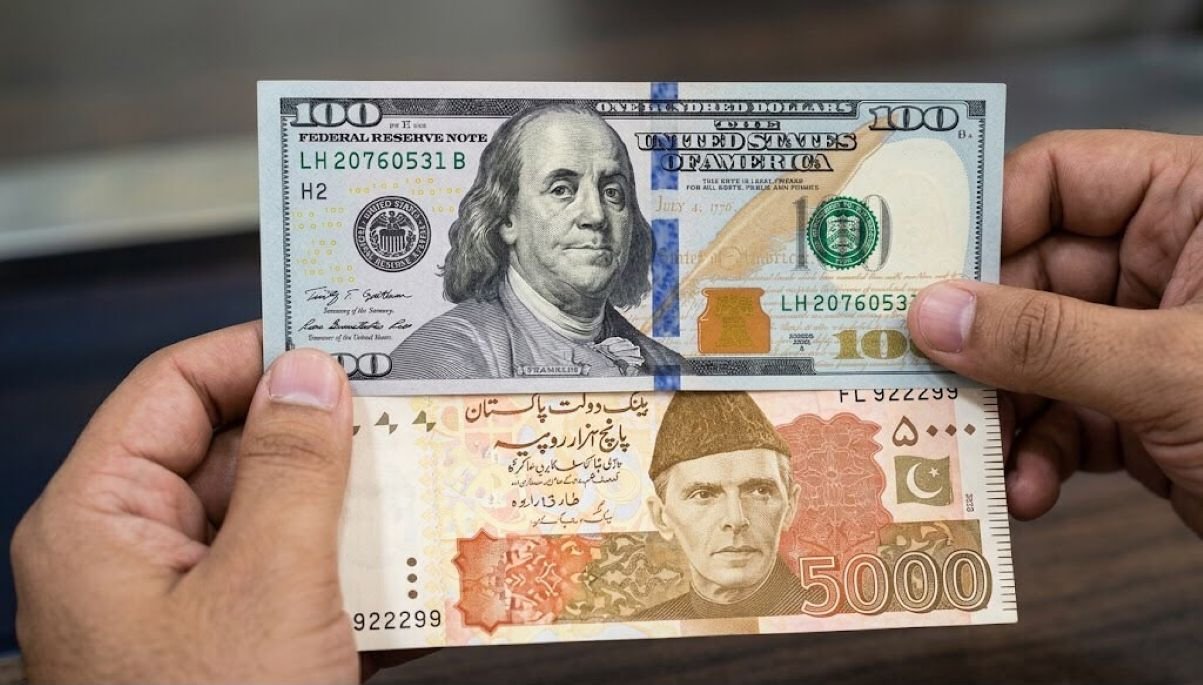
Pakistan, meanwhile, faces a similar pressure. With the rupee already under stress and import costs rising, higher oil prices translate almost directly into elevated fuel and electricity bills for households and businesses. The government has so far kept prices partially administered, but fiscal room is narrowing.
Final Thought!
Oil prices are once again a hostage to geopolitics. Trump’s swift and public rejection of Iran’s peace counterproposal has reset market expectations that were cautiously turning optimistic last week.
READ MORE: Oil Prices Cross $119 a Barrel — Is This Another Energy Nightmare?
With the Strait of Hormuz still largely closed, drone attacks resuming around the direct talks now in doubt, the path to lower crude prices runs through Beijing — and even that is uncertain. Traders, governments, and consumers worldwide are watching Wednesday’s Trump-Xi meeting very closely indeed.