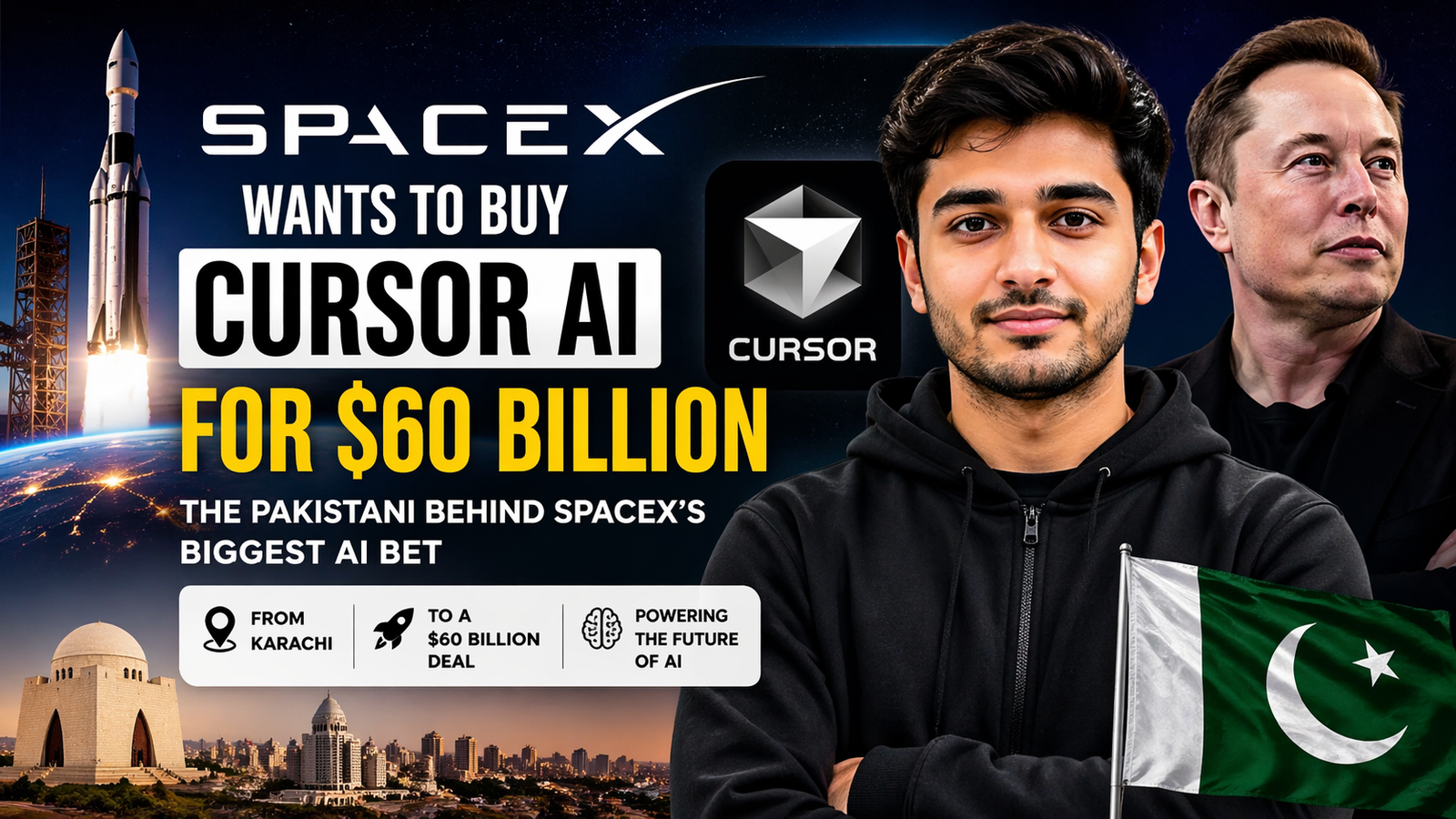
On Tuesday, April 22, 2026, Elon Musk’s SpaceX posted a quiet but bombshell announcement on X — it had secured the option to acquire Cursor, one of Silicon Valley’s hottest AI coding startups, for a staggering $60 billion later this year. If the acquisition doesn’t close, SpaceX will still pay $10 billion for the joint work completed during their partnership. At the center of this story is a 26-year-old from Karachi — Sualeh Asif, one of Cursor’s four co-founders, who went from competing in the International Math Olympiad for Pakistan to becoming a billionaire at one of the world’s most valuable private companies.
The SpaceX Cursor AI acquisition marks a defining moment — not just for the AI industry, but for how the world sees talent coming out of Pakistan.
What Exactly Is Cursor — And Why Does SpaceX Want It?
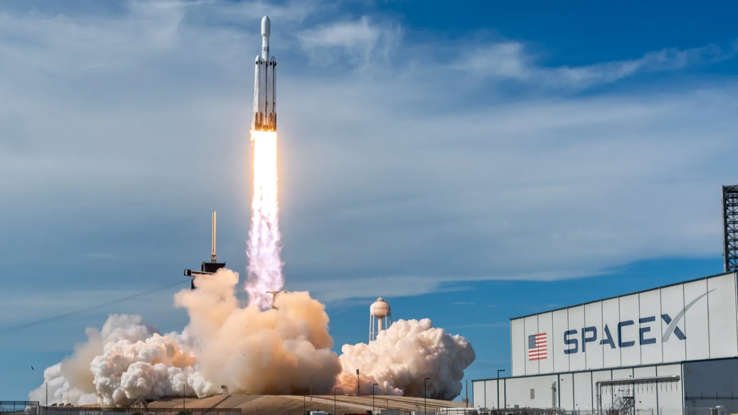
Cursor is an AI-powered code editing tool built by Anysphere, a San Francisco-based startup founded in 2022. The product lets software engineers write, debug, and refactor code with the help of artificial intelligence — think of it as a smart coding assistant that genuinely understands your codebase, not just autocomplete.
The numbers behind Cursor are difficult to ignore. The startup has crossed $1 billion in annualised recurring revenue, is used daily by more than one million developers, and has been adopted by 67 percent of Fortune 500 companies. Every single day, Cursor’s tools generate approximately 150 million lines of enterprise code. That kind of scale puts it in a league with the biggest names in developer infrastructure.
SpaceX confirmed on X: “The combination of Cursor’s leading product and distribution to expert software engineers with SpaceX’s million H100 equivalent Colossus training supercomputer will allow us to build the world’s most useful models.”
In short, SpaceX isn’t buying Cursor just for its product — it’s buying the product, the talent, the revenue, and a direct pipeline into millions of professional developers worldwide.
The SpaceX–xAI Connection: Why an Aerospace Giant Is Buying an AI Startup
Here’s the context that makes this deal make sense: SpaceX merged with Elon Musk’s AI company xAI in February 2026. Since that merger, SpaceX has essentially been building itself into an AI powerhouse, not just a rocket company. The Colossus supercomputer cluster in Memphis — reportedly the world’s largest, with the equivalent of one million Nvidia H100 chips — is a massive piece of computing infrastructure that needs equally powerful software and models to justify its existence.
Cursor fills that gap precisely. While rivals like OpenAI and Anthropic have already established strong footholds in the AI coding tools market, xAI has lagged behind. The SpaceX Cursor AI acquisition is a direct answer to that competitive gap.
The deal’s timing is also tied closely to SpaceX’s long-anticipated IPO. The company is reportedly targeting a valuation of close to $1.75 trillion, which would make it the largest public listing in history. Adding a $60 billion AI asset with proven revenue and enterprise adoption significantly strengthens that story for investors.
Meet Sualeh Asif — Pakistan’s Billion-Dollar Coder

Sualeh Asif grew up in Karachi, attended Nixor College, and later earned his place at the Massachusetts Institute of Technology — one of the most competitive universities in the world. While at MIT, he represented Pakistan in the International Math Olympiad three times, from 2016 to 2018, before co-founding Anysphere with three classmates: Michael Truell, Aman Sanger, and Arvid Lunnemark.
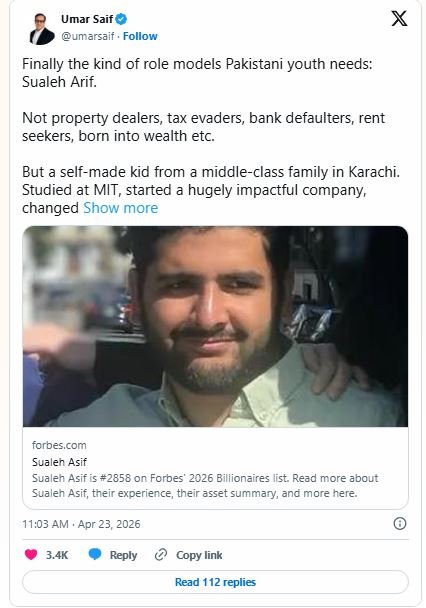
Asif’s net worth now stands at approximately $1.3 billion according to Forbes — a fact that has drawn widespread attention back home. Umar Saif, former Federal Minister for IT in Pakistan, specifically highlighted Asif as a model for the country’s youth, describing him as a self-made entrepreneur from a middle-class background who built a global company by his mid-twenties.
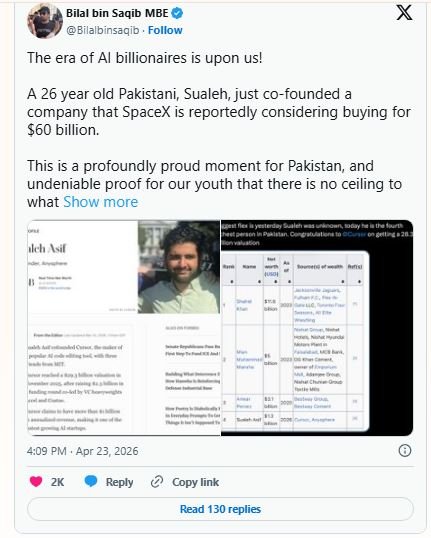
Bilal bin Saqib, Chairman of the Pakistan Virtual Assets Regulatory Authority, expressed on X what many Pakistanis felt on Thursday: “This is a profoundly proud moment for Pakistan, and undeniable proof for our youth that there is no ceiling to what they can achieve.”
How Cursor Grew So Fast: A Valuation Timeline That Shocked Silicon Valley
Cursor’s growth trajectory reads more like fiction than a business case study. The startup’s valuation has leapt almost every quarter since 2024:
- January 2024: Valued at just $2.5 billion
- May 2024: Climbed to $9 billion following early enterprise adoption
- June 2024: Raised its first $60 million funding round
- November 2025: Closed a $2.3 billion Series D at a $29.3 billion post-money valuation, co-led by Accel and Coatue
- February 2026: Annualised revenue crossed $2 billion, according to Fortune
- April 2026: SpaceX announces the $60 billion acquisition option
For context, Slack took two and a half years to cross $100 million in annualised revenue. Cursor did it in under two years from launching its first product. The company has raised more than $3 billion in total and was reportedly in talks to raise a fresh round at a $50 billion valuation — just days before the SpaceX announcement made that number look almost modest.
What Happens If the Deal Goes Through?
If SpaceX exercises its acquisition option later this year, Cursor will become part of the rapidly growing SpaceX Cursor AI–X conglomerate that Musk is assembling across rocketry, social media, and artificial intelligence. The combined entity would control a full AI stack: from the chips and supercomputing power, to the developer tools that millions of engineers use every day.
There’s also a competitive dimension to this. Microsoft previously showed interest in acquiring Cursor, according to reports from HUM News, but that deal reportedly fell apart over unresolved terms. Amazon recently committed $5 billion to Anthropic for chip access. Google and Meta are both pouring billions into AI infrastructure. SpaceX is making its move on the developer tools layer — and Cursor is the crown jewel of that layer right now.
What Does This Mean For Developers?
In the short term, not much changes. Cursor continues to operate and improve. But if the acquisition closes, developers who rely on Cursor daily will be working within a platform owned by Elon Musk — a detail that has already sparked discussion in developer communities about product independence, pricing, and data practices. Those questions are worth watching as the deal develops.
Pakistan’s Growing Footprint in Global Tech
Sualeh Asif is not Pakistan’s first tech success story, but his story carries unusual weight because of its scale and speed. A 26-year-old from a middle-class background in Karachi — not from a privileged tech family, not born in Silicon Valley — co-built a product that is now at the center of one of the largest potential acquisitions in AI history.
The story also arrives at a time when Pakistan’s tech sector is trying to establish credibility as a source of serious engineering and product talent. Government officials and the startup ecosystem have both been quick to celebrate Asif’s success, and rightly so. Stories like his tend to shift perceptions in ways that years of investment promotion cannot.
What to Watch Next

The deal structure is unusual by any standard. SpaceX has not committed to the acquisition — it has paid for the right to acquire. That means the actual closing is still months away and contingent on factors that haven’t been publicly disclosed. In the meantime, Cursor continues to develop its models using xAI’s Colossus supercomputer, and two of Cursor’s senior engineering leads, Andrew Milich and Jason Ginsberg, have already moved over to xAI.
The SpaceX IPO, targeted for June 2026, may be the real deadline. If investors need to see the AI acquisition story fully baked before the listing, expect the $60 billion deal to either close or collapse in the coming weeks.
Either way, Sualeh Asif — and the startup he helped build from a college dorm room at MIT — has already changed the game.
Final Thought!
The SpaceX Cursor AI Acquisition is more than a business deal. It’s a signal that the AI coding tools market has matured to the point where even a rocket company wants a piece of it — and that exceptional talent, wherever it comes from, can reach the very top of the global tech stack. Keep watching this space as the SpaceX Cursor AI IPO approaches and the acquisition timeline becomes clearer.
Have thoughts on what this deal means for the AI industry or for Pakistan’s tech future? Share this story and join the conversation.