Govt Releases Rs. 59 Million to Officially Celebrate the First Anniversary of Pakistan’s Historic 10 May Air Victory
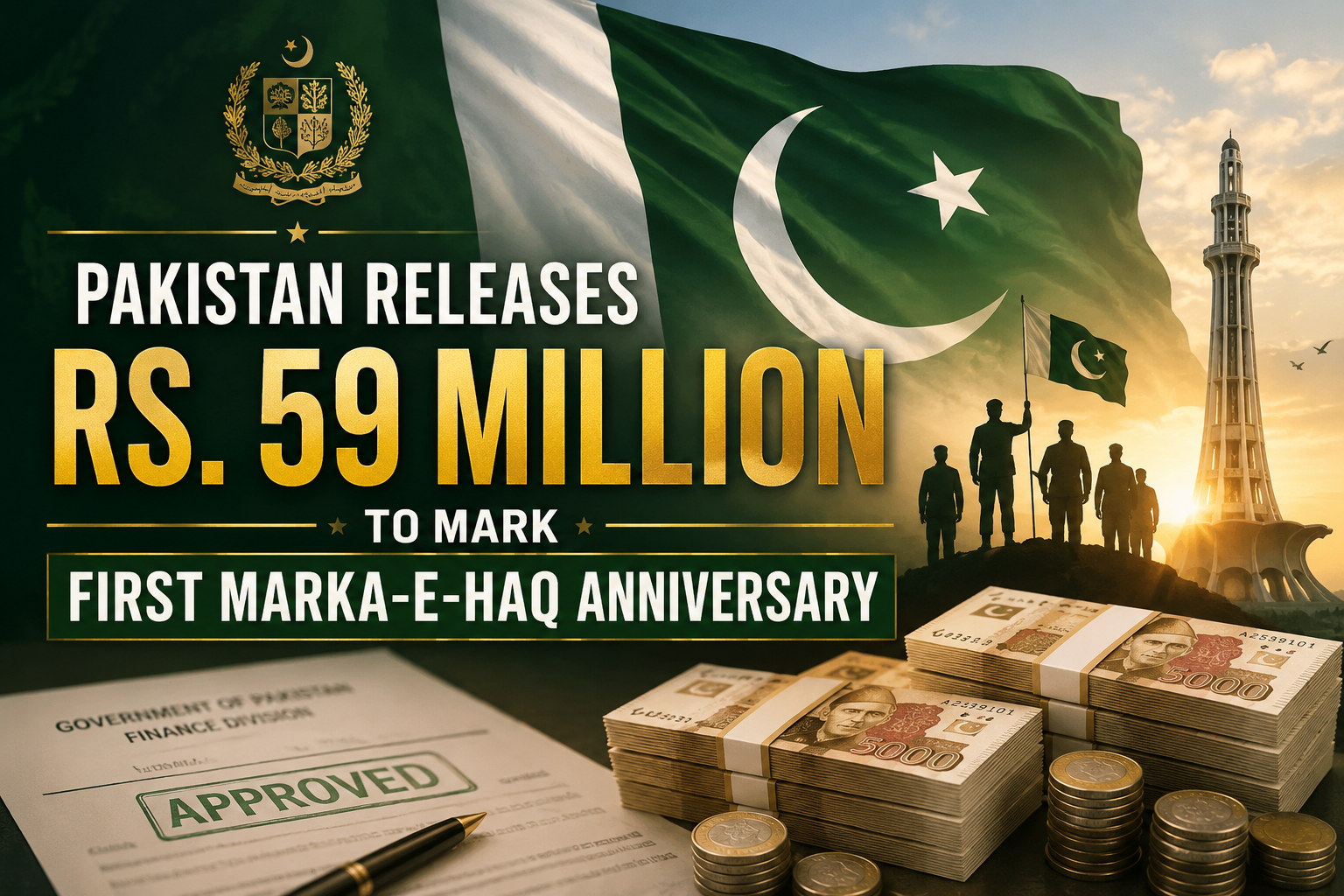
Pakistan’s Economic Coordination Committee has approved Rs. 59.624 million in special funds to celebrate Marka-e-Haq Day on 10 May — marking one full year since the Pakistan Air Force repelled India’s aerial offensive, downed multiple fighter jets, and forced New Delhi into a ceasefire agreement, in what military analysts have since called the most consequential air battle of the 21st century.
ISLAMABAD — The federal government has formally greenlighted a dedicated budget to commemorate the first anniversary of what Pakistan now officially recognises as “Marka-e-Haq” — the Battle for Truth. The Economic Coordination Committee (ECC) of the Cabinet, chaired by Federal Minister for Finance and Revenue Muhammad Aurangzeb at the Finance Division, approved the funds during a wide-ranging meeting that also cleared grants for education, energy, and public administration.
The Rs. 59.624 million allocation, proposed by the National Heritage and Culture Division, will cover the national-level celebrations for both Independence Day and the Marka-e-Haq 2025 commemorations. The announcement comes just days before the first official observance of Youm-e-Marka-e-Haq on 10 May 2026.
What Is Marka-e-Haq — and Why Does 10 May Matter?
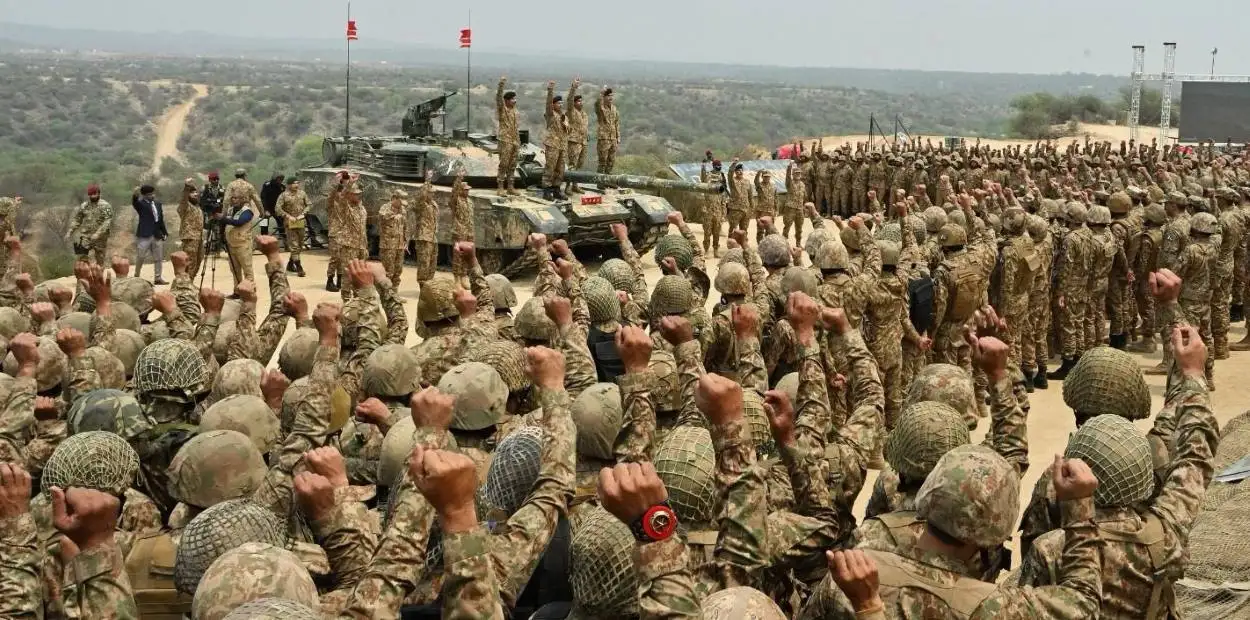
The term “Marka-e-Haq” was coined by the Pakistan Army’s Inter-Services Public Relations directorate to describe the full arc of the April–May 2025 military conflict with India. It covers the period from the 22 April Pahalgam attack — which India used as a pretext to launch strikes into Pakistani territory — all the way through to the ceasefire that took effect on 10 May 2025.
It was on that final day that Pakistan launched Operation Bunyanum Marsoos, conducting retaliatory missile strikes on 26 targets inside India, before both sides agreed to a ceasefire brokered through US diplomatic intervention. The day has since become a point of national pride, with Prime Minister Muhammad Shehbaz Sharif himself announcing shortly after the conflict that 10 May would be observed every year as a national day.
“The Day will be celebrated every year with enthusiasm and spirit of national unity as the professional capabilities of our brave forces have made us proud.”
— Prime Minister Shehbaz Sharif, May 2025
The Air Battle That Changed the Equation
The conflict’s most dramatic chapter unfolded in the skies. In the early hours of 7 May 2025, more than 110 fighter jets from both sides clashed in what international defence analysts later described as the largest aerial engagement in modern history. Pakistan’s air force scrambled its integrated air defence network and launched a counter-air mission that, by all accounts, caught India’s military establishment off guard.
Pakistan deployed its Chengdu J-10C jets armed with Chinese-made PL-15 beyond-visual-range missiles, alongside JF-17 Thunder aircraft. India committed Rafales, Su-30MKIs, and MiG-29s to the fight. When the dust settled, wreckage from multiple Indian aircraft — including what defence analysts identified as a Rafale bearing the serial number BS-001 — was found scattered across the Bathinda and Hoshiarpur districts of India’s Punjab province.
Key Facts: The May 2025 Air Engagement
- Date of main aerial clash: Night of 6–7 May 2025
- Aircraft involved: ~72 Indian, ~42 Pakistani fighters (110+ total)
- Pakistan’s key platforms: J-10C jets with PL-15 missiles; JF-17 Block III
- India’s platforms: Rafale EH, Su-30MKI, MiG-29
- Confirmed wreckage in India: Rafale tail section (BS-001), PL-15 missile body
- Ceasefire date: 10 May 2025, ~5:00 PM local time
- Brokered by: United States (VP JD Vance, Sec. of State Marco Rubio)
- China’s confirmation: J-10CE achieved first combat success, confirmed Jan 2026
Indian Air Marshal AK Bharti, at a 10 May press briefing during the conflict, declined to confirm the number of jets lost, saying only that “India is in a combat situation, so there will be losses.” India’s Chief of Defence Staff General Anil Chauhan later acknowledged the loss of aircraft in a statement on 31 May 2025, though he rejected Pakistan’s claim of six downed jets.
In January 2026, China’s State Administration of Science, Technology and Industry for National Defense officially confirmed that the J-10CE fighter — the export variant operated by Pakistan — had recorded combat results in 2025, becoming the first Chinese-exported jet to achieve a confirmed combat success. The statement, while deliberately vague, was universally interpreted as referring to the May 2025 engagement.
ECC Approves Rs. 3.01 Billion Across Multiple Sectors
The Marka-e-Haq celebration fund was just one piece of a broader ECC session that cleared Technical Supplementary Grants worth approximately Rs. 3.01 billion across several sectors. Other major decisions from the meeting included:
Other Key ECC Decisions
- Rs. 2.5 billion: Grant for the Directorate General Immigration & Passports — covering salaries, production materials, and outstanding liabilities for FY 2025–26
- Rs. 100 million: Construction of Faiz Ahmad Faiz Complex in Narowal for cultural and educational development
- Rs. 350 million: Danish School Kuri, Islamabad — for operational requirements after commencement of classes
- Energy sector: Approved revival of National Steel Complex Limited (NSCL) via gas supply for industrial and captive power operations
- Power market reform: Uniform application of Use of System Charges (UoSC) across all distribution companies, including K-Electric, under the CTBCM framework
The meeting was attended by federal ministers including Qaiser Ahmed Sheikh, Awais Ahmed Khan Leghari, Rana Tanveer Hussain (joining virtually), and Special Assistant to the Prime Minister Haroon Akhtar Khan, along with senior officials from relevant ministries and regulatory bodies.
A Nation Preparing to Celebrate — From Karachi to Islamabad
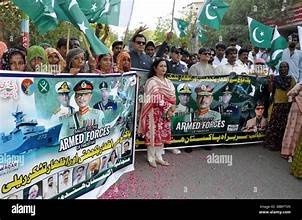
The political momentum behind Marka-e-Haq celebrations extends well beyond Islamabad. In Karachi, the Pakistan People’s Party has announced a large public gathering at Nishan-e-Pakistan Park in Clifton on 9 May, featuring Pakistani singers, performers, and prominent political figures. Sindh Minister Saeed Ghani, who announced the event, said national flags and tribute banners will be displayed across the city from 7 May onward, with reception camps being set up along major roads.
The scale of public enthusiasm reflects just how deeply the events of May 2025 have resonated with ordinary Pakistanis. For many, the conflict — sparked by India’s Operation Sindoor following the Pahalgam attack — represented a moment when Pakistan’s armed forces demonstrated both strategic preparation and technological edge against a larger adversary.
Pakistan’s Strategic Takeaways from the Conflict
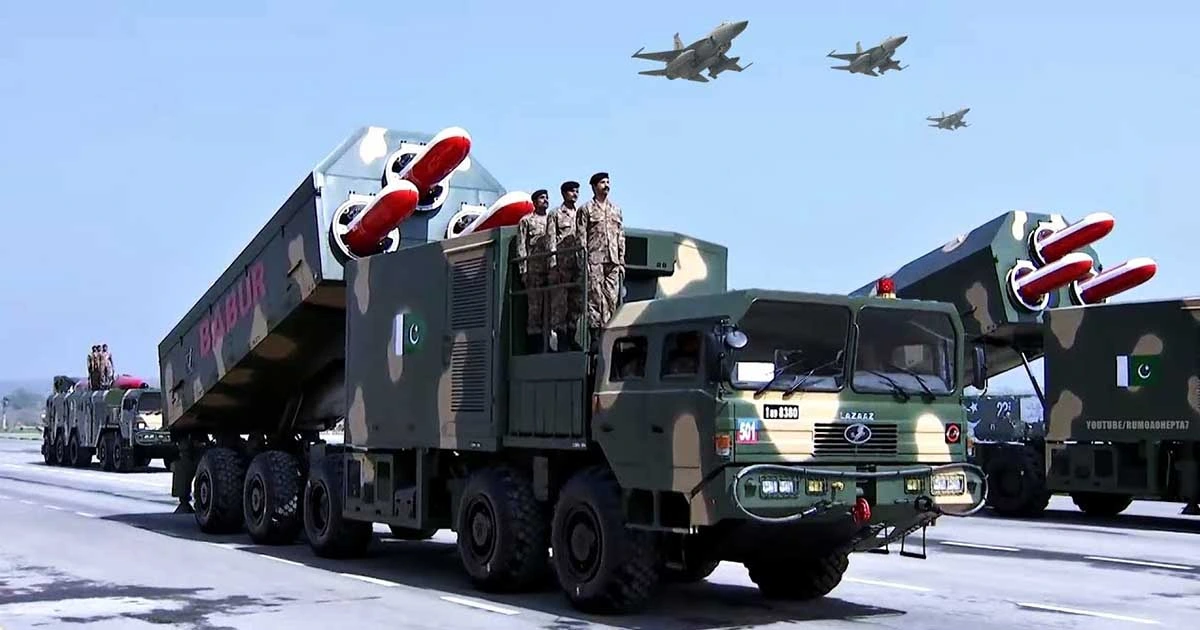
Defence analysts have spent the past year dissecting what made Pakistan’s aerial performance so effective. Experts point to the Pakistan Air Force’s long-term investment in network-centric warfare through its National ISR and Integrated Air Operations Centre (NIAOC), which fused space-based assets, cyber tools, and electronic warfare into a unified battlefield picture.
Retired Air Marshal Arshad Malik has credited this integrated command architecture as the decisive factor. Western analysts, including British defence expert Justin Bronk, noted that Indian pilots were flying under strict rules of engagement that reportedly prohibited them from engaging Pakistani aircraft or air defences directly — a doctrinal constraint that significantly hampered their ability to respond. Pakistan’s electronic warfare systems also jammed Indian communications and degraded sensor performance during the engagement.
The PAF’s No. 15 Squadron — known as the Cobras, based at PAF Base Minhas in Kamra — was later publicly credited with conducting the intercept operation on 7 May. According to a June 2025 statement, the squadron deployed 18 of its 20 assigned J-10C aircraft for the mission.
What the Government Has Already Committed to Martyrs’ Families
Beyond the celebration budget, the government’s financial commitments in the aftermath of the conflict have been substantial. Prime Minister Shehbaz Sharif announced a comprehensive compensation package for families of military and civilian casualties, including Rs. 10 to 18 million for the heirs of military martyrs (depending on rank), full salary continuation with allowances until the date of retirement, free education for martyrs’ children until graduation, and a Rs. 1 million marriage grant for one daughter of each fallen soldier.
Civilian victims of Indian aggression were also included in the package, with Rs. 10 million allotted for heirs of civilian martyrs and Rs. 1–2 million for the injured. The government additionally committed to rebuilding homes and mosques damaged during the conflict.
Looking Ahead: The Significance of Marka-e-Haq as a National Day
The formal allocation of funds for Marka-e-Haq celebration funds 2026 marks an important milestone — it is the first time the government has officially budgeted for the commemoration through the ECC process. This institutionalises 10 May not just as a date of historical memory, but as a standing national occasion on par with other official observances.
Pakistan Today noted in its anniversary coverage that the events of April–May 2025 have fundamentally altered the strategic calculus in the region, with international defence communities continuing to study the engagement’s lessons on network-centric air combat, Chinese weapons systems, and the role of electronic warfare in modern conflicts.
Pakistan’s ECC has formally backed the first national commemoration of Marka-e-Haq with Rs. 59.624 million, embedding 10 May into the country’s official calendar of observances. From the Cobras’ intercept mission over PAF Base Minhas to China’s confirmation of the J-10CE’s combat debut, the events of May 2025 continue to shape Pakistan’s defence identity and diplomatic standing. The anniversary this year is set to be the largest and most coordinated tribute yet to the men and women of the Pakistan Armed Forces.
As the country prepares to mark the anniversary with national ceremonies, cultural events, and tributes to its armed forces, the ECC’s funding decision signals that Marka-e-Haq is not being treated as a one-time moment — but as a chapter of national history that future generations will be asked to remember.