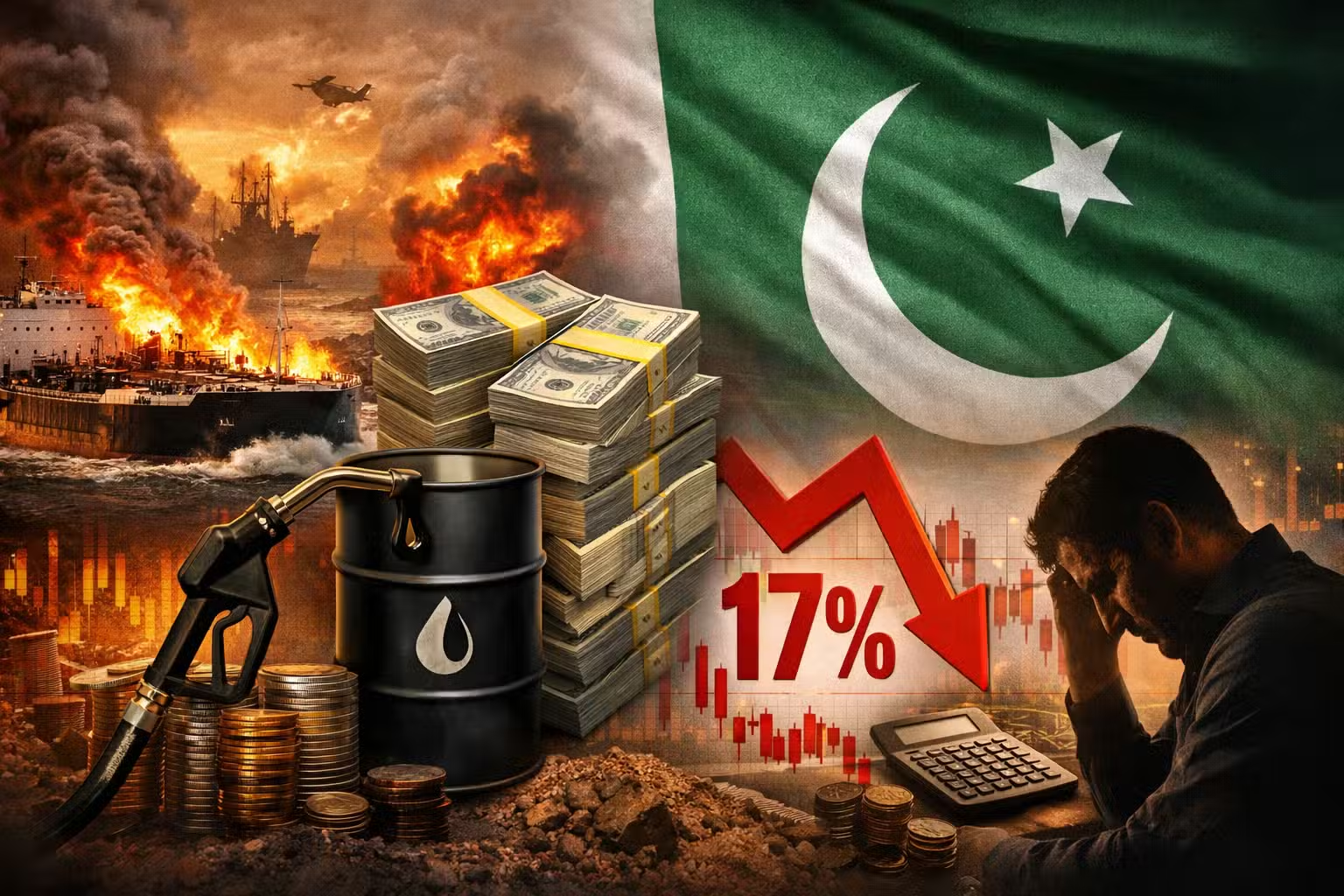

Pakistan’s state-owned enterprises (SOEs) have posted staggering losses exceeding Rs. 830 billion in FY25, despite continued financial backing and policy support from the federal government. The figures, revealed in official fiscal reports in Islamabad this week, highlight deep-rooted structural inefficiencies across key public-sector entities. The widening losses come at a time when Pakistan is striving for economic stability, fiscal consolidation, and reform commitments under international financial frameworks.
The surge in SOE losses FY25 raises critical questions: Why are losses rising despite subsidies and bailouts? Which sectors are contributing the most? And how will this impact Pakistan’s already strained public finances?
SOE Losses FY25: A Growing Fiscal Challenge
The latest data shows that aggregate losses of major public-sector enterprises have crossed Rs. 830 billion in the fiscal year 2024–25. This represents a significant increase compared to the previous fiscal year, intensifying concerns within economic and policy circles.
State-owned enterprises operate in key sectors such as:
- Energy and power distribution
- Aviation
- Railways
- Steel and heavy industry
- Public utilities
While some entities showed marginal operational improvements, overall financial performance deteriorated due to mounting circular debt, operational inefficiencies, rising fuel costs, and delayed structural reforms.
Economic analysts warn that unchecked SOE losses FY25 could widen the fiscal deficit and undermine efforts to stabilize the economy.
Government Support: Bailouts Continue
Despite repeated reform pledges, the government continued to inject financial support into struggling enterprises during FY25. Subsidies, guarantees, and equity injections were extended to prevent operational collapse in several sectors.
Officials argue that such support is necessary to:
- Maintain essential public services
- Protect employment
- Avoid systemic shocks
- Meet social and strategic obligations
However, critics say continuous bailouts without deep governance reform only postpone the problem.
One senior economist noted that “fiscal space is shrinking, and repeated financial injections into loss-making entities reduce the government’s ability to invest in health, education, and infrastructure.”
Energy Sector: The Biggest Contributor
The power sector remains the largest contributor to SOE losses FY25. Distribution companies (DISCOs) and generation entities continue to face challenges such as:
- High transmission and distribution losses
- Inefficient billing and recovery systems
- Electricity theft
- Rising capacity payments
- Circular debt accumulation
The circular debt crisis alone has crossed alarming thresholds, affecting liquidity across the energy chain. Despite tariff adjustments and policy interventions, structural bottlenecks persist.
Energy experts argue that without governance reform, improved loss recovery, and private-sector participation, losses may continue to grow.
Aviation and Railways Under Pressure

Public transport entities also recorded substantial losses in FY25.
Aviation Sector
The national airline has struggled with:
- Fleet management issues
- High operational costs
- Mounting liabilities
- Limited route profitability
Although restructuring and privatization discussions have been ongoing, implementation delays have contributed to financial strain.
Railways
Pakistan Railways continues to operate under financial stress due to:
- Aging infrastructure
- Outdated rolling stock
- Rising fuel expenses
- Fare recovery challenges
While freight operations have shown slight improvement, passenger services remain heavily subsidized.
Impact on Pakistan’s Fiscal Position
The rise in SOE losses FY25 directly impacts the federal budget and fiscal deficit.
Loss-making enterprises require:
- Direct budgetary support
- Sovereign guarantees
- Debt servicing assistance
These obligations add to public debt and reduce fiscal maneuverability. Pakistan is already navigating economic stabilization measures and revenue enhancement strategies.
Financial experts caution that continued losses may:
- Increase borrowing requirements
- Raise debt-to-GDP ratios
- Complicate negotiations with international lenders
- Limit development spending
The situation underscores the urgency of structural reforms rather than short-term financial fixes.
Reform Commitments and Privatization Plans

The government has repeatedly pledged reforms under its broader economic restructuring framework. Key reform measures discussed include:
- Corporate governance reforms
- Board-level accountability
- Performance-based contracts
- Public-private partnerships
- Strategic privatization of selected entities
Officials maintain that a comprehensive SOE reform policy is being implemented gradually. Some enterprises are reportedly under review for partial or full privatization.
However, policy analysts argue that political resistance, labor concerns, and procedural delays have slowed tangible progress.
Why Reforms Have Been Slow
Several structural and political factors contribute to delayed reforms:
- Strong labor unions resisting privatization
- Political sensitivity around strategic assets
- Weak monitoring mechanisms
- Governance and transparency gaps
- Frequent management changes
Experts suggest that sustainable reform requires institutional independence, depoliticized appointments, and strict performance metrics.
Without these, financial injections may continue without meaningful operational improvement.
International Perspective
Globally, many countries have restructured or privatized inefficient state-owned enterprises to reduce fiscal burdens.
Examples from emerging markets show that:
- Transparent audits improve investor confidence
- Independent boards enhance accountability
- Market-based pricing ensures sustainability
- Private-sector partnerships increase efficiency
Pakistan’s reform journey, analysts say, must align with global best practices while considering local socio-economic realities.
Economic Outlook: What Comes Next?
With SOE losses FY25 exceeding Rs. 830 billion, the coming fiscal year will be critical.
Possible scenarios include:
- Accelerated privatization
- Tougher financial discipline
- Improved revenue recovery mechanisms
- Stricter performance audits
- Tariff rationalization in energy
Economic planners face a delicate balancing act — protecting public interest while reducing fiscal leakages.
If meaningful reforms are implemented, experts believe losses can gradually decline over the next three to five years. However, delay may deepen structural vulnerabilities.
Stakeholder Reactions
Business leaders and independent economists have urged swift action. Many believe that continued losses distort market competition and crowd out private investment.
On the other hand, labor representatives warn that rapid privatization could result in job losses and social instability.
The debate reflects a broader policy challenge: how to modernize public enterprises without triggering economic disruption.
The Bigger Economic Picture
SOEs play a critical role in Pakistan’s economic architecture. They provide energy, transport, and industrial services essential for growth.
However, when such enterprises consistently generate losses, they:
- Drain public resources
- Reduce efficiency
- Increase inflationary pressures
- Undermine investor confidence
Addressing SOE losses FY25 is therefore not just about accounting figures — it is about long-term economic sustainability.
Reform or Repetition?
The sharp rise in SOE losses FY25 to over Rs. 830 billion sends a clear signal that incremental adjustments are no longer sufficient. Despite continued government support, financial deterioration persists across key sectors.
Moving forward, Pakistan faces a critical choice: continue subsidizing inefficiencies or implement structural reforms that ensure accountability, transparency, and financial discipline.
The coming fiscal year will test the government’s resolve to deliver meaningful SOE restructuring. Sustainable economic stability depends not only on revenue growth but also on curbing persistent public-sector losses.
What do you think — should Pakistan fast-track privatization or strengthen internal governance reforms?