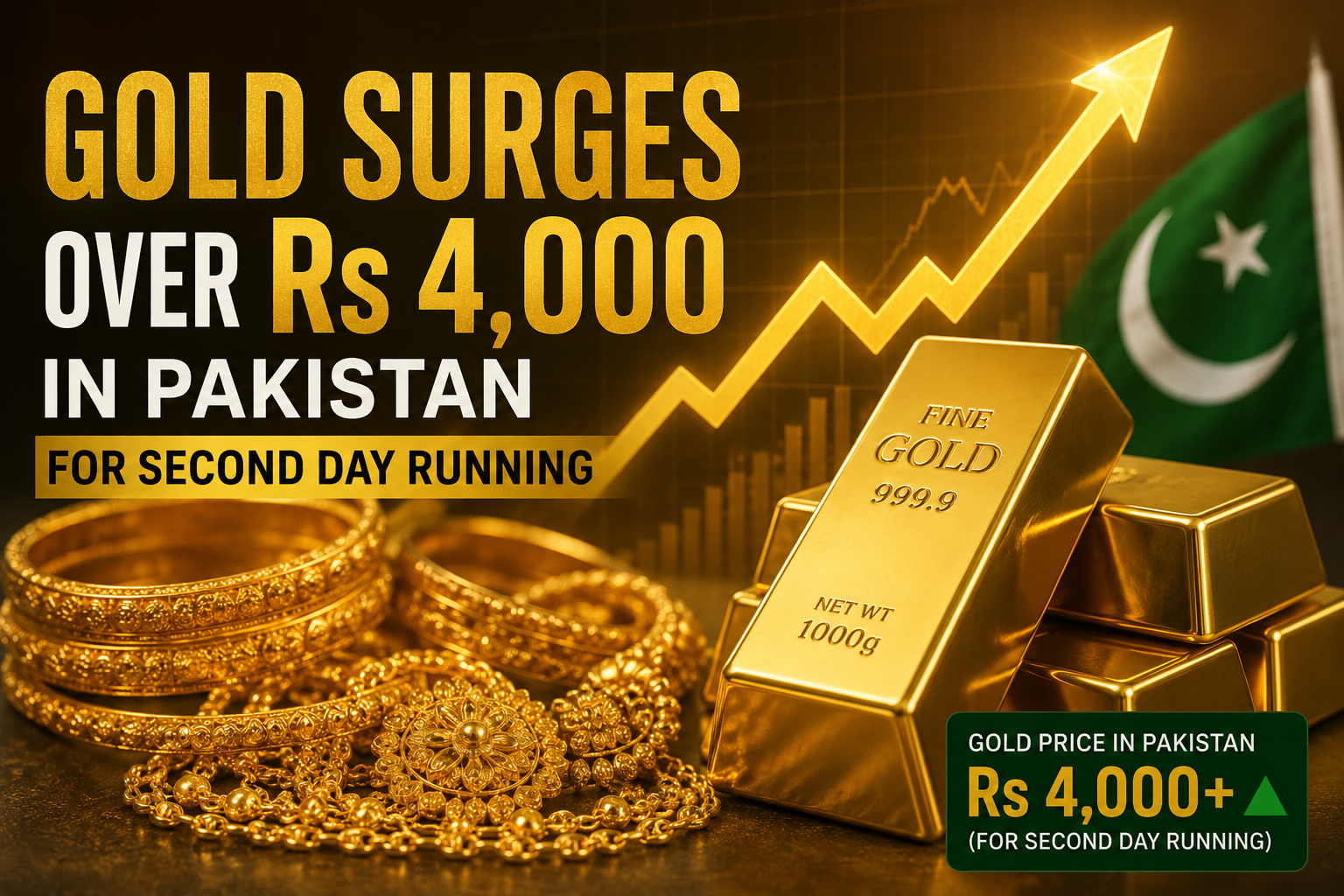
Gold Climbs Rs 4,370 in Pakistan — Buyers Face Second Big Hike in Two Days
Gold prices in Pakistan jumped for the second session in a row on Sunday, with the per tola rate climbing Rs 4,370 to reach Rs 444,336 — just 24 hours after an even larger spike of Rs 7,250 that had pushed the rate to Rs 439,966. In two trading days, buyers have had to absorb a combined surge of more than Rs 11,600 per tola, as rising geopolitical tensions and relentless safe-haven demand continue to drive international bullion markets to new highs.
The figures come from the All Pakistan Sarafa Gems and Jewellers Association (APGJSA), the official body that publishes daily bullion rates for local markets. The 10-gram 24K gold rate rose by Rs 3,933 to Rs 379,880. Silver also continued its rally, adding Rs 200 per tola to reach Rs 7,279.
Two days, Rs 11,600+ — the numbers in full
Pakistan’s gold market doesn’t often see back-to-back moves of this size. Friday’s Rs 7,250 per tola jump was already a sharp single-session move. The fact that Sunday brought another Rs 4,370 on top of that tells you something about the mood in global markets right now.
| Category | Rate (14 June) | Day’s change |
|---|---|---|
| Gold per tola (24K) | Rs 4,44,336 | ▲ Rs 4,370 |
| Gold per 10 grams (24K) | Rs 3,79,880 | ▲ Rs 3,933 |
| Silver per tola | Rs 7,279 | ▲ Rs 200 |
| International gold | $4,219 / oz | ▲ $43 |
| Previous session (13 June) | Rs 4,39,966 | ▲ Rs 7,250 |
The two-day combined gain now stands at over Rs 11,620 per tola — a figure that will be felt most sharply by jewellers trying to hold prices steady and families with gold purchases planned for the coming weeks.
Why is the gold price in Pakistan rising so fast?
The short answer is that Pakistan’s local bullion market moves with global gold prices, and right now global gold prices are under serious upward pressure from multiple directions at once.
Geopolitical tensions pushing investors toward safety
Escalating tensions in the Middle East have been a consistent driver of gold’s recent rally. When investors sense instability — whether from active conflict, ceasefire uncertainty, or diplomatic volatility — they tend to move money into assets they consider safe stores of value. Gold has played that role for centuries, and 2026 has been no different. Each fresh round of regional tension sends another wave of buying into the global bullion market, and that feeds directly into local rates in Karachi, Lahore, and beyond.
Federal Reserve rate expectations
Expectations that the US Federal Reserve will cut interest rates later in 2026 have added a second layer of fuel to the rally. Lower interest rates make gold more attractive compared to interest-bearing assets like bonds and savings deposits — so when rate cuts appear likely, gold tends to rally even without a geopolitical trigger. That dynamic has been building through the middle of this year, and it’s showing up clearly in the numbers.
Central bank demand and tight supply
Global central banks have been accumulating gold at an unusually high pace, reducing the supply available to regular market participants while signalling confidence in the metal as a long-term reserve asset. International institutions are broadly optimistic about gold prices through 2026, pointing to this central bank buying, tight supply, elevated geopolitical risk, and continued investment demand as structural supports for the current rally.
The Pakistan angle — why local prices feel the impact harder
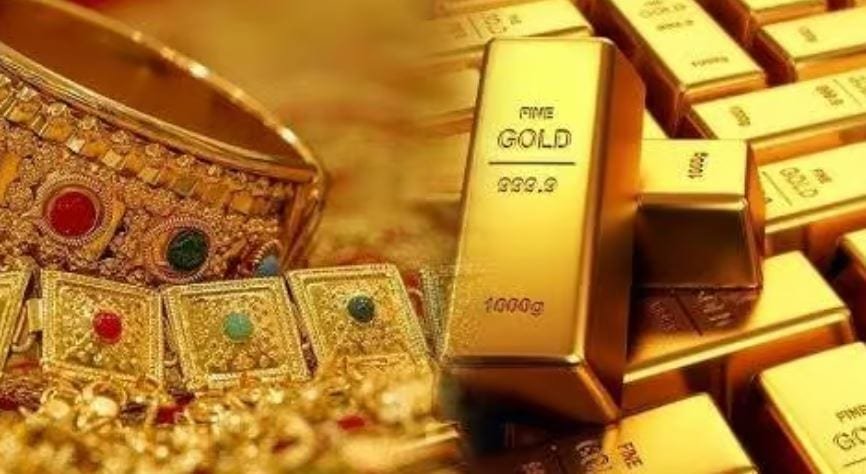
Pakistan’s gold market has its own dynamic layered on top of the international one. The gold price in Pakistan is determined by two things: what gold costs on international markets, and how the Pakistani rupee is trading against the US dollar on any given day.
When the rupee weakens against the dollar, local gold prices rise even if international prices haven’t moved — because gold is purchased in dollars globally, and a weaker rupee simply buys fewer of them. Conversely, if the rupee strengthens, it can cushion the local impact of a global price rise. Neither factor has been providing much cushion lately.
Local demand adds another dimension. In Pakistan, gold isn’t just an investment — it’s deeply embedded in weddings, family savings, and the way households protect wealth across generations. That cultural role means the Sarafa Bazaar remains active regardless of which direction prices are moving, though a sharp two-day surge can slow buying as consumers wait to see whether prices stabilise.
What this means for buyers, jewellers, and investors
- Wedding shoppers: Anyone who budgeted for gold jewellery a week ago is now looking at a meaningfully higher bill. The Rs 11,600+ two-day jump has compressed purchasing power noticeably for occasion-based buyers.
- Jewellers: Back-to-back price spikes are difficult to absorb at the retail level. Stock bought at Friday’s rate is already cheaper than what would need to be purchased now to replace it.
- Investors: Those who already hold gold have seen solid paper gains over the past two sessions. Analysts broadly continue to view gold as a strong long-term hedge against inflation and currency depreciation — though short-term corrections remain possible as traders take profits.
- Remittance households: Families converting overseas earnings into gold are dealing with a double squeeze — a higher dollar-denominated gold price and the exchange rate impact when converting into rupees.
Silver joins the rally — precious metals move as a group
It’s not just gold. Silver has also been climbing, with the per tola rate rising Rs 200 in Sunday’s session to reach Rs 7,279. Earlier in the week, silver had hit a historic all-time high in Pakistan, and the broader trend across precious metals — gold, silver, and platinum all moving upward together — signals a genuine shift in investor sentiment toward safety and away from riskier assets.
READ MORE! Gold Rate in Pakistan Crashes Below Rs. 4.5 Lakh — Worst Drop in 5 Months
What to watch next
Several factors will determine whether this rally continues or takes a breather in the coming sessions:
- Any developments in Middle East ceasefire negotiations or diplomatic talks involving the US and Iran could either ease pressure or accelerate it
- US economic data — particularly jobs numbers and inflation figures — will influence Federal Reserve rate expectations and therefore gold’s appeal globally
- The rupee-dollar exchange rate will determine how much of any international move translates into local Pakistani price changes
- Profit-taking by traders who’ve ridden the rally through two big sessions could trigger a short-term pullback, even without any change in the underlying fundamentals
Key facts at a glance
Date |
Sunday, 14 June 2026 |
| Gold per tola (24K) | Rs 4,44,336 (▲ Rs 4,370) |
| Gold per 10 grams (24K) | Rs 3,79,880 (▲ Rs 3,933) |
| Silver per tola | Rs 7,279 (▲ Rs 200) |
| International gold | $4,219 per ounce (▲ $43) |
| Previous session (13 June) | Rs 4,39,966 per tola (▲ Rs 7,250) |
| Combined two-day rise | Rs 11,620+ per tola |
| Official source | APGJSA (All Pakistan Sarafa Gems and Jewellers Association) |
People also ask
What is the gold price in Pakistan today, 14 June 2026?
Why did gold prices in Pakistan rise two days in a row?
What is the 10-gram gold rate in Pakistan on 14 June 2026?
Is this a good time to buy gold in Pakistan?
Final Thought!
Two sessions. Two big jumps. More than Rs 11,600 per tola added to the gold price in Pakistan in the space of 48 hours. The forces behind the move — Middle East tensions, Federal Reserve rate expectations, central bank accumulation, and persistent safe-haven demand — are not going away overnight.
Whether prices consolidate here or keep climbing in the near term, this week’s moves are a reminder of just how quickly Pakistan’s bullion market can shift when global conditions align.
For buyers and investors alike, staying close to daily APGJSA rates and tracking international price movements remains essential. The Sarafa Bazaar is moving fast right now, and the numbers are changing every session.
Are you tracking the gold market as a buyer, jeweller, or investor? How are these back-to-back price hikes affecting your plans? Share your thoughts in the comments below — we’d like to hear from our readers.