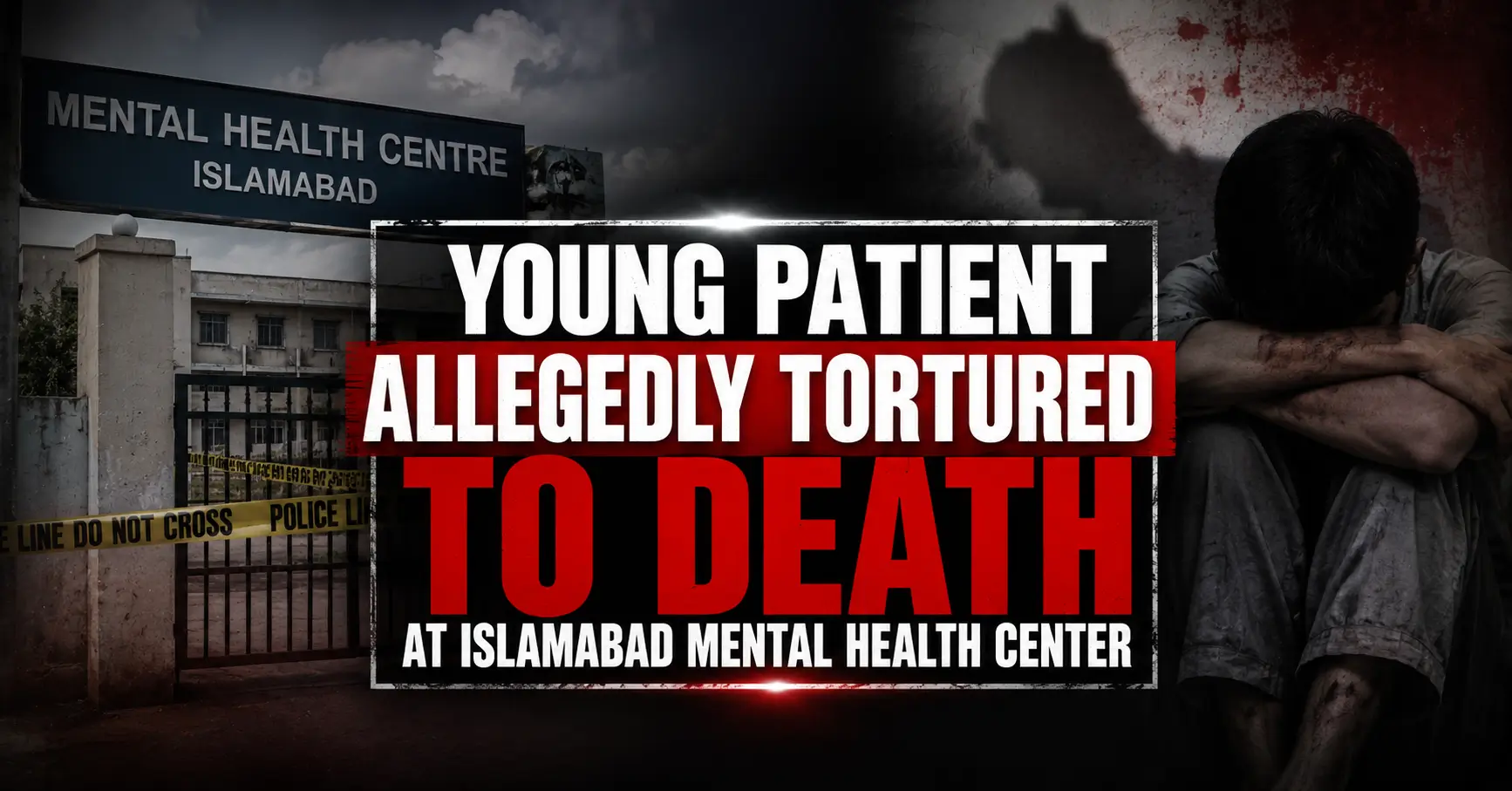

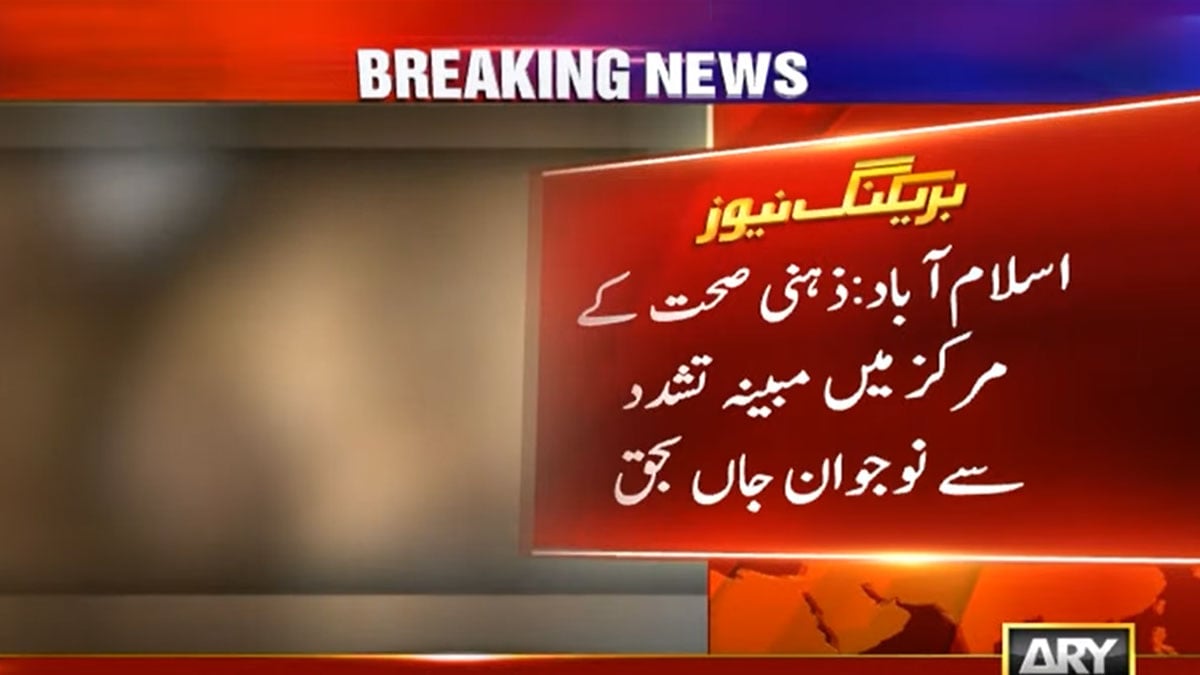
A young patient has allegedly been tortured to death inside a mental health facility in Islamabad, according to ARY News, which reported the case as a developing story.
The report has surfaced at a moment when Pakistan’s largely unregulated network of private psychiatric and rehabilitation centres is already under scrutiny.
Details remain limited. What is confirmed is grim enough on its own: a patient, admitted for care, died under circumstances pointing to abuse rather than treatment.
For a country with no dedicated licensing authority for mental health practitioners, the case lands as one more warning sign that few seem willing to act on.
What We Know So Far About the Islamabad Mental Health Centre Death

The Islamabad mental health centre torture death case emerged as breaking news, with limited official detail released publicly so far. No confirmed identity, facility name, or arrest has been independently verified through multiple outlets at this stage.
That scarcity of information is itself telling. Cases involving private psychiatric or rehab centres in Pakistan routinely surface only after a death, rarely before, because oversight bodies have little visibility into how these facilities actually operate day to day.
A Disturbing Pattern: Pakistan’s History of Rehab and Psychiatric Facility Abuse
This is not an isolated allegation. In 2024, police in Rawalpindi’s Wah Saddar area registered a murder case against staff of a private drug rehabilitation centre after a patient’s body was brought to hospital showing torture and cut marks, with autopsy findings confirming he had been beaten with sticks and rods.
READ MORE: Bahria Town Deputy CEO Jailed in Rs1.7bn FX Case
Years earlier, a Punjab Healthcare Commission crackdown told a similar story. Inspectors visiting the Amir Chishti Hospital found zero sanitation, goats tied up inside patient rooms, and no proper medical treatment being administered.
Across raids on dozens of facilities, 36 illegal rehab centres were sealed and 651 patients rescued and transferred to the Punjab Institute of Mental Health.
- Patients beaten “on the slightest pretext” for unpaid labour, according to survivor accounts from PHC-raided centres
- Forced admissions in violation of Pakistan’s Mental Health Act
- Overcrowded rooms with sedation practices survivors described as leaving them “claw-like” and unable to move normally
The 2021 killing of Noor Mukadam by a client of an elite Islamabad therapy centre also forced a reckoning, after it emerged the accused had previously trained and counselled clients there himself.
Why Mental Health Facilities in Pakistan Remain Largely Unregulated
Pakistan still has no dedicated national licensing authority for psychiatric or counselling professionals, a gap that leaves quality control almost entirely voluntary.
Most patients admitted to rehab and mental health facilities are brought in forcibly, a practice that itself violates Pakistan’s Mental Health Act of 1965 unless the individual is genuinely unable to make decisions for themselves.
Clinical psychologist Muhammad Ali Khan has previously noted that it is quite easy for anyone to call themselves a counsellor with minimal to no mental health training, and said at least a third of his own clients had described some form of boundary violation by a former therapist.
- No mandatory registration for counsellors or therapy centres nationwide
- Provincial healthcare commissions can only act after complaints or raids, not proactively
- Facilities frequently operate without signage, “looking just like decent family homes,” according to regulators
Rights Groups and Experts Sound the Alarm

Pakistan’s Human Rights Commission has repeatedly flagged custodial and institutional torture as a systemic problem.
In a letter to Prime Minister Shehbaz Sharif marking the International Day in Support of Victims of Torture, the HRCP expressed grave concern over the widespread use of torture and cruel, inhuman treatment in detention facilities nationwide, describing Pakistan’s legal framework as inadequate to prevent such acts.
The commission has also urged the government to ensure torture survivors get access to effective remedies and rehabilitation, and called for an independent, prompt investigation mechanism free from institutional interference. That call applies squarely to psychiatric and rehab facilities, where victims are often the least equipped to report abuse themselves.
Mental health advocacy groups, including the Pakistan Psychiatric Society, have separately pushed for a public, verifiable registry of licensed therapists and treatment centres — a proposal that has gone nowhere in successive legislative sessions.
What This Means for Patients, Families and Policy Going Forward
Every fresh allegation of this kind renews pressure on federal and provincial health authorities to finally regulate the sector. Yet enforcement has historically been reactive: a facility gets sealed, an FIR gets filed, and then attention moves on until the next case.
Families searching for psychiatric or addiction treatment in Pakistan currently have almost no reliable way to verify a facility’s credentials, staffing, or safety record before admission. Until a binding national licensing system exists, that burden falls entirely on relatives making decisions during a crisis.
If today’s allegations are confirmed, this Islamabad case could become the latest test of whether Pakistan’s institutions are willing to move past statements of concern toward actual accountability.