
Pakistan’s most recognisable bachelor woke up married. At least, that’s what his phone was telling him.
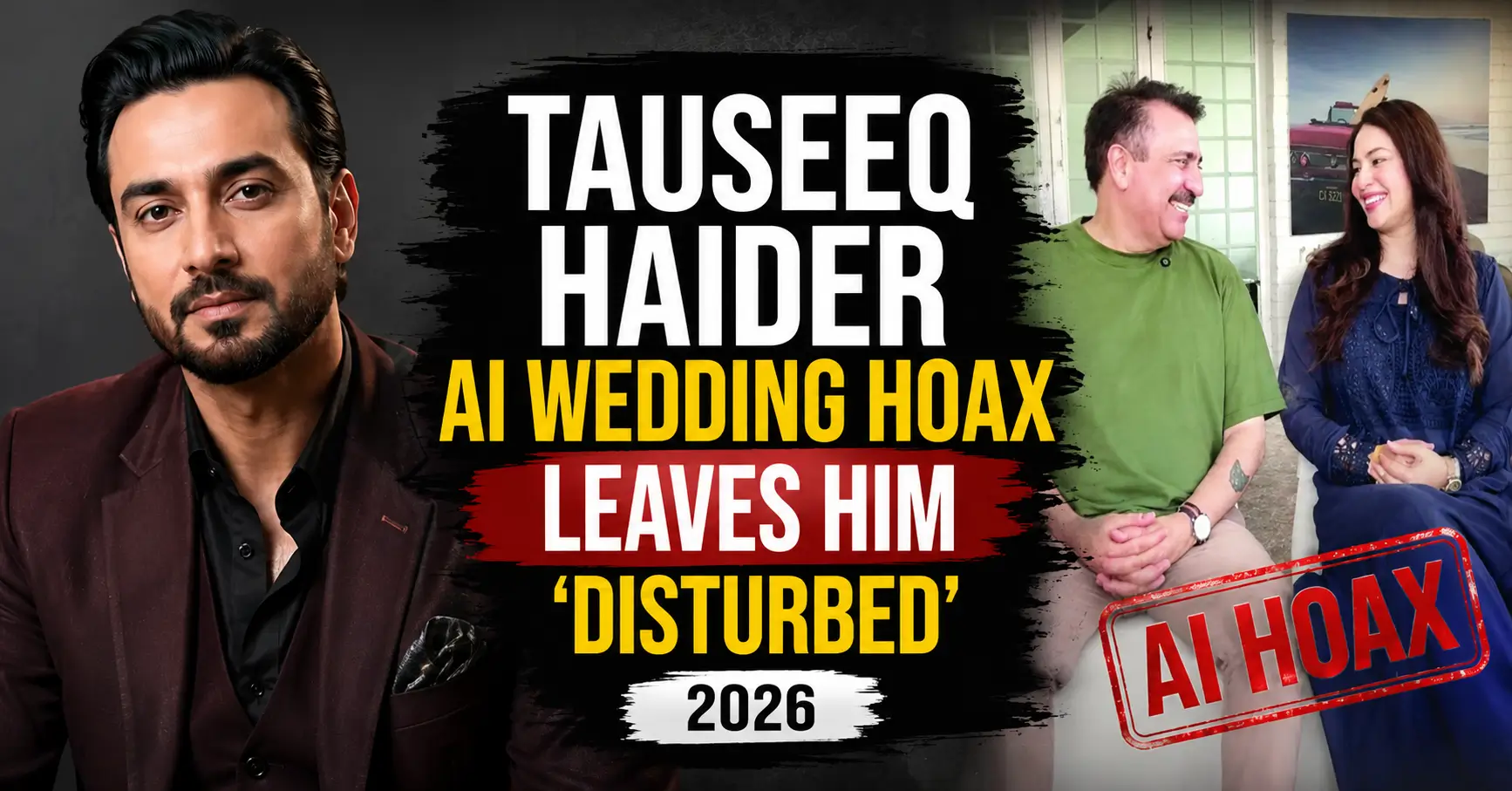
Veteran broadcaster Tauseeq Haider found himself at the centre of a viral AI-generated wedding hoax this week, after fabricated images showed him and fellow actor Farah Saadia dressed as bride and groom. The images spread across YouTube, Instagram and TikTok fast enough that well-wishers were sending congratulations before Haider had even seen them himself.
He has since called the episode “very disturbing” and asked content creators to stop treating people’s personal lives as clickbait.
How the AI Wedding Rumour Started

A series of AI-generated images falsely portraying the two veteran Pakistani television personalities as newlyweds began circulating rapidly across social platforms earlier this week. The photos were convincing enough that many fans took them at face value, assuming the two industry veterans had quietly tied the knot.
Haider says he only realised what had happened after wading through a flood of messages. Some congratulated him. Others wanted to know why he’d kept the wedding a secret. It took him roughly ten minutes to piece together that none of it was real, and that an AI tool had generated the images from scratch.
His first reaction, by his own account, wasn’t panic. It was amusement at how good the fake photos looked.
Haider and Saadia Respond With Humour — Then a Warning

Rather than issue an angry denial, the pair leaned into the absurdity. They posted a joint Instagram video captioned “Happily single,” with Haider joking that they were “happily married” and offering mock congratulations to Saadia.
Haider joked that a wave of “professional” YouTubers had broken the news of their marriage before the two of them even found out about it themselves. Saadia played along too, teasing that the AI had done such a convincing job that Haider looked good in the fake photos.
The jokes had an edge to them. Haider suggested that if creators had already earned money off the fake story, the least they could do was share some of it as a wedding gift.
But the tone shifted when Saadia spoke about what this actually means for people whose images get used this way. She pointed out that both of them have families, children and relatives, and that content built purely for views can turn into a real disaster for the people involved. She asked creators to show some basic respect and put their energy into something more meaningful.
Speaking later on the show Rise and Shine with Zohaib Hassan and Nadia Khan, Haider reiterated that the whole experience had been genuinely unsettling, even if he chose to respond with humour rather than outrage. He said he deliberately kept things light because the internet is already saturated with people ranting about AI, and another angry statement wouldn’t have changed anything.
Who Are Tauseeq Haider and Farah Saadia

Haider began his broadcasting career in 1987 as a newsreader at Radio Pakistan and is widely credited as the pioneering voice of the country’s FM radio service. He has spent decades as a television host and actor, and remains one of the most familiar faces on Pakistani state television.
Saadia rose to prominence through the hit drama Bandhan before building a long career across popular serials, and later became a household name hosting morning shows. Both have spent much of their careers based at PTV’s Islamabad Centre, admired as morning show hosts known for substantive, knowledgeable discussions.
Their decades-long public profiles are exactly what made the fake wedding images so easy to believe — and so quick to spread.
Why This Keeps Happening to Public Figures
This isn’t an isolated incident. AI-generated images of celebrities are becoming a recurring problem across Pakistan’s entertainment industry, and the tools behind them have gotten good enough that casual viewers can no longer tell fake from real at a glance.
The pattern is familiar: a fabricated image or clip goes viral, algorithms reward the engagement, and creators profit long before any correction catches up with the original claim. By the time a public figure issues a denial, the fake story has often already reached more people than the clarification ever will.
Haider’s response points to something creators may not want to hear: the people whose faces are being used rarely have much say in when, or whether, the truth catches up.
What It Means Going Forward
Haider isn’t done dealing with AI confusion either. He also addressed his upcoming drama Shaidai, where viewers have convinced themselves his on-screen death scene was AI-generated. He insists it wasn’t — just well-shot camerawork mistaken for something more sinister.
Taken together, the two episodes highlight a growing headache for public figures: audiences are now primed to assume anything dramatic or unusual involving a celebrity is AI until proven otherwise. That scepticism cuts both ways. It can expose real hoaxes, but it also means genuine, non-manipulated content gets dragged into the same suspicion.
For now, Haider remains unmarried, unbothered by his on-screen “death,” and mostly amused by the whole ordeal. Whether the creators behind the fake wedding video will heed his call for restraint is a different question entirely.