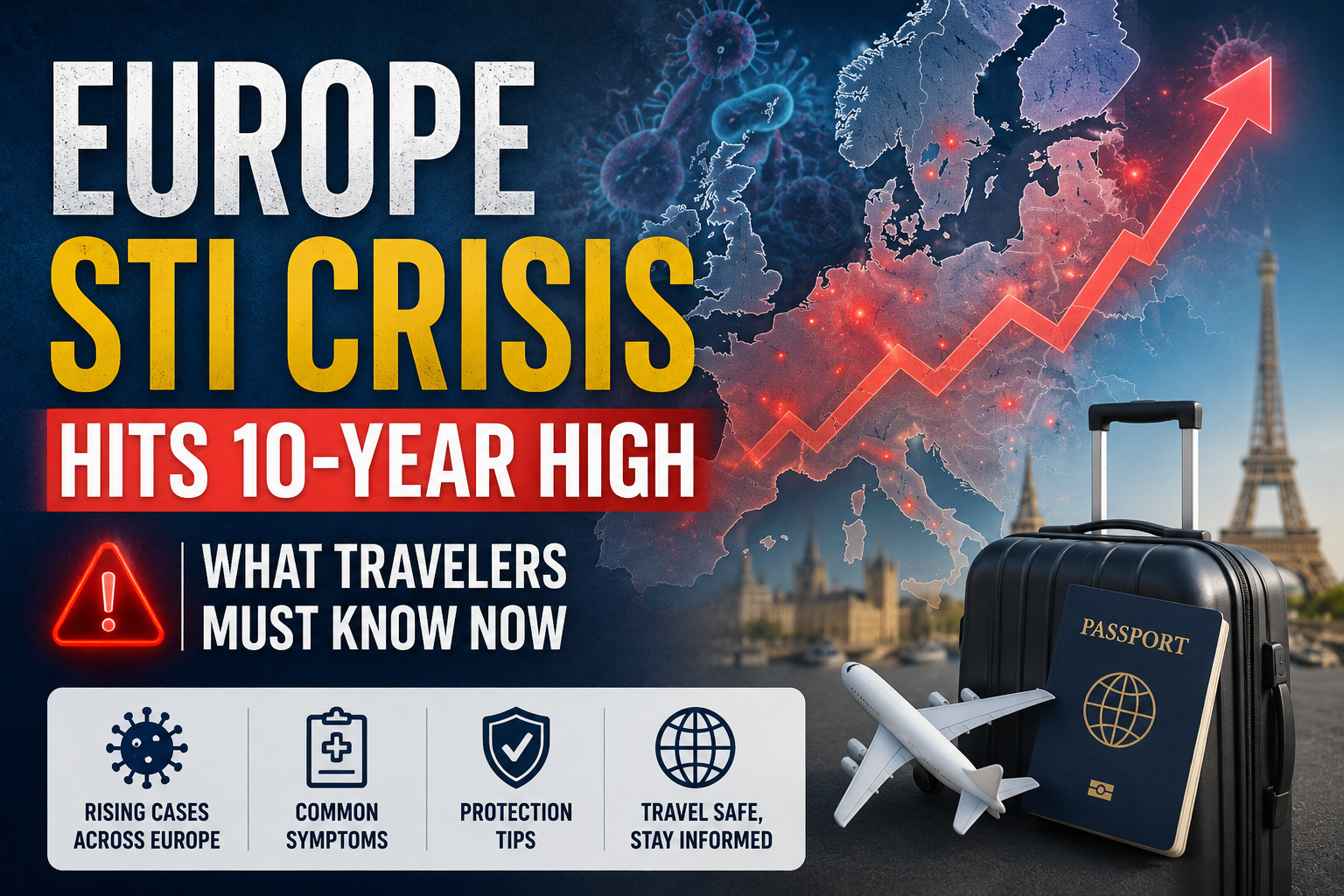

Europe is in the grip of a sexual health emergency. New data from the European Centre for Disease Prevention and Control (ECDC) confirms that sexually transmitted infections across the European Union and European Economic Area have reached their highest levels in more than ten years — a crisis that public health officials are calling both alarming and preventable. For Pakistani travelers, students, and workers heading to Europe, the numbers are impossible to ignore.
What the Numbers Actually Say
The headline figure is stark. Gonorrhoea cases in EU/EEA countries hit 106,331 in 2024 — a 303% increase since 2015. That is not a typo. Three times more cases than a decade ago, and the curve is still pointing upward.
Syphilis has more than doubled over the same period, reaching 45,577 confirmed cases. Chlamydia remains the most commonly reported STI on the continent, with 213,443 cases recorded in the latest data cycle.
Between 2023 and 2024 alone, overall STI notification rates climbed another 4.3%, with cases among men jumping 7.9% in a single year.
Bruno Ciancio, Head of Unit for Directly Transmitted and Vaccine-Preventable Diseases at the ECDC, put it plainly:
“Sexually transmitted infections have been on the rise for 10 years and reached record-high levels in 2024. Untreated, these infections can cause severe complications, such as chronic pain and infertility, and, in the case of syphilis, problems with the heart or nervous system.”
Who Is Most at Risk?
The Europe STI surge is not limited to any single group — that is what makes it especially concerning for general travelers.
- Young women aged 20–24 are among the most affected. Gonorrhoea notification rates in this group rose by nearly 200% between 2021 and 2023 alone.
- Men aged 25–34 recorded the highest overall rates among males in 2024.
- Gay, bisexual, and men who have sex with men (MSM) saw gonorrhoea notification rates rise by nearly 300% between 2014 and 2023.
- More than half of all gonorrhoea cases in 2024 were in the MSM group, but heterosexual transmission is increasing rapidly.
The ECDC has specifically flagged the spike among young heterosexual women as a warning sign, noting that high gonorrhoea rates in women of reproductive age carry serious risks including pelvic inflammatory disease and long-term infertility.
Which European Countries Are Worst Hit?
According to the ECDC’s 2024 data, the countries recording the highest STI rates include:
- Ireland
- Malta
- Iceland
- Luxembourg
- Denmark
- Spain
These are also among the most popular travel and study destinations for Pakistanis in Europe. Anyone planning an extended stay in these countries should be especially informed about the health landscape they are entering.
Why Is Europe’s STI Problem Getting Worse?
Health officials point to several overlapping reasons behind the Europe STI surge, none of which look likely to reverse quickly.
Condom use is declining. Josep Mallolas, head of the HIV/AIDS unit at Hospital Clínic Barcelona, was blunt about it: “Condom use has become increasingly rare; it is used less and less.” Post-pandemic behavioural shifts have led to more sexual partners and less consistent protection, particularly among young adults.
Testing systems are failing to keep up. The ECDC’s 2024 monitoring report — the first comprehensive cross-country assessment of national STI responses — found that most EU/EEA countries are ill-prepared to respond effectively. Many national STI strategies are outdated, and only 10 of the 29 reporting countries have updated their national plans within the past five years.
Drug-resistant strains are emerging. Perhaps the most worrying long-term development is the growth of antimicrobial resistance in gonorrhoea. Drug-resistant gonorrhoea is now a documented threat in Europe, meaning common antibiotics may no longer clear the infection reliably. The ECDC is actively monitoring resistance trends and urging immediate action.
Surveillance gaps mask the true scale. ECDC Director Andrea Ammon has previously described reported figures as likely just the “tip of the iceberg,” since many infections go undetected, untested, or unreported.
What This Means for Pakistani Travelers
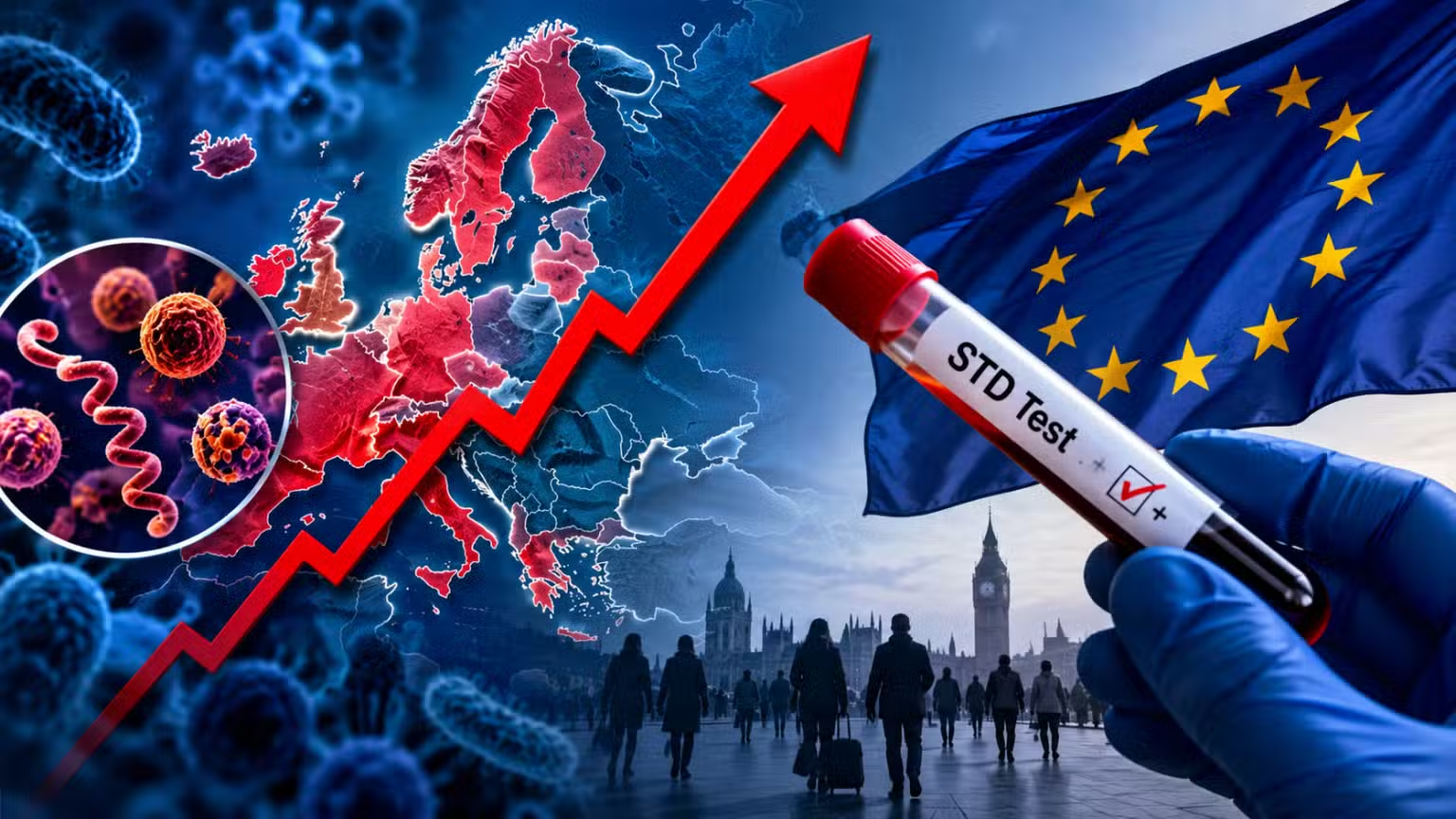
Pakistan does not have a formal STI-related travel advisory for Europe at this stage, but the scale of the Europe STI surge is relevant to any Pakistani citizen traveling there for tourism, education, work, or family visits — particularly for longer-duration stays.
Several practical realities are worth understanding before departure:
1. Sexual health services vary wildly across Europe. Not every city or country has accessible, affordable, or culturally comfortable testing and treatment services. Language barriers and social stigma can make it harder to seek help when needed.
2. The risk is real even for cautious travelers. The ECDC data shows the surge is not confined to high-risk groups. It is spreading through the general population. Knowing the risk environment matters.
3. Untreated infections carry serious consequences. Gonorrhoea, syphilis, and chlamydia — if left untreated — can cause chronic pain, infertility, and in the case of syphilis, heart and neurological damage. Early testing and treatment are the difference between a manageable infection and a lasting health complication.
4. Condom use remains the most effective prevention tool. Despite declining use across Europe, the ECDC continues to emphasise consistent condom use, particularly with new or multiple partners, as the single most effective non-vaccine prevention measure currently available.
Europe’s Governments Are Scrambling — But Slowly
The ECDC’s 2024 monitoring report paints a picture of governments that know they have a problem but have been slow to act. Of 29 EU/EEA countries surveyed, 18 have some form of national STI strategy — but many of these are years out of date, were written before the post-pandemic behavioural shifts took hold, and do not reflect current epidemiological trends.
There are also significant access barriers for people seeking care: cost, availability, stigma, and in some countries, a lack of anonymous testing services all reduce the likelihood that people get tested and treated in time.
New vaccines are in development. GSK’s investigational vaccine for Neisseria gonorrhoeae — the bacteria behind gonorrhoea — was under evaluation, and repurposed vaccines are also being studied for STI prevention. But a vaccine solution remains years away from wide deployment.
A Public Health Warning That Deserves Serious Attention

The ECDC is not a body that raises alarms without data. The scale of what it is reporting — a continent-wide, decade-long surge in three major STIs simultaneously, hitting record highs in 2024, accompanied by antimicrobial resistance concerns and healthcare system gaps — is the kind of public health development that affects everyone who lives in or travels to Europe.
For Pakistani citizens, whose numbers traveling to Europe for education, tourism, and work have grown steadily over the past decade, this is not a distant problem. It is a health context they will be stepping into.
The message from Europe’s own health authorities is clear: get informed, get tested if needed, and protect yourself. That advice applies equally to anyone arriving from abroad.
Key Facts at a Glance
| STI | Cases in 2024 | Change Since 2015 |
|---|---|---|
| Gonorrhoea | 106,331 | +303% |
| Syphilis | 45,577 | +100%+ |
| Chlamydia | 213,443 | Highest reported |
Final Thought!
Europe’s sexually transmitted infection crisis is not a rumour or a sensational headline — it is a documented, data-backed public health emergency confirmed by the EU’s own disease authority. The Europe STI surge, with gonorrhoea alone up over 300% since 2015, represents the worst rates the continent has seen in more than a decade, and 2024 figures are the highest ever recorded.
For Pakistani travelers, students, and workers, this is relevant, actionable information. Awareness, precaution, and access to testing are the tools available right now. Being informed is the first step.
If you found this article useful, share it with someone planning to travel to Europe. Health awareness starts with a conversation.