
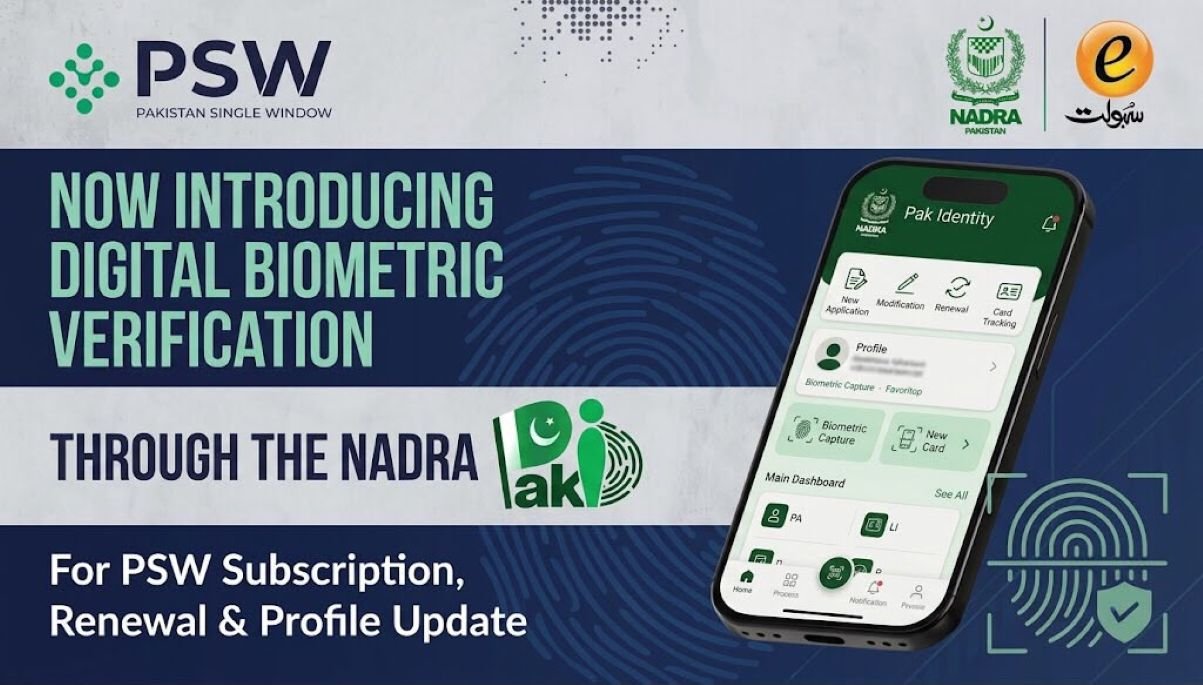

The Pakistan Single Window has linked its platform directly with NADRA’s PakID mobile app, meaning users can now complete mandatory biometric verification without ever stepping foot inside an e-Sahulat centre.
Announced this week, the update targets one specific pain point that has frustrated PSW users for years, the need to physically show up somewhere just to confirm your own identity.
What Changed With This Integration
Previously, anyone using Pakistan Single Window services had to visit a NADRA e-Sahulat centre in person whenever biometric verification was required. That applied to fresh subscriptions, subscription renewals, and even routine profile updates, turning a simple administrative step into an actual trip that ate up someone’s working day.
With this new integration in place, eligible users can now complete that same verification entirely through their smartphone, using the PakID app instead. According to PSW, this change removes the physical visit, meaning the entire onboarding journey can now happen digitally from start to finish.
PSW has confirmed both verification channels will remain available during a transition period, so users can still choose to visit an e-Sahulat centre in person if that is what they prefer, or simply switch over to the app-based option whenever they’re ready.
Why This Matters Most for Overseas Pakistanis
While the update benefits everyone using PSW services, one group stands to gain especially clear advantages. Overseas Pakistanis involved in trade related activities back home have historically faced a genuine problem, needing to either travel back to Pakistan just for biometric verification or find some workaround through relatives and representatives.
This new remote option removes that barrier almost entirely. Eligible overseas users can now complete their PSW biometric verification straight through the PakID app from wherever they happen to be living, cutting out what used to be an unavoidable trip back to Pakistan purely for administrative purposes.
Speaking about the update, PSW’s CEO Syed Aftab Haider connected the change directly to feedback the organization had been hearing from its user base. “The integration with Nadra’s PakID Mobile App reflects our commitment to listening to the PSW community both in Pakistan and overseas and responding to their needs,” he said.
He also spoke to the bigger picture behind the update. “By enabling remote biometric verification, we are removing another physical trip in the onboarding process and making the PSW user journey more convenient, accessible, and user driven,” Haider added, tying this single feature into a broader philosophy PSW seems to be building its digital strategy around.
The Bigger Picture Behind PakID’s Growing Role
NADRA’s PakID app has increasingly become the backbone connecting citizens to a whole range of government services beyond its original identity card functions. Just weeks earlier, the app received a separate update adding features like online FIA complaint filing and automatic signature cropping, part of a broader push to reduce how often people need to visit physical government offices at all.
Government departments across Pakistan appear to be treating PakID less like a standalone identity app and more like a general purpose digital gateway, one capable of handling everything from pension verification to trade platform authentication under a single, unified system.

For Pakistan Single Window specifically, this fits neatly into its own stated mission of expanding digital solutions and simplifying procedures for businesses. PSW has positioned itself as a central digital hub for cross border trade processes, and removing friction points like mandatory in person verification directly supports that broader accessibility goal.
What This Means Going Forward for Everyday Users
For anyone currently using or planning to use PSW services, the practical takeaway is refreshingly simple. Check whether you qualify for remote verification through the PakID app, and if you do, you can likely skip a trip to an e-Sahulat centre altogether going forward.
Given how quickly government digitization efforts have been moving in Pakistan recently, from pension verification reforms to fuel subsidy registration systems, this latest PakID integration feels like part of a much larger pattern rather than an isolated update.
Each of these changes individually might seem small, but when stacked together they represent a meaningful shift in how ordinary Pakistanis interact with government and semi government services.