
Saudi Arabia’s National Day this week carried far more weight than usual. Prime Minister Shehbaz Sharif marked the occasion by reaffirming Pakistan’s defense commitments to the Kingdom, at a moment when Saudi Arabia is facing a renewed wave of missile and drone attacks from Yemen’s Houthi movement.
Just days earlier, Saudi air defenses had intercepted a Houthi drone dangerously close to Islam’s holiest city.
What Shehbaz Sharif Actually Said and Why It Matters
In his National Day message, Shehbaz Sharif said, “Pakistan stands unwaveringly, shoulder to shoulder, with the Kingdom in safeguarding its sovereignty, security and the sanctity of Islam’s holiest sites.” This message directly ties Pakistan’s support to the ongoing Houthi threat rather than offering vague diplomatic pleasantries.
He went further, framing any danger to the two holy mosques as something that resonates far beyond Saudi borders. Any threat to the Haramain Sharifain, he noted, “deeply wounds the sentiments of Muslims across” the world.
Days earlier, Foreign Office spokesperson Sajjad Haider Khan had used similarly firm language during a weekly briefing, confirming Pakistan remained “closely monitoring developments” and fully supported Saudi Arabia’s efforts to protect its holy sites.
The Background Behind This Defense Commitment
To understand why this moment carries such significance, it helps to look at how Pakistan’s defense relationship with Saudi Arabia actually evolved. Islamabad and Riyadh signed a bilateral mutual defense agreement back in September 2025, establishing a formal security partnership between the two nations.
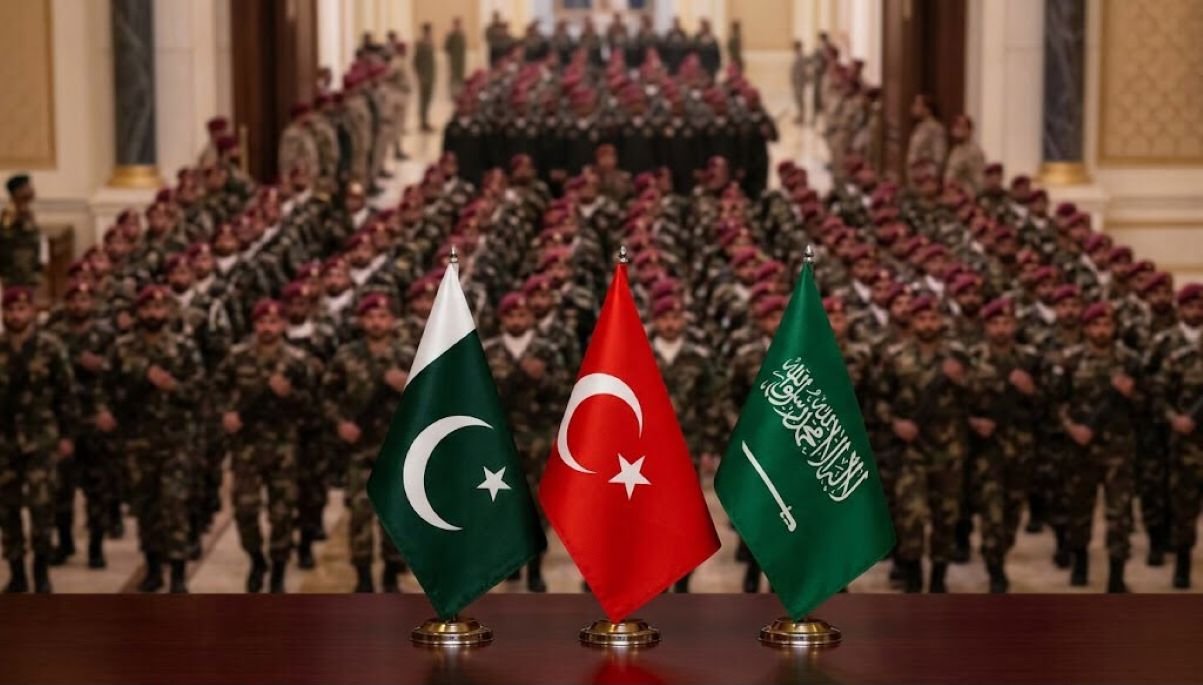
That relationship deepened further just last month, when Pakistan, Saudi Arabia, and Turkey jointly signed the Makkah Joint Defense Agreement in August. Under this trilateral pact, an armed attack against any one of the three signatories would be treated as an attack against all three, a mutual defense structure similar in spirit to arrangements seen in other major military alliances around the world.
Foreign Office spokesperson Khan addressed this directly, describing the pact as “defensive in nature” and intended to strengthen regional peace and stability, while declining to elaborate on what specific actions it might actually trigger.
How the Houthi Threat Has Escalated
The renewed danger driving all this diplomatic activity traces back to Yemen, where the Houthi movement, an Iran-aligned group controlling much of the country’s north, has ramped up attacks against Saudi cities and infrastructure. This escalation forms part of a much wider regional conflict that began with US and Israeli strikes on Iran back in February.
Recent Houthi advances along Yemen’s Red Sea coast have brought the group uncomfortably close to the Bab al-Mandab Strait, a critical shipping route connecting the Red Sea to the Gulf of Aden. That proximity threatens Saudi oil exports at a moment when maritime trade routes elsewhere, including the Strait of Hormuz, are already under serious pressure.
A Saudi led coalition confirmed it intercepted and destroyed a drone approaching restricted airspace near Makkah itself, though Houthi officials have denied deliberately targeting the holy city. Houthi spokesman Yahya Saree pushed back on that narrative directly, stating that “our operations target its oil facilities and military bases, which are far removed from the sacred sites.”
Pakistan’s Careful Balancing Act
Despite the strong rhetoric, Pakistan has stopped short of announcing any direct military action under the Makkah agreement. Foreign Ministry spokesman Sajjad Haider Khan clarified earlier this month that no immediate military response had actually been discussed, even while reaffirming Pakistan’s broader support for Saudi sovereignty and territorial integrity.
Defense Minister Khawaja Asif struck a notably different tone in a separate interview, suggesting the moment for real action may be approaching. “Makkah Agreement applies to us, and we will fulfil our duty,” he said without specifying exactly what form that duty might take in practice.
This cautious positioning reflects a genuinely difficult balancing act for Islamabad. Pakistan maintains important diplomatic ties with Iran and has consistently supported efforts to stabilize Yemen through dialogue rather than military escalation. Direct involvement against the Houthis risks straining that Iran relationship considerably, while also exposing Pakistan to the wider fallout of an already volatile regional conflict.
At the same time, Saudi Arabia remains one of Pakistan’s most important long-standing partners, both economically and militarily, with Pakistani personnel historically providing training and security assistance within the Kingdom.
That history makes this current crisis a genuine test of just how far Pakistan’s defense commitments actually extend once real fighting starts inching closer to home. For now, Islamabad appears determined to project firm solidarity through words.