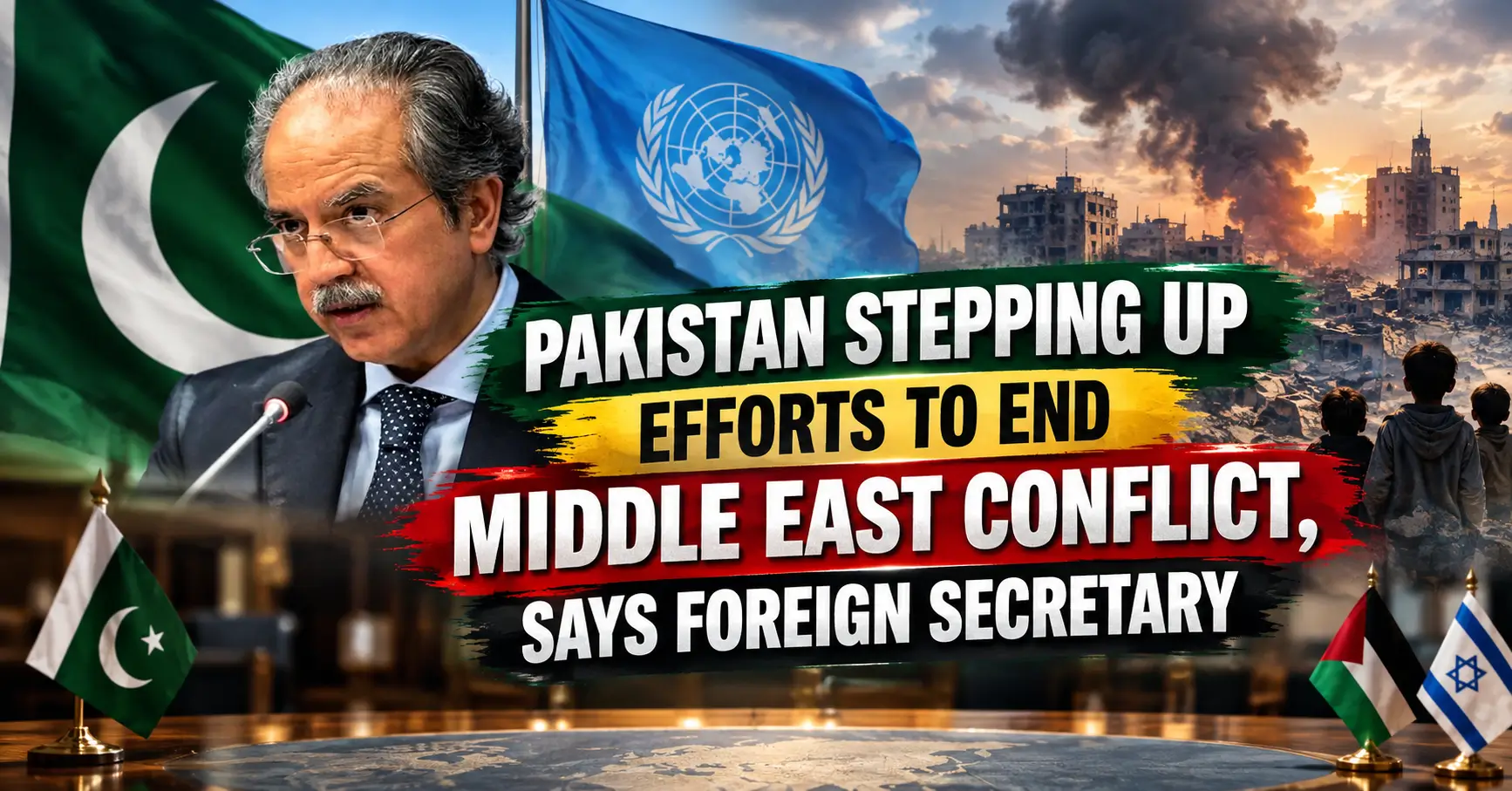

Pakistan role in the Middle East conflict has moved from quiet back-channel diplomacy to a public commitment, with the country’s top diplomat confirming Islamabad is widening its peace push as the regional crisis deteriorates.
Foreign Secretary Asim Iftikhar Ahmad told local media on Sunday that Pakistan wants a resolution built on dialogue, not force, and that the country is prepared to shoulder more responsibility as tensions between Iran, the US and their regional partners continue to climb.
Foreign Secretary’s Statement Signals a Bigger Pakistani Push

The Pakistan Middle East conflict took center stage again this week when Ahmad laid out Islamabad’s position in unusually direct terms. He said the objective was a peaceful, internationally sanctioned settlement not a prolonged standoff that risks dragging in more countries.
His comments came as fighting, drone strikes and disrupted shipping routes continue rattling Gulf states. Ahmad was blunt about the trajectory, acknowledging that matters are “moving in a negative direction” and that Pakistan feels compelled to act rather than watch from the sidelines.
Key points from his briefing:
- Pakistan is seeking a ceasefire and a return to negotiations under UN mechanisms
- Islamabad views the UN Security Council Charter as the proper vehicle for resolving disputes, not military escalation
- Pakistan considers itself among the countries “at the forefront” of Iran-US diplomacy
- The Foreign Office rejects claims that the UN has become irrelevant to the crisis
What’s Fuelling the Middle East Conflict
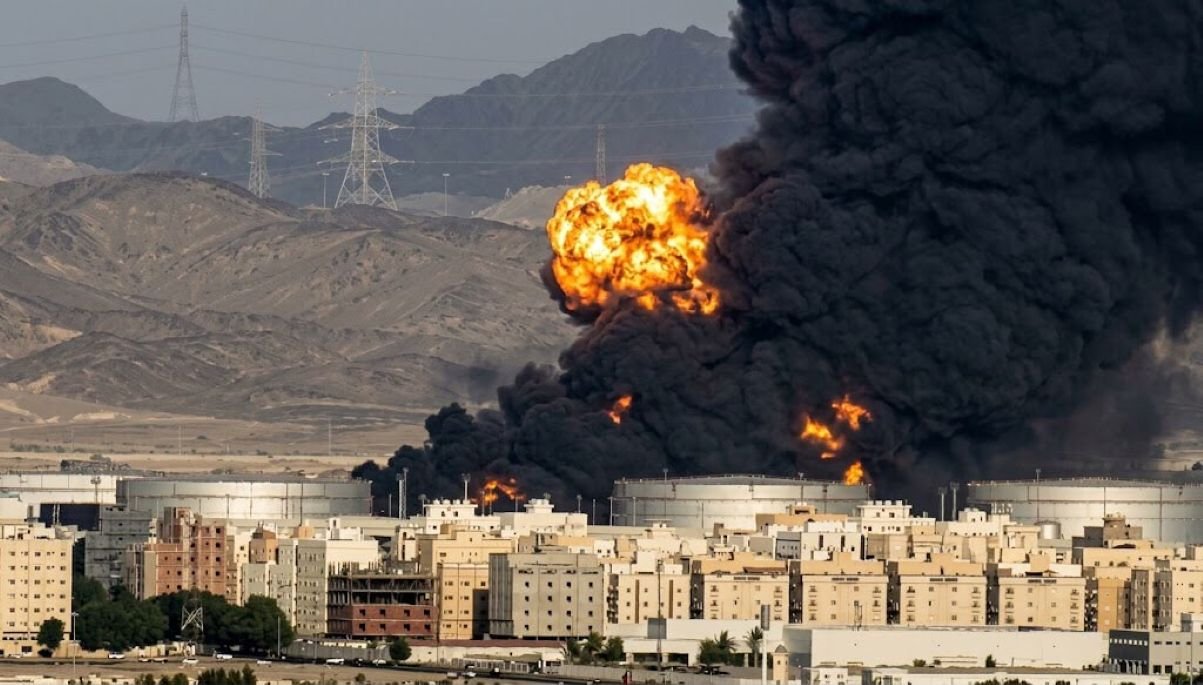
Understanding the Pakistan Middle East conflict angle requires context on the underlying dispute. The confrontation traces back to the escalating US-Israel military campaign against Iran, which has spilled into strikes on Gulf-adjacent infrastructure and repeated threats to shipping through the Strait of Hormuz.
READ MORE: Section 144 imposed across Punjab from Sept 13 to 17
Energy markets, Gulf security arrangements and regional trade routes have all absorbed shocks from the fighting. That spillover is precisely why Islamabad heavily dependent on Gulf remittances, energy imports and defence ties has pushed so hard for de-escalation rather than staying neutral from a distance.
The Makkah Agreement and Pakistan’s Widening Stakes

Ahmad remarks repeatedly referenced the Makkah Joint Defence Agreement, a pact Pakistan signed alongside Saudi Arabia and Türkiye in August 2026. He described it as proof that Islamabad is “taking on additional responsibility” for regional stability, not stepping back from it.
The agreement treats an attack on any signatory as an attack on all three, formalising a security bloc built on Riyadh’s and Ankara’s shared alarm over the widening war. For Pakistan, that commitment now sits uneasily alongside its self-appointed role as an Iran-US mediator.
| Aspect | Detail |
|---|---|
| Signed | August 7, 2026, Mecca |
| Signatories | Pakistan, Saudi Arabia, Türkiye |
| Core clause | Attack on one treated as attack on all three |
| Secretariat | Based in Riyadh; first secretary-general from Pakistan |
| Complication | Pakistan simultaneously mediates the Iran-US standoff |
Pakistan’s Track Record as a Regional Mediator
This isn’t Islamabad first attempt at Gulf peacemaking. Pakistan has previously worked to ease Saudi-Iran tensions and helped facilitate Afghanistan-US dialogue, giving it institutional experience that few other regional players can claim.
That history is part of why Riyadh, Ankara and even Washington have tolerated Pakistan’s dual-track approach — mediator on one hand, treaty ally on the other. Analysts note this hedging strategy is deliberate, not accidental, reflecting Islamabad’s limited appetite for picking sides outright.
A brief timeline of Pakistan’s recent Middle East diplomacy:
| Date | Development |
|---|---|
| 2025 | Strategic Mutual Defence Agreement signed with Saudi Arabia |
| Early 2026 | Pakistan deploys troops and air-defence assets to Saudi Arabia |
| March 2026 | Islamabad hosts Saudi, Turkish, Egyptian foreign ministers on Iran-US war |
| May 2026 | FM Dar says mediation could yield “significant progress” |
| August 2026 | Makkah Joint Defence Agreement signed |
| September 2026 | FS Ahmad reaffirms peace push amid worsening conflict |
The Expert Angle: Credibility Versus Constraints

Regional analysts remain split on whether the Makkah pact strengthens or undercuts Pakistan mediator standing in the Pakistan Middle East conflict. One Gulf-focused analyst told Al Jazeera that Pakistan credibility as a mediator would be “diminished, but not eliminated” once it formally joined a defence bloc widely read as anti-Iran.
Others argue the opposite that Pakistan’s nuclear-armed status and troop deployments to Saudi Arabia give it leverage Ankara and Riyadh cannot offer alone, making Islamabad more useful — not less — as a bridge between Washington and Tehran.
What Comes Next for Pakistan’s Diplomacy
Islamabad balancing act will only get harder as the conflict widens. Pakistan must maintain defence commitments to Saudi Arabia while keeping communication channels with Iran intact a combination that leaves little room for missteps.
Prime Minister Shehbaz Sharif expected meeting with US President Donald Trump on the UNGA sidelines, alongside a planned meeting with Saudi Crown Prince Mohammed bin Salman, suggests Pakistan intends to keep pressing its case on multiple fronts simultaneously rather than picking one lane.