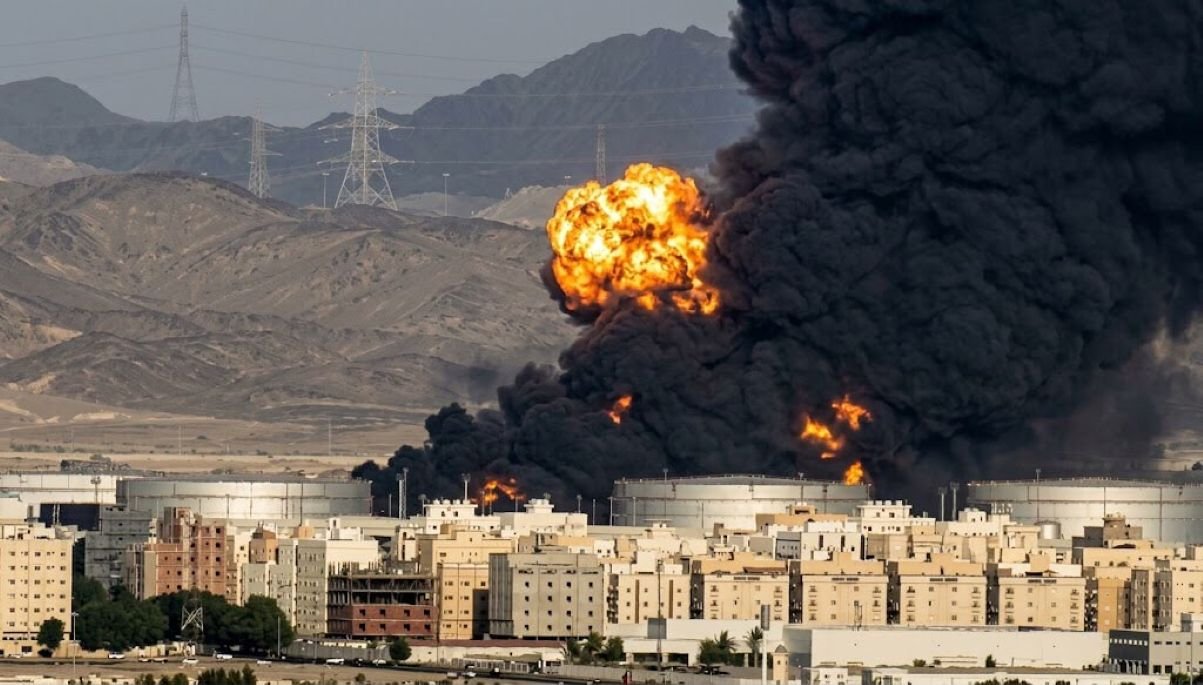

Saudi Arabia is facing one of its toughest stretches in decades, and oil sits right at the centre of the situation. On Friday, the Saudi kingdom shut down its critical East-West pipeline after drone strikes hit the facility. Cutting off a vital route that had been keeping oil exports flowing despite months of regional conflict.
What Just Happened to the Pipeline
The East-West pipeline stretches roughly 1,200 kilometres across the Arabian Peninsula, carrying crude oil from Saudi Arabia’s eastern fields all the way to the Red Sea port of Yanbu. Since the closure of the Strait of Hormuz back in March, this route had effectively become Saudi Arabia’s main bypass option for keeping exports moving.
Drones that were launched from Iraq, struck the pipeline’s pump stations on Thursday September 10 , triggering fires that satellite imagery later confirmed. Saudi Arabia’s Ministry of Energy confirmed the attack directly, stating the pipeline “was subjected to multiple attacks” and had to be shut down “as a precautionary measure.”
The timing makes this especially painful for Riyadh. With the Strait of Hormuz already restricted, losing this secondary route leaves Saudi Arabia with essentially no way to reroute that same eastern crude elsewhere. A report stated that Saudi Arabia’s crude output has already dropped to its lowest level since 1990, dropping by nearly two million barrels a day compared to the previous month.
How the Broader War Reached This Point
The current conflict traces back to February 28, 2026, when the United States and Israel launched strikes against Iran. Iran responded by firing missiles and drones at Israel and several Gulf states, Saudi Arabia included, dragging the entire region into a war nobody there had chosen.
Since then, Saudi oil infrastructure has been hit repeatedly. The Ras Tanura refinery has been targeted more than once, and Houthi forces widely seen as Iran aligned allies operating out of Yemen, have pushed aggressively along the Red Sea coast in recent weeks.
By early September, reports indicated the Houthis had gained control over most of Yemen’s Red Sea coastline, putting them close to the Bab al-Mandeb Strait, another critical corridor for global energy shipments.
Saudi Arabia has not stayed quiet through any of this. Alongside the UAE, Kuwait, Bahrain, Qatar, and Jordan, it jointly condemned Iran’s actions back in March. The Saudi kingdom’s foreign ministry did not soften his words either, warning that continued Iranian attacks would mean Tehran would “bear the heaviest diplomatic, economic, and strategic consequences, and be the biggest loser.”
Where Pakistan Fits Into This Picture
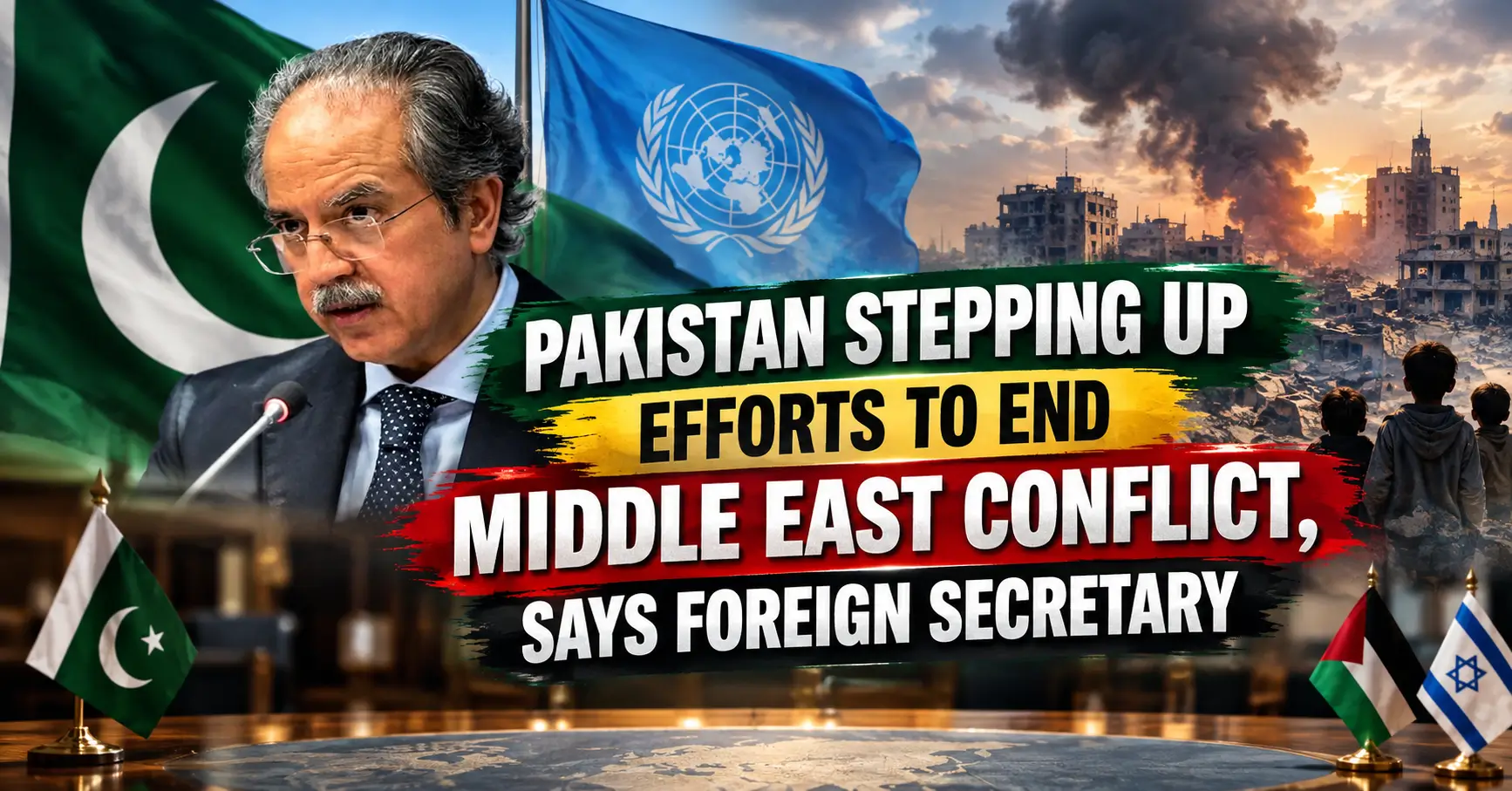
Pakistan’s involvement adds a genuinely important layer to this conflict. Back in September 2025, Pakistan signed a Strategic Mutual Defence Agreement with Saudi Arabia, treating an attack on either country as an attack on both.
That pact was expanded in August 2026, when Saudi Arabia, Pakistan, and Turkey signed the Mecca Joint Defence Agreement, extending similar mutual protection to all three nations. Prime Minister Shehbaz Sharif has been vocal throughout the conflict, condemning Iran’s missile attacks and affirming support for the kingdom’s security.
Following the ceasefire earlier this year, Pakistan reportedly sent 13,000 troops along with fighter jets to Saudi Arabia, honouring commitments under the defence pact. At the same time Pakistan has tried carefully to avoid becoming a direct participant in the war itself.
Defence Minister Khawaja Asif has stressed the importance of Pakistan’s relationship with the United States while explicitly ruling out military participation in any offensive campaign against Iran. Field Marshal Asim Munir has also stayed in direct contact with Iranian officials, positioning Pakistan as a communication bridge between Riyadh and Tehran.
What This Means Going Forward
For ordinary people around the world this conflict is already showing up somewhere unavoidable as the fuel prices rise with any action or reaction. Brent crude has climbed toward the $100 mark amid the disruption, and analysts have warned prices could push past $120 a barrel if attacks on Gulf infrastructure keep escalating.
Given how tightly global energy markets are linked, that kind of instability ripples outward to countries like Pakistan, where petrol prices have already been climbing sharply this year.
Nobody can say with confidence how this situation resolves. Saudi Arabia continues repairing damaged infrastructure while bracing for further attacks, Iran shows no clear signs of backing down. For now, the pipeline sits closed, oil markets remain shaky, and the wider Gulf region stays locked in one of its most uncertain chapters in recent memory.