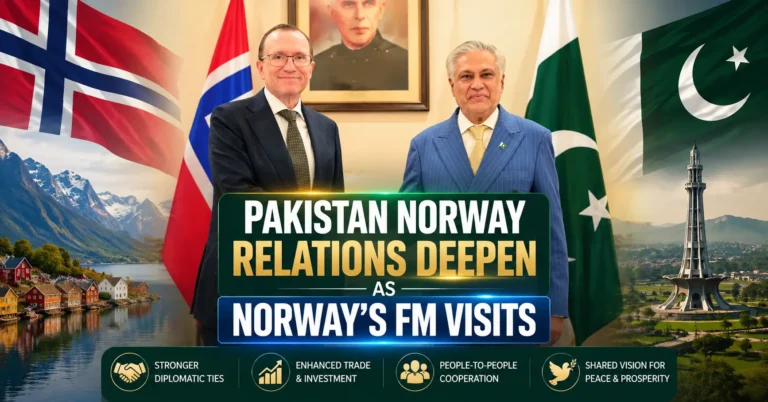

Pakistan Norway relations entered a new chapter on Thursday, as Norwegian Foreign Minister Espen Barth Eide wrapped up a two-day visit to Islamabad — the first by a Norwegian top diplomat in a decade. The trip carried unusual weight, blending defence diplomacy, trade talk and a rare public nod to Pakistan’s mediating role in the Iran-US conflict.
Eide’s itinerary was packed. He met Deputy Prime Minister and Foreign Minister Ishaq Dar at the Ministry of Foreign Affairs, then travelled to General Headquarters (GHQ) in Rawalpindi for talks with Chief of Defence Forces and Chief of Army Staff Field Marshal Syed Asim Munir. Both meetings produced statements that Pakistani outlets rushed to publish — but few explained what any of it actually means.
Who Is Espen Barth Eide, and Why Is This Visit Significant

Espen Barth Eide has served as Norway’s foreign minister and arrived in Islamabad at Ishaq Dar’s personal invitation. His visit marked the highest-level engagement between the two countries in ten years, a gap that itself says something about how peripheral Pakistan-Norway ties had become.
He was received at the airport by Additional Foreign Secretary (Europe) Ambassador Ayesha Ali. Eide later said he had promised Dar “many months ago” that he would come, framing the trip as a long-overdue reset rather than a routine courtesy call between allies.
Inside the GHQ Meeting: What CDF Munir and Eide Discussed
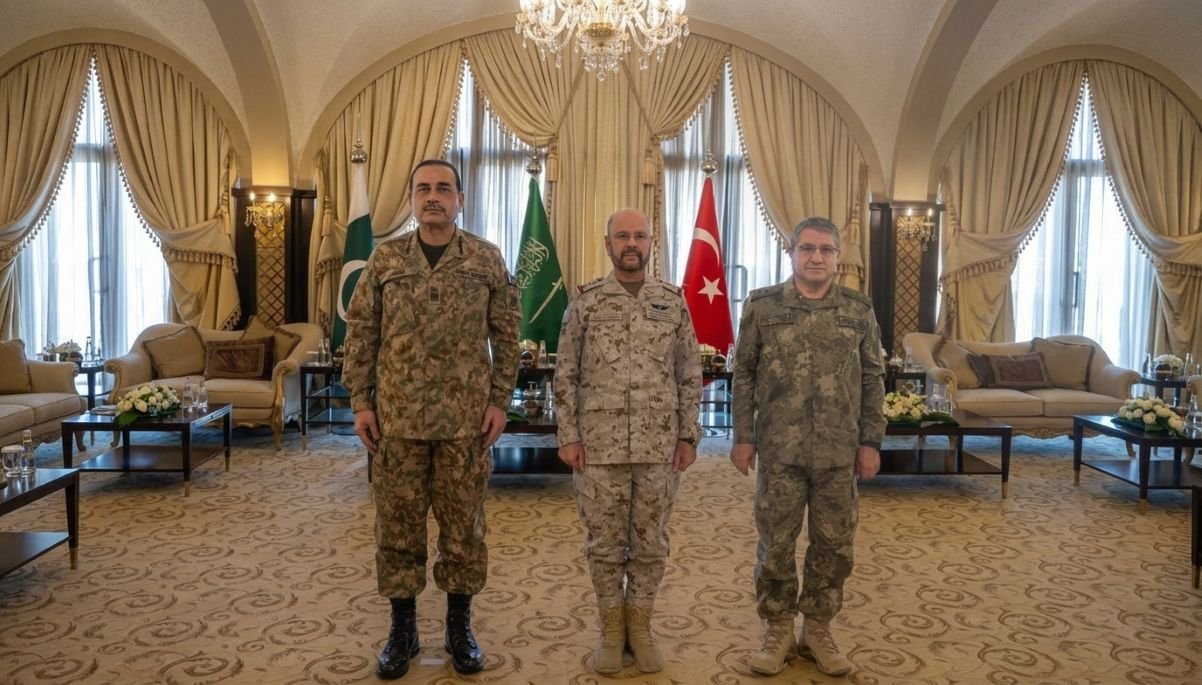
At GHQ, Field Marshal Munir briefed the visiting delegation on Pakistan’s reading of global and regional security, according to the Inter-Services Public Relations (ISPR) statement. He stressed “cooperation and collaborative efforts” as the only realistic way to manage shared security threats.
Eide, in turn, praised what ISPR called the “professional role” of Pakistan’s armed forces in regional stability. Key points raised during the meeting included:
- Expansion of defence and security engagements between the two militaries
- Ongoing regional security dynamics, including the Iran-US conflict fallout
- Bilateral cooperation frameworks between Pakistan and Norway
- Reaffirmation of both sides’ commitment to strengthened ties
A Decade-Long Gap: The Backstory of Pakistan Norway Relations

Pakistan Norway relations stretch back roughly 78 years, according to remarks made during the visit, yet high-level political contact has been sparse. The Foreign Office noted the trip built on “sustained high-level engagement,” including phone calls between Dar and Eide in March and April 2026.
READ MORE: PIA Chairman Anwar Ali Hyder Rewards Staff — Big Move
A visit by Norway’s State Secretary, Andreas Motzfeldt Kravik, to Islamabad in May had already laid groundwork. Eide’s arrival effectively converted months of lower-level diplomatic contact into a headline-grabbing, ministerial-level reset of the relationship.
Iran-US Mediation: Pakistan’s “Massive Task,” According to Oslo
Much of the visit’s coverage centred on Eide’s praise for Pakistan’s diplomacy during the Iran-US conflict that began on February 28. He credited Prime Minister Shehbaz Sharif, Dar and Munir with what he called “a service to the world” for offering Islamabad as both venue and facilitator for negotiations.
“I know how hard it is,” Eide said, referring to the difficulty of peace mediation. He added that Norway was among the earliest Western nations to state the conflict was a violation of international rules — a pointed alignment with Islamabad’s own position on the matter.
Trade, EFTA and the Fivefold Jump in IT Exports
Beyond security, the economic thread of the visit deserves more attention than it received elsewhere. Dar told reporters Pakistan’s IT exports to Norway had grown more than fivefold over the last two years, a figure that hints at a quietly expanding tech-services corridor.
Eide, meanwhile, pushed for structural trade gains through the EFTA-Pakistan partnership. Dar cited Norwegian fertiliser giant Yara International’s joint venture with Fauji Fertilizer as a model, calling it a potential “trailblazer” for future Norwegian investment in Pakistan.
Climate, Maritime Cooperation and the Pakistani Diaspora

Climate change surfaced as a genuine area of convergence. Dar pointed to an MoU signed under Article 6 of the Paris Agreement on April 1, while Eide spoke of Pakistan’s exposure to “extreme effects” of floods and climate-driven disasters.
Maritime cooperation also featured prominently, with Dar pitching Pakistan as a competitive ship-recycling destination for Norwegian vessels under Hong Kong Convention standards. Both leaders further highlighted the Pakistani diaspora in Norway, which Eide said had produced “leading politicians” of Pakistani-Norwegian descent.
Kashmir and the Indus Waters Treaty Enter the Conversation
Dar used the platform to raise Indian Illegally Occupied Jammu and Kashmir (IIOJK), calling it one of the world’s “long-standing unresolved international disputes,” still on the UN Security Council’s agenda since 1948.
He also accused India of “weaponising water” after New Delhi’s unilateral suspension of the Indus Waters Treaty, urging Eide’s government to recognise the move as a breach of international law. Eide, for his part, said Norway and Pakistan “totally agree and cooperate” on broader questions of sovereignty and dispute resolution.
What This Visit Signals for Pakistan’s Global Standing
Taken together, the visit reads less like a one-off courtesy trip and more like a calculated diplomatic push. Pakistan is leaning into its Iran-US mediation credentials to reposition itself internationally at a moment when regional alignments are shifting fast.
Whether this translates into concrete EFTA trade gains or deeper defence cooperation remains to be seen. For now, Pakistan Norway relations have moved from a decade of quiet dormancy to renewed, high-profile engagement — and both capitals appear eager to keep that momentum going.
Do you think Pakistan’s Iran-US mediation role will translate into lasting diplomatic and trade gains with Western partners like Norway?