
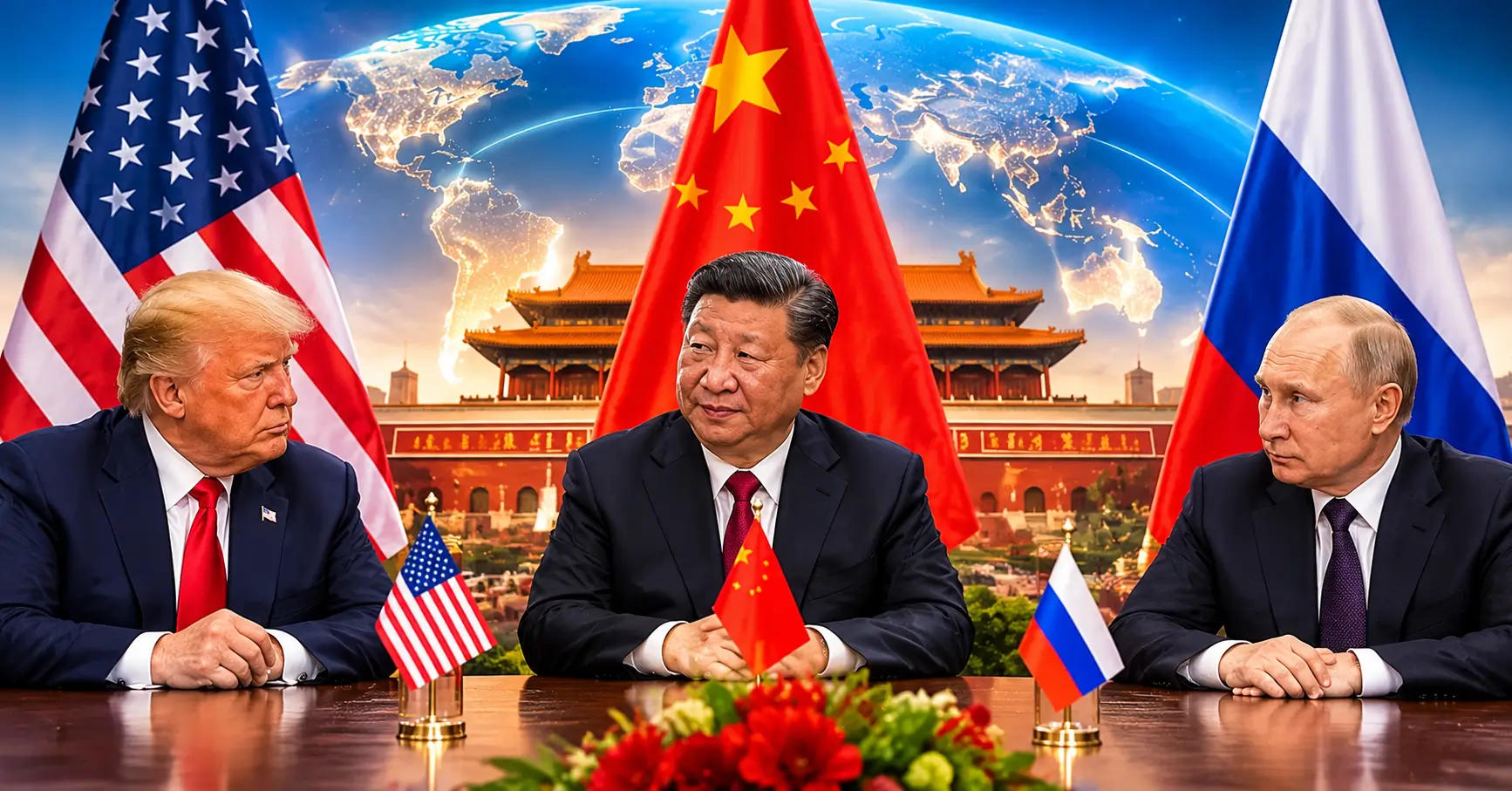

The three leaders meeting in China could mark a significant moment in international diplomacy as US President Donald Trump, Chinese President Xi Jinping and Russian President Vladimir Putin prepare for unprecedented trilateral talks in Shenzhen on November 19.
The planned gathering will take place alongside the Asia-Pacific Economic Cooperation (APEC) summit. Nuclear arms reduction and the Iran conflict are expected to feature prominently, although officials have cautioned against expecting an immediate diplomatic breakthrough.
Why Trump, Xi Jinping and Putin Are Meeting in China
The proposed meeting brings together the leaders of three countries with enormous economic, military and geopolitical influence. Their discussions could influence international security, nuclear policy and relations between competing global powers.
The gathering also reflects growing pressure to establish communication between Washington, Beijing and Moscow. Despite their differences, all three governments have interests in preventing wider international instability and managing increasingly complicated security challenges.
When and Where Will the Three Leaders Meet?

The three leaders are scheduled to meet on November 19, 2026, in Shenzhen, a major technology and economic centre in southern China. Kremlin spokesman Dmitry Peskov confirmed the date and location on November 14.
The discussions will take place on the sidelines of the APEC Economic Leaders’ Meeting, scheduled for November 18–19. The wider summit provides an opportunity for participating governments to address regional economic cooperation alongside important diplomatic developments.
| Summit detail | Information |
|---|---|
Meeting date | November 19, 2026 |
Location | Shenzhen, China |
| US President | Donald Trump |
Chinese President | Xi Jinping |
| Russian President | Vladimir Putin |
Main expected subjects | Nuclear arms and Iran |
| Associated event | APEC 2026 |
What Will Be Discussed at the Trilateral Summit?
Nuclear weapons and international security are expected to dominate the discussions. White House Assistant Press Secretary Olivia Wales said Trump intends to discuss reducing nuclear weapons, describing their proliferation as a serious international danger.
READ MORE: NCCIA Issues Advisory Ahead of 11.11 Sale, Warns Shoppers About Online Fraud
Iran is another subject Washington intends to raise. However, the three governments have different foreign policy priorities, meaning discussions could expose disagreements rather than produce immediate commitments or a common diplomatic position.
The expected agenda includes:
Nuclear arms reduction and non-proliferation.
International security and strategic stability.
The conflict involving Iran.
Relations between the United States, China and Russia.
Nuclear Weapons and the Future of Global Arms Control

Nuclear arms control represents one of the most significant reasons behind the proposed gathering. The United States and Russia possess the world’s largest nuclear arsenals, while China’s expanding capabilities have increased international attention on its strategic weapons programme.
The expiration of the New START treaty in February 2026 has added urgency to discussions about future arrangements. However, bringing three nuclear powers into one negotiation presents challenges because their arsenals, security concerns and military strategies differ considerably.
Why Iran Is Part of the Discussion
Iran is expected to feature in Trump’s discussions with Putin and Xi, reflecting Washington’s interest in addressing the country’s security situation and wider regional tensions. The issue also connects to disagreements over nuclear proliferation and international security.
For Beijing and Moscow, Iran has its own diplomatic and strategic significance. Their positions do not necessarily match Washington’s objectives, making the discussion an important test of whether the three governments can identify common ground.
Will the Russia-Ukraine War Be Discussed?

The Russia-Ukraine war remains an important complication surrounding the meeting. According to US officials, Trump does not intend to include Ukraine in the trilateral discussions, arguing that the conflict belongs to a separate diplomatic track.
However, Russian officials have indicated that Ukraine-related negotiations could continue through other discussions during the APEC gathering. This difference in messaging matters because any discussions affecting Ukraine’s future without its participation could generate serious concerns among European governments and Kyiv.
What Does Each Country Want From the Meeting?
Although the three presidents will share the same negotiating table, their priorities are not identical. Washington wants to advance nuclear arms discussions, while Moscow has an interest in strengthening its international diplomatic position and maintaining communication with the United States.
Beijing faces a different calculation. China wants to preserve its strategic independence while maintaining its relationship with Moscow and managing competition with Washington. These competing interests could determine whether the meeting produces practical progress.
| Country | President | Main diplomatic interest |
|---|---|---|
United States | Donald Trump | Nuclear arms reduction and Iran |
China | Xi Jinping | Strategic stability and diplomatic influence |
| Russia | Vladimir Putin | International engagement and security negotiations |
Why China Is a Crucial Player in the Summit
China’s role as host gives Xi Jinping an opportunity to position Beijing at the centre of an important international diplomatic gathering. Hosting discussions between Washington and Moscow also reinforces China’s influence in conversations about global security.
However, China’s participation in nuclear arms negotiations is complicated by differences in arsenal size. Beijing has historically resisted being placed under the same arms control obligations as the United States and Russia, whose nuclear stockpiles are considerably larger.
How the APEC Summit Brings Global Powers Together
The APEC summit provides the diplomatic setting for the planned meeting. The organisation brings together 21 Asia-Pacific member economies and focuses on economic cooperation, trade, investment and regional development.
Its 2026 leaders’ meeting takes place in Shenzhen on November 18–19. The event’s broader economic agenda includes innovation, artificial intelligence, supply chain resilience and regional cooperation, making it an important gathering beyond the proposed three-way talks.
Why the Meeting Could Change Global Diplomacy
A direct conversation between Trump, Xi and Putin could create opportunities for communication on issues that frequently divide their governments. Even without a formal agreement, establishing dialogue between the three nuclear powers would carry diplomatic significance.
However, the meeting should not automatically be interpreted as evidence of a new alliance or a major geopolitical agreement. Their competing interests, existing disagreements and different approaches to international conflicts could limit the outcome considerably.
Challenges That Could Prevent a Major Agreement
One major obstacle is the difference between the countries’ nuclear capabilities and expectations. Washington wants China involved in wider arms control discussions, while Beijing has reasons to question arrangements that treat its considerably smaller arsenal in the same way.
The Ukraine conflict and Iran’s regional position create additional complications. Disagreements over negotiating formats, participation and diplomatic priorities could prevent the leaders from reaching common commitments, even if they agree to maintain communication after the summit.
What Happens After the China Summit?
The immediate significance of the three leaders meeting in China will depend on whether the discussions produce further diplomatic engagement. A first conversation may establish negotiating priorities, but meaningful nuclear arms agreements would require detailed discussions and sustained government-level cooperation.
International observers will also watch for developments involving Iran, Ukraine and US-China relations. Statements issued after the gathering, any follow-up meetings and concrete policy commitments will provide a clearer picture of its diplomatic importance.
The planned Shenzhen meeting therefore represents an important diplomatic development, but its actual impact will only become clear after the leaders sit down together.