
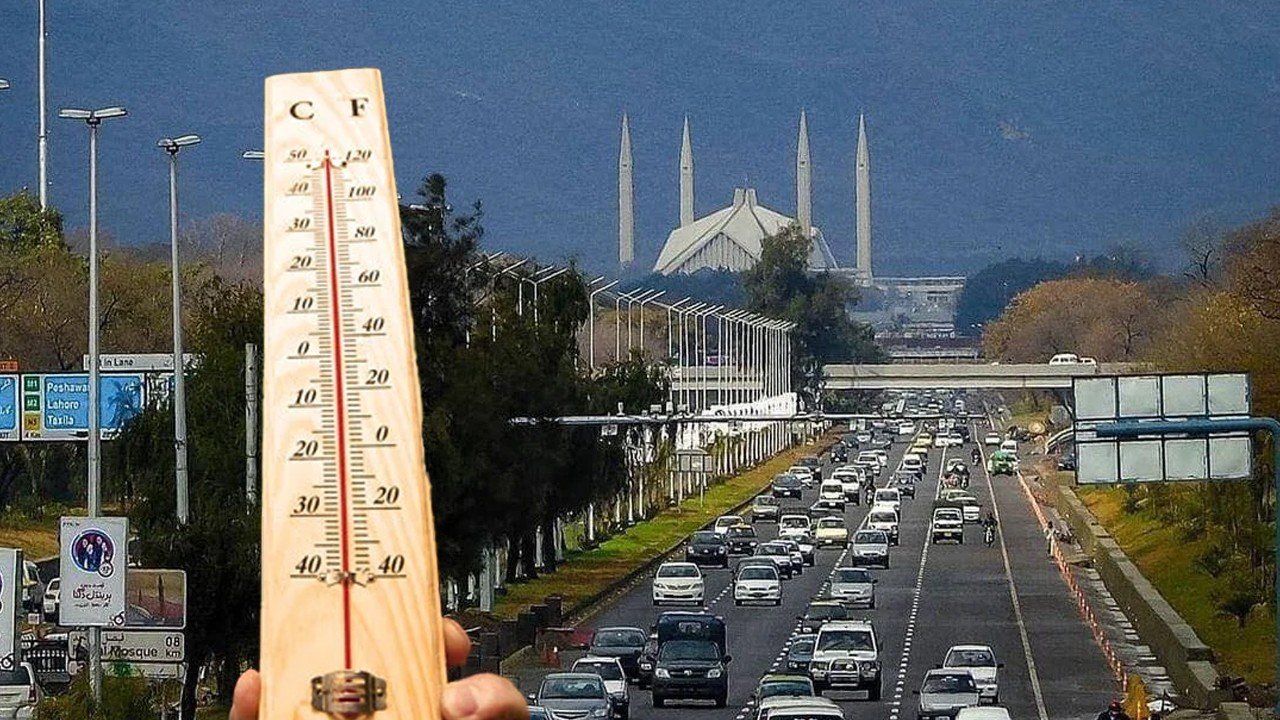
ISLAMABAD: The federal capital, Islamabad, recorded one of its hottest-ever days this week as temperatures surged to 45°C, just 1.6°C below the city’s all-time high. According to the Pakistan Meteorological Department (PMD), the scorching heat marked a historic moment in what is already being described as the Islamabad hottest February on record. The extreme weather also coincided with a forest fire in the Margalla Hills, raising further environmental concerns.
Meteorologists say persistent high-pressure systems and dry conditions contributed to the unusual spike in temperature, while authorities brace for possible climate-related impacts.
45°C Recorded — Just Below Historic 1994 Record
The Pakistan Meteorological Department confirmed that Islamabad’s temperature reached 45°C on Wednesday, bringing it dangerously close to the city’s highest-ever recorded temperature.
The all-time record remains 46.6°C, set on June 21, 1994 — a benchmark that still stands more than three decades later. However, the latest reading is being described as one of the hottest days ever experienced in the capital.
Weather experts note that such temperatures are highly unusual for this time of year, particularly during what is traditionally considered the late winter or early spring transition period.
Relief Expected as Rain Forecast Announced
In a post on X (formerly Twitter), PMD’s Dr. Mohammad Hanif offered a glimmer of hope. He indicated that rainfall is expected in the coming days, which could provide much-needed relief from the relentless heatwave conditions.
Meteorologists believe incoming weather systems may lower temperatures and ease pressure on residents already coping with extreme heat.
However, experts caution that short-term rainfall does not reverse broader warming trends.
Margalla Hills Fire Amid Extreme Heat
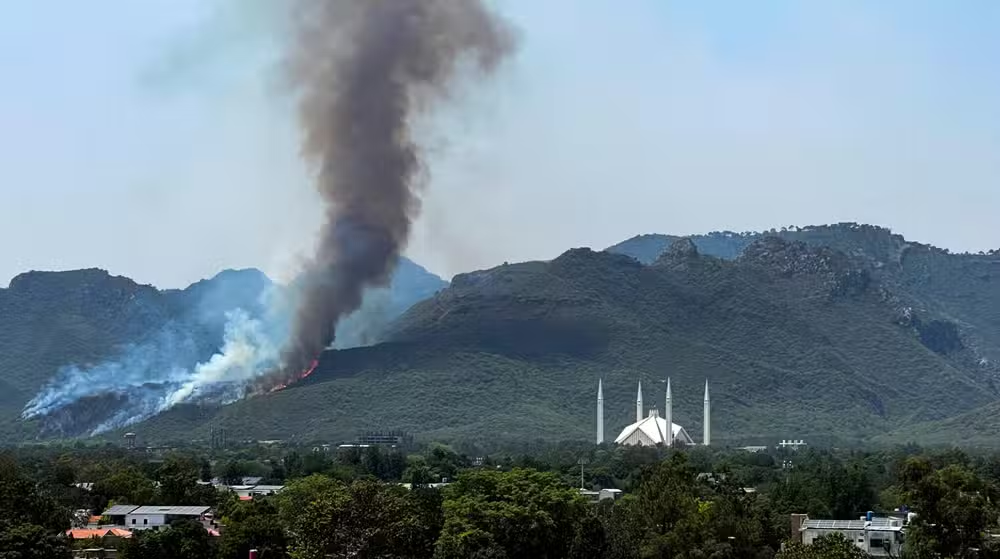
As temperatures soared, a fire broke out on the slopes of the Margalla Hills, triggering an immediate emergency response from the Islamabad district administration.
The assistant commissioner reached the site to oversee operations as firefighting teams launched efforts to contain the blaze in a forested area. According to district officials, more than 50 firefighters were deployed to control the fire.
Authorities expressed confidence that the situation would soon be brought under control. The cause of the fire had not been officially confirmed at the time of reporting.
Dry Weather Increases Fire Risk
The Margalla Hills, a popular destination for hiking, sightseeing, and family picnics, frequently experience fire incidents during prolonged dry spells.
Officials believe that many such fires are linked to human activity, including:
- Careless disposal of cigarette butts
- Illegal bonfires
- Unauthorized barbecues
- Negligent handling of burning materials
With dry vegetation and soaring temperatures, even a small spark can quickly escalate into a large blaze.
Environmentalists warn that rising heat combined with reduced rainfall significantly increases wildfire risks.
Section 144 Imposed in Margalla Hills National Park
In response to both the extreme heat and fire outbreak, authorities have reinforced strict preventive measures.
The district administration has imposed Section 144, banning barbecues and bonfires across green belts and within the Margalla Hills National Park.
Officials clarified that no fire-related activity is allowed under the current restrictions. The move aims to prevent further incidents during the ongoing heatwave.
Temporary warning signs and banners have also been installed at various hiking trails and entry points to alert visitors.
Public Advisory for Eid Picnics
With Eid holidays approaching, the district administration has urged families to choose safer public spaces rather than forested areas for picnics and gatherings.
Authorities emphasized that:
- Forest zones remain high-risk areas
- Bonfires and barbecues are strictly prohibited
- Violations may result in legal action
Residents have been advised to follow safety guidelines and cooperate with enforcement teams to prevent further environmental damage.
Heatwave Conditions Across Pakistan
Islamabad’s extreme temperatures are part of a broader national trend.
Multiple cities across Pakistan have recently ranked among the hottest places in the world, according to international weather monitoring platforms. Severe heat alerts have been issued in various regions as temperatures continue to climb.
Climate experts say Pakistan is increasingly vulnerable to:
- Early-onset heatwaves
- Prolonged dry spells
- Rising average temperatures
- Increased wildfire risks
The Islamabad hottest February adds to growing evidence of shifting climate patterns.
Climate Change or Weather Anomaly?
While one extreme day does not confirm long-term climate change, scientists say repeated record-breaking temperatures are cause for concern.
Islamabad, historically known for relatively moderate summers compared to cities like Karachi and Lahore, is increasingly witnessing intense heat events.
Experts explain that climate change amplifies natural weather variations. This means:
- Hot days become hotter.
- Heatwaves arrive earlier.
- Dry spells last longer.
When combined with rapid urban expansion and reduced green cover, these factors intensify heat stress in cities.
Urban Expansion and Rising Heat
Islamabad’s development over the past decade has significantly altered its landscape. Expanding housing projects, road networks, and commercial zones have reduced natural green spaces.
The “urban heat island” effect — where concrete and asphalt trap heat — may be contributing to higher surface temperatures.
Environmental planners argue that stronger urban forestry programs and sustainable infrastructure planning are essential to protect the city from future extremes.
Health Risks of Extreme Heat
High temperatures pose serious health risks, particularly for vulnerable groups such as children, the elderly, and outdoor workers.
Medical professionals advise:
- Staying hydrated
- Avoiding outdoor activities during peak hours
- Wearing light, breathable clothing
- Seeking immediate help for symptoms of heatstroke
Authorities may issue further advisories if temperatures continue to rise before the forecast rainfall arrives.
What Happens Next?
Meteorologists are closely monitoring upcoming weather systems that could bring rain and temporary relief.
If rainfall materializes, it may:
- Lower daytime temperatures
- Reduce wildfire risks
- Improve air quality
However, climate experts stress that long-term adaptation strategies are necessary to address rising heat trends.
Outlook!
Islamabad’s temperature spike to 45°C just shy of its 1994 record marks one of the most extreme weather events in the city’s history. The Islamabad hottest February has not only broken records but also triggered forest fires, public safety measures, and fresh debate about climate change.
While rain is expected to bring temporary relief, the broader message remains clear: extreme weather events are becoming more frequent and intense. As authorities enforce fire bans and heat advisories, residents are urged to stay cautious and environmentally responsible.
The coming days will determine whether this was an isolated surge or another signal of a warming future for Pakistan’s capital.