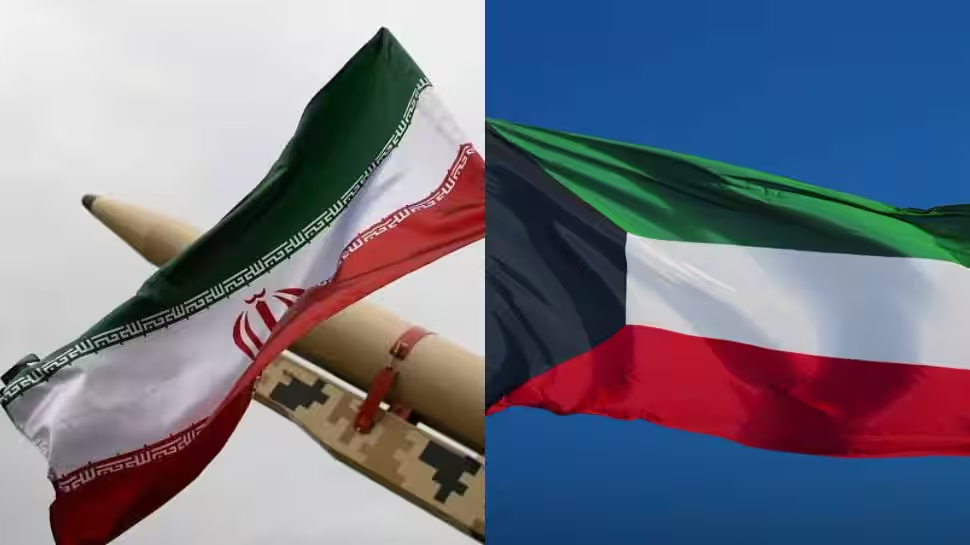
Kuwait Condemns Iran Airspace Violation after alleging that attacks carried out by Iran breached its territory in what officials described as a “flagrant violation” of sovereignty and international law. The statement was issued by Kuwait’s Foreign Ministry in Kuwait City following reports of missile activity and air defense interceptions across parts of the Gulf.
Officials warned that the country reserves the right to respond proportionately, signaling that further escalation could destabilize the wider region. The remarks come amid rising tensions involving Iran and several Gulf states.
Kuwait Condemns Iran Airspace Violation in Strong Terms

In an official statement, Kuwait’s Foreign Ministry said the attacks carried out on its territory constituted a direct breach of sovereignty. The ministry described the alleged actions as a serious violation of international law and regional norms.
“Kuwait reserves the right to respond in a manner commensurate with the scale and nature of this attack,” the statement read. However, authorities did not provide specific details about what such a response might entail.
The carefully worded declaration suggests Kuwait is weighing diplomatic, legal, and potential security measures.
Rising Gulf Tensions After Reported Missile Activity
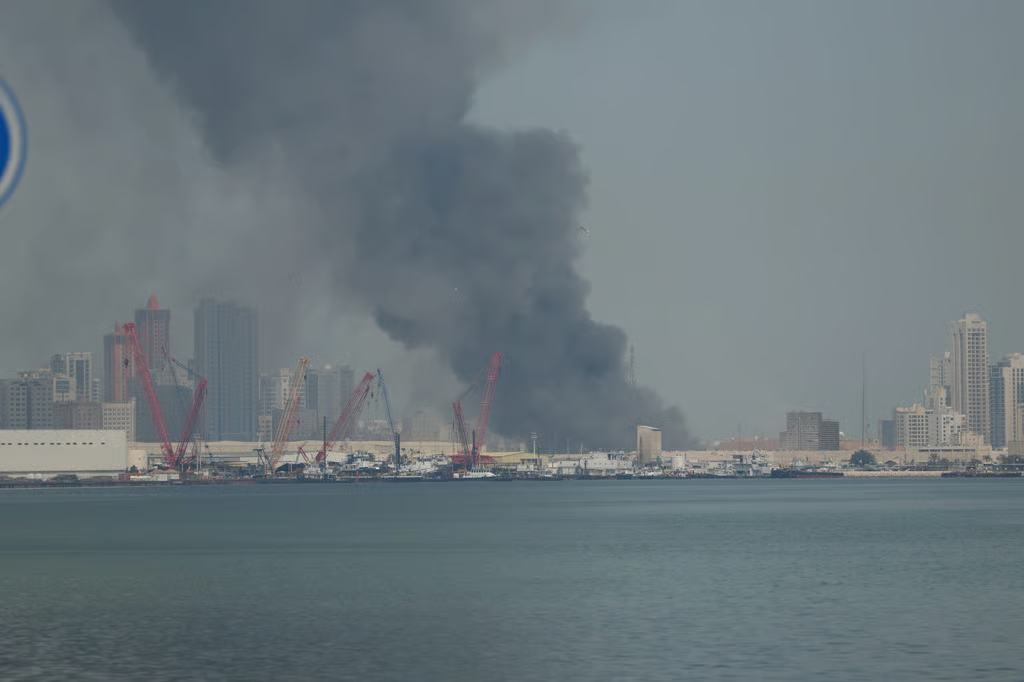
The condemnation follows reports of missile launches and air defense interceptions across several Gulf states. Governments in the region have increasingly characterized these incidents as violations of international law and direct threats to regional stability.
Multiple states have also reported:
- Temporary airspace disruptions
- Air travel delays and rerouting
- Activation of air defense systems
- Heightened military readiness
While damage assessments are ongoing, officials have emphasized the seriousness of the situation.
Regional Reactions: UAE and Qatar Signal Retaliation Rights
Kuwait’s remarks come shortly after the United Arab Emirates and Qatar declared they reserve the right to retaliate against Iran’s reported missile attacks.
Both governments framed the incidents as breaches of sovereignty and warned that appropriate measures could follow if tensions continue to rise.
The coordinated tone among Gulf states suggests growing alignment on security concerns related to Iran.
Kuwait’s Warning on Regional Stability

Beyond condemning the attacks, Kuwait stressed the broader risks of escalation. The Foreign Ministry warned that any further military activity would “seriously undermine stability in the region.”
The Gulf region remains strategically vital due to its energy exports, shipping lanes, and global trade routes. Even limited military exchanges can have significant economic and geopolitical consequences.
Security analysts say Kuwait’s warning is intended not only for Iran but also for the international community, signaling the urgency of de-escalation efforts.
Legal Framing: International Law and Sovereignty
By describing the alleged attacks as violations of international law, Kuwait is positioning its response within a legal framework rather than purely military rhetoric.
Experts note that references to airspace violations and sovereignty breaches often serve two purposes:
- Building diplomatic support at international forums
- Justifying potential countermeasures under international law
Kuwait has historically preferred diplomatic engagement and mediation in regional disputes. However, direct territorial concerns may shift the tone toward a firmer stance.
Impact on Civil Aviation and Public Safety
Several Gulf states reported disruptions to civilian air traffic following the missile activity. Flights were delayed, rerouted, or temporarily suspended as precautionary measures.
Civil aviation authorities across the region heightened alert levels to ensure passenger safety. Airlines continue to monitor developments closely.
Although no widespread civilian casualties have been reported, the incidents have raised public anxiety about regional security.
Diplomatic Channels and Next Steps
Despite the strong condemnation, Kuwait has not closed the door to diplomatic engagement. Officials have not announced immediate military retaliation, suggesting that consultations with regional allies and international partners are ongoing.
Potential next steps could include:
- Diplomatic complaints at international bodies
- Coordination with Gulf Cooperation Council members
- Strengthening defensive readiness
- Strategic communication to deter further incidents
Much will depend on whether additional military activity occurs in the coming days.
Broader Regional Context
Tensions between Iran and several Gulf states have fluctuated in recent years, often tied to broader geopolitical rivalries and security concerns.
The current developments represent one of the more direct confrontations involving reported airspace violations. If confirmed, such actions could mark a significant escalation in Gulf security dynamics.
Global powers are likely to monitor the situation closely, given the strategic importance of the region.
A Critical Moment for Gulf Security
Kuwait Condemns Iran Airspace Violation at a time of heightened regional tension, warning of proportional response while urging stability. The statement signals both resolve and caution, reflecting Kuwait’s dual commitment to sovereignty and regional peace.
As Gulf states coordinate their positions and assess developments, the coming days will be crucial in determining whether diplomacy prevails or tensions deepen further.
Readers can follow ongoing updates in our International and Middle East coverage sections as the situation continues to unfold.