

In a major step toward strengthening climate action and sustainable workforce development, The University of Lahore (UOL), under its strategic platform Continuum, has partnered with CLIMENA LLC to launch Pakistan’s largest multi-disciplinary Climate Talent Initiative Pakistan programme.
Announced in early 2026 at UOL’s Lahore campus, the initiative aims to build a national pipeline of 10,000 climate-ready professionals within the next 24 months. The project focuses on developing climate skills, ESG compliance expertise, and green economic capabilities to support sustainable growth in Pakistan and across the Middle East.
The initiative seeks to bridge academia with industry execution, strengthen workforce readiness, and equip professionals with practical tools to address climate challenges, regulatory requirements, and sustainable development goals.
A Landmark Climate and Sustainability Partnership

The Climate Talent Initiative Pakistan represents the first flagship international collaboration under UOL’s Continuum platform — an integrated alumni, employer, and impact ecosystem designed to connect education with real-world implementation.
The programme aims to create sector-specific talent pipelines aligned with national and regional economic priorities. By combining academic training with industry engagement, the initiative focuses on developing practical expertise in climate adaptation, mitigation strategies, and environmental governance.
Officials say the partnership reflects growing global demand for skilled professionals capable of addressing climate risks while supporting economic development and regulatory compliance.
Why the Climate Talent Initiative Pakistan Matters
Pakistan faces increasing environmental pressures, including extreme weather events, water scarcity, and rising energy demands. At the same time, businesses and institutions are under growing pressure to meet environmental, social, and governance (ESG) standards.
The initiative responds directly to these challenges by developing skilled human capital capable of supporting:
- Climate adaptation and mitigation strategies
- ESG reporting and compliance frameworks
- Green economic transformation
- Sustainable infrastructure development
- Climate finance and investment readiness
The programme is aligned with national policy priorities, international development frameworks, and regulatory requirements, including environmental disclosure standards by the Securities and Exchange Commission of Pakistan (SECP).
Programme Designed for Diverse Professionals
The initiative is structured to serve a wide range of participants, ensuring broad institutional impact. It targets:
- UOL alumni and students
- Public sector professionals
- Development practitioners
- Industry leaders and corporate managers
- Financial sector experts
- Government officials and regulators
Participants will receive applied training, policy-relevant knowledge, and implementation tools through short courses, micro-credentials, and executive workshops.
The programme will initially focus on Pakistan while also supporting regional collaboration and knowledge exchange with the Middle East.
Programme Focus Areas
The Climate Talent Initiative Pakistan covers multiple sectors and disciplines to address complex climate and sustainability challenges.
ESG and Regulatory Compliance
The programme will help public and private institutions meet environmental disclosure requirements, improve governance standards, and strengthen sustainability reporting frameworks.
Climate Finance and Carbon Markets
Participants will gain expertise in climate finance mechanisms, green banking, and carbon trading systems to support investment in sustainable projects.
Climate Technologies and Innovation
Training will focus on renewable energy, recycling solutions, and green data centres, encouraging technological innovation and environmentally responsible operations.
Climate-Resilient Infrastructure
The initiative supports the development of infrastructure capable of withstanding environmental risks, including disaster risk management strategies.
ESG Data Systems and Digital Reporting
Participants will learn monitoring, reporting, and verification (MRV) techniques, data management systems, and digital reporting tools for ESG compliance.
These focus areas aim to provide practical skills that can be directly applied across industries and government institutions.
Bridging Policy Commitments with Implementation
A key objective of the initiative is to strengthen local execution capacity. Experts often highlight that policy commitments alone are insufficient without skilled professionals to implement them.
The programme is designed to help:
- Businesses improve sustainability reporting quality
- Investors and banks meet international funding requirements
- Government ministries implement climate policies
- Development agencies execute environmental programmes
- Regulators ensure compliance with global standards
By building institutional readiness, the initiative seeks to translate climate commitments into measurable outcomes and real-world impact.
Driving Sector-Wide Transformation
The Climate Talent Initiative Pakistan is expected to influence multiple sectors of the economy by equipping professionals with specialized climate and sustainability skills.
Engineering and Infrastructure
Engineers will receive training in designing net-zero public and industrial infrastructure, supporting energy efficiency and emission reduction goals.
Healthcare Systems
Healthcare professionals will develop strategies for climate-resilient health systems capable of responding to environmental risks.
Manufacturing and Textile Industry
Industry leaders will explore circular economy models, sustainable production practices, and export compliance requirements.
Public Sector and Governance
Government teams will strengthen ESG reporting, climate data management, and policy implementation frameworks.
This sector-wide approach ensures that climate action becomes integrated into economic planning and institutional operations.
Pilot Programme and Expansion Plans
The initiative will begin with a pilot cohort of 200 UOL alumni and students. Following the pilot phase, the programme will scale to train 10,000 professionals across Pakistan and the Middle East within two years.
Officials describe the project as one of the region’s most comprehensive climate and ESG talent ecosystems. The expansion strategy reflects growing demand for sustainability expertise in both public and private sectors.
The programme also aims to position Pakistan as a regional hub for climate and ESG talent development.
Leadership Perspectives on the Initiative
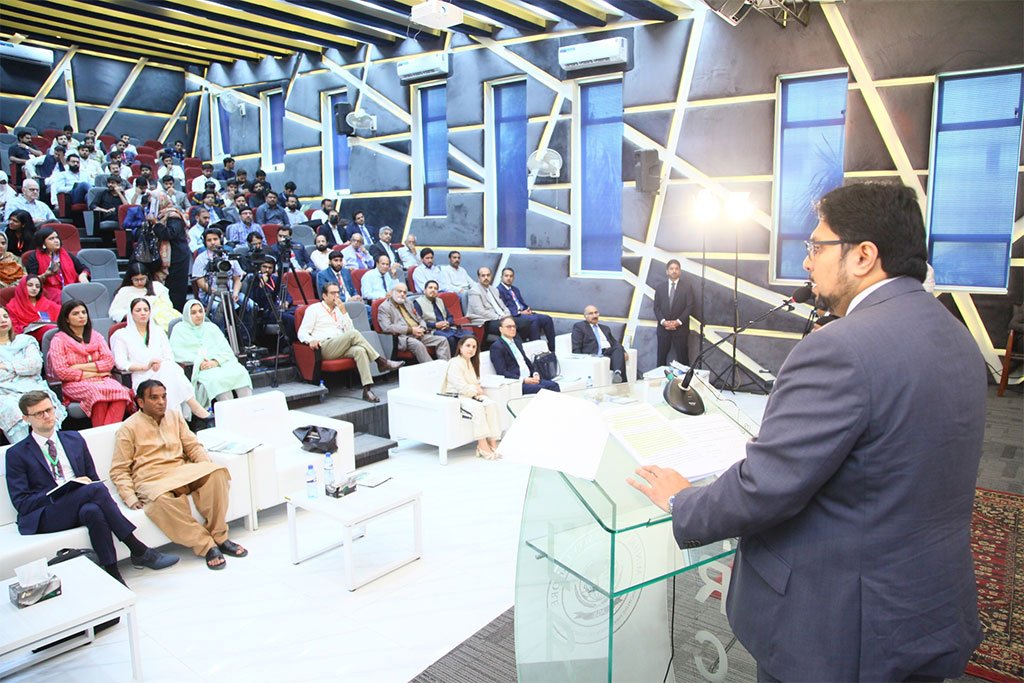
At the launch, institutional leaders emphasized the programme’s importance for national development and workforce readiness.
Awais Raoof, Chairman Board of Governors at The University of Lahore, said the initiative places alumni at the centre of Pakistan’s sustainability transition. He noted that combining academic knowledge with practical frameworks would help government institutions, development partners, and industries access the skilled talent needed to meet ESG obligations and deliver national climate priorities.
Dr Shahid Mahmud, Chairman and CEO of Interactive Group of Companies and Honorary Senior Adviser at OIC COMSTECH, representing CLIMENA, highlighted the global shift toward execution capacity in climate initiatives. He stated that the partnership would help scale climate, ESG, and digital skills that support compliance, project viability, and sustainable development outcomes.
Global Expertise Meets Academic Leadership
CLIMENA brings international expertise in ESG frameworks, climate finance, and regulatory compliance. The organization is a joint venture involving Fatima International UAE and Sustainability LLC (USA), combining global sustainability knowledge with regional insights.
Through this collaboration, UOL contributes academic leadership, research capacity, and its extensive alumni network. The partnership aims to create a strong knowledge exchange platform linking global best practices with local implementation.
This integration of global expertise and academic resources is expected to enhance Pakistan’s competitiveness in climate and sustainability sectors.
For more details about the Continuum platform and programme structure, readers can visit the official page:
Economic and Environmental Impact
The Climate Talent Initiative Pakistan is expected to generate long-term benefits beyond education and workforce development.
Potential Outcomes
- Improved climate resilience and environmental sustainability
- Increased access to international climate funding
- Stronger ESG compliance across industries
- Enhanced green job creation
- Greater investment in sustainable technologies
By developing skilled professionals and strengthening institutional capacity, the initiative supports Pakistan’s broader transition toward a green economy.
Final Thought
The launch of the Climate Talent Initiative Pakistan marks a significant milestone in the country’s efforts to address climate change through education, innovation, and workforce development. By partnering with CLIMENA LLC, The University of Lahore is building a large-scale talent ecosystem designed to equip professionals with the skills needed for climate resilience, ESG compliance, and sustainable economic growth.
With plans to train 10,000 climate-ready professionals and expand across Pakistan and the Middle East, the initiative highlights the growing importance of human capital in tackling environmental challenges. As climate risks continue to shape global economies, programmes like this may play a crucial role in preparing institutions, industries, and communities for a more sustainable future.
Readers are encouraged to follow developments in climate education and sustainability initiatives as Pakistan strengthens its role in regional climate leadership.