
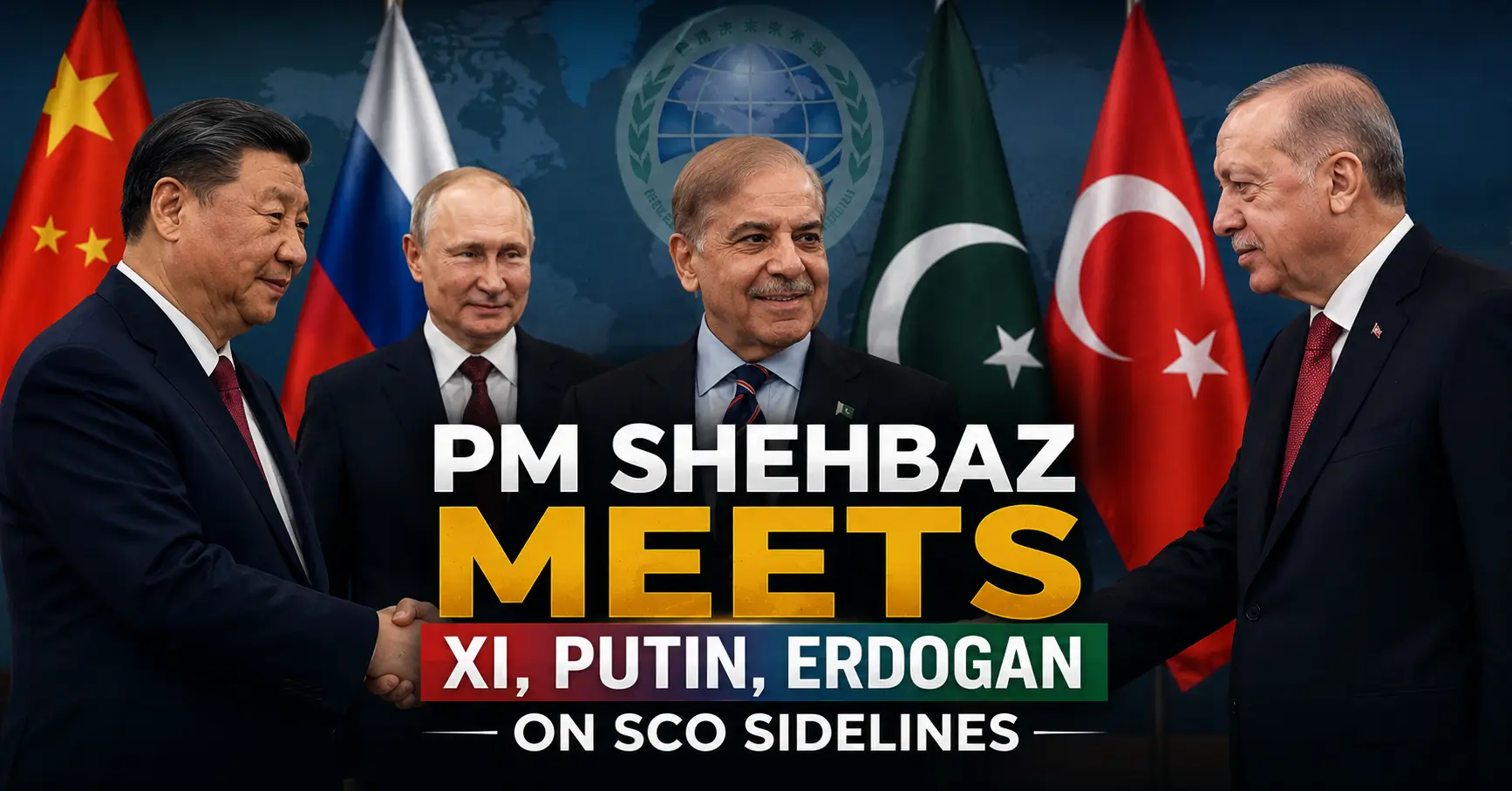

PM Shehbaz spent three days shaking hands with the men who run half the world’s population. Bishkek, the modest Kyrgyz capital, briefly became the center of global diplomacy.
PM Shehbaz meets Xi, Putin, Erdogan on SCO sidelines this week, alongside Iran’s Masoud Pezeshkian and several Central Asian heads of state, at the 26th Summit of the Shanghai Cooperation Organisation. The gathering ran from August 31 to September 1, 2026, marking the bloc’s 25th anniversary.
For Pakistan, the trip carried more weight than a routine diplomatic outing. Islamabad walked away with the SCO’s rotating chairmanship for 2026–27, a role that puts it at the center of the organisation’s agenda for the next year.
- PM Shehbaz Sharif visited Kyrgyzstan from August 31 to September 2, 2026.
- He was accompanied by Deputy PM Shehbaz and Foreign Minister Ishaq Dar, Commerce Minister Jam Kamal Khan, and other senior officials.
- Pakistan formally assumed the SCO Council of Heads of State chairmanship for 2026–27.
Inside the Bilateral Diplomacy at the 26th SCO Summit
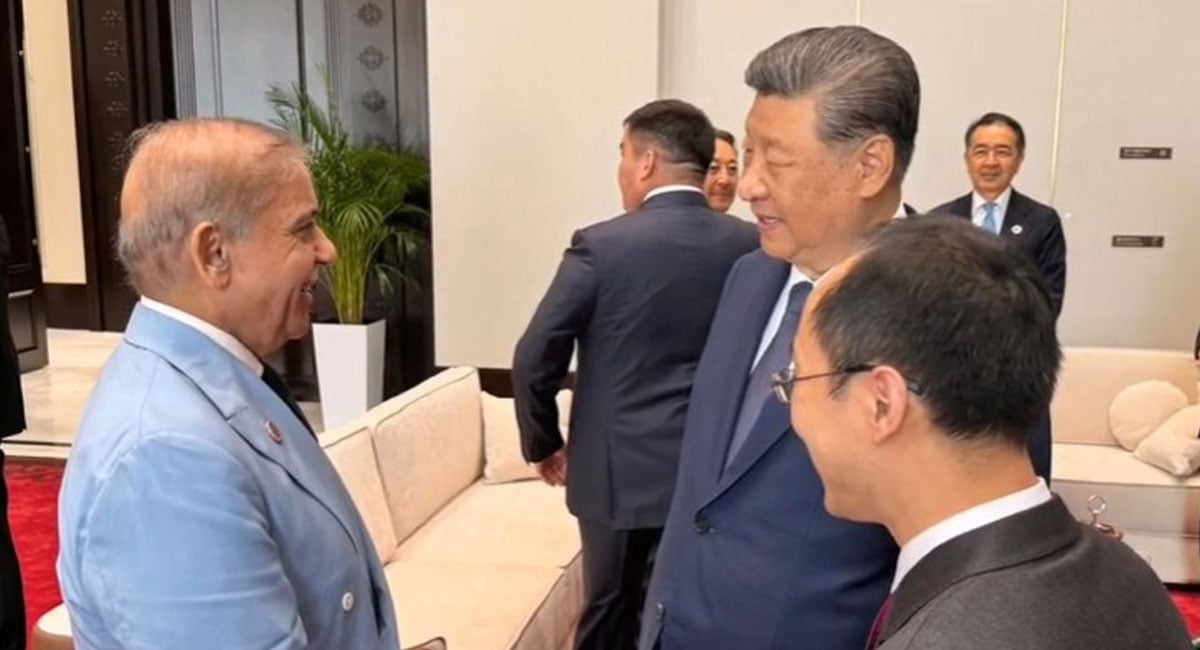
The 26th SCO Summit brought together roughly a dozen heads of state and government to the Ala-Archa State Residence outside Bishkek. Chinese President Xi Jinping, Russian President Vladimir Putin, Indian PM Narendra Modi, and Turkish President Recep Tayyip Erdogan all attended.
PM Shehbaz meets Xi, Putin, Erdogan on SCO sidelines as part of a packed schedule of informal pull-aside meetings, described by Pakistan’s Prime Minister’s Office as taking place in a “warm and cordial atmosphere.” The talks covered bilateral, regional, and international matters, though few concrete deliverables were publicly detailed from the Xi and Putin conversations specifically.
Pakistan’s Meetings With Regional Leaders — Key Takeaways
Not every meeting was a passing handshake. Shehbaz held substantive, documented sit-downs with several counterparts, and some produced tangible outcomes.
- He met Iranian President Masoud Pezeshkian on arrival, reaffirming the Islamabad Memorandum of Understanding from June 2026 on regional peace efforts.
- Pezeshkian invited Shehbaz to the ECO Summit in Tehran scheduled for December 2026.
- Pakistan and Kyrgyzstan signed a Diplomatic Programme of Cooperation for 2026–2027, along with a research MoU between the Institute of Strategic Studies Islamabad and its Kyrgyz counterpart.
With Uzbek President Shavkat Mirziyoyev, the conversation turned practical. Shehbaz pressed for faster implementation of previously agreed trade, investment, and connectivity decisions rather than fresh commitments.
Why the Shanghai Cooperation Organisation Summit Matters for Pakistan
The Shanghai Cooperation Organisation isn’t a household name outside policy circles, but it matters. Founded in 2001 by China, Russia, and four Central Asian states, it now spans ten full members after Pakistan and India joined in 2017.
For Pakistan, SCO membership offers a rare seat at a table shared by China, Russia, and India simultaneously. Few multilateral forums put Islamabad in direct proximity to all three at once, and Bishkek was no exception.
Field Marshal Syed Asim Munir’s recent visit to Tehran also featured in Shehbaz’s discussions with Pezeshkian, underscoring how security and diplomacy now move together in Pakistan’s regional outreach. The summit’s theme, “25 Years of the SCO: Together for Sustainable Peace, Development and Prosperity,” reflected the bloc’s broader ambitions beyond Pakistan’s own agenda.
Pakistan Set to Chair the SCO Council for 2026–27

The headline outcome for Islamabad wasn’t a bilateral photo-op. It was the chair’s gavel. Pakistan formally signed the declaration assuming the SCO Council of Heads of State chairmanship for the 2026–27 term during the Bishkek ceremony.
READ MORE: Islamabad MoU Implementation Is Only Way Forward: Dar Tells Iran
That role positions Pakistan to shape the bloc’s agenda through security, counterterrorism, trade, and connectivity discussions over the coming year. It also means Islamabad will host the next Council of Heads of State summit in 2027, a significant diplomatic showcase.
| Development | Detail |
|---|---|
| SCO Chairmanship | Pakistan, 2026–27 term |
| Next CHS Summit Host | Pakistan, 2027 |
| Summit Dates | August 31 – September 1, 2026 |
| Summit Location | Bishkek, Kyrgyzstan |
| Outcome Documents | 28 signed, including Bishkek Declaration |
Speaking at the summit, PM Shehbaz said the SCO provides a “shade of security and stability for all of us,” congratulating Kyrgyzstan on completing its chairmanship term and outgoing host duties.
Regional and Economic Context Behind the Bishkek Summit
The summit arrived at a tense moment. It was held four-and-a-half years into Russia’s war in Ukraine and roughly six months after the US-Israeli strikes on Iran that triggered a brief but damaging conflict, later paused under the Islamabad-mediated MoU.
Xi and Putin used their own sidelines meeting to reaffirm what they called an increasingly “solid” strategic partnership, even as Xi acknowledged growing “uncertainty and unpredictability in the international order.” For Pakistan, sandwiched geographically and diplomatically between these powers, that backdrop shaped much of the conversation in Bishkek.
- China-Pakistan ties remain anchored by the China-Pakistan Economic Corridor (CPEC), with both sides pushing toward an expanded “CPEC 2.0” phase.
- Pakistan’s outreach to Iran built on Pezeshkian’s own visit to Pakistan in June 2026.
- The summit also featured discussion of an SCO development bank and new transport corridors, Kyrgyz proposals that could reshape regional connectivity.
Expert and Diplomatic Reactions

Diplomatic observers noted that Pakistan’s chairmanship win carries symbolic and practical value beyond the summit hall. Al Jazeera’s coverage framed the Bishkek gathering as another platform for Xi and Putin to project a “vision of a multipolar world,” a framing Islamabad has quietly leaned into by expanding its own multilateral footprint.
Xi told Putin during their own meeting that bilateral ties had grown “more solid” and that prospects ahead were “even brighter,” despite global turbulence. Putin, in turn, said cooperation was “successfully developing on all fronts” — language that signals how major powers are using the SCO stage to project unity, with smaller and mid-sized members like Pakistan positioning themselves accordingly.
What Comes Next for Pakistan’s SCO Diplomacy
The real test starts now. Chairing the SCO Council means Islamabad must shepherd the bloc’s agenda through a year of heightened regional tension, from the Iran ceasefire’s fragility to ongoing China-India recalibration.
Pakistan will also need to prepare to host the 2027 summit, an undertaking that demands sustained diplomatic bandwidth and security coordination. Bishkek’s warm optics translate into concrete trade and connectivity gains for Pakistan remains an open question — one that will likely define how this chairmanship is judged.