
PTA’s New Rule Means Your Mobile Balance Will Never Just Vanish
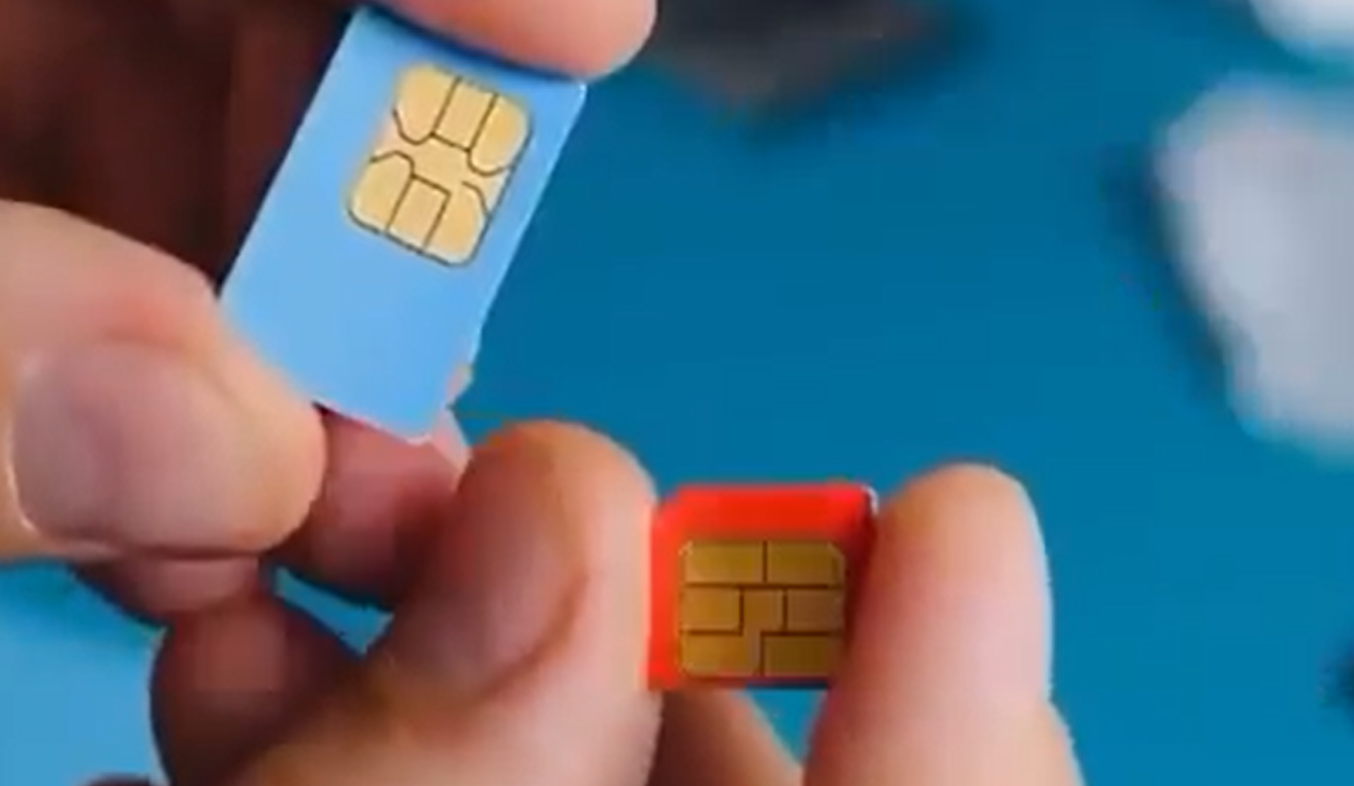
Millions of prepaid mobile users across Pakistan just got some rare good news. The Pakistan Telecommunication Authority PTA has ordered every cellular company, including Jazz, Zong, Ufone, and Telenor, to guarantee a minimum balance validity of 180 days on any recharge, no matter how small the balance is.
The rule takes effect on October 1, 2026. If your balance expire before you use it, it would not disappear for good. The moment you add balance again while your SIM is still active, that old unused amount balance comes right back.
This matters more than it might sound, since PTA’s own determination shows that around 97 percent of mobile subscribers in Pakistan, Azad Jammu and Kashmir, and Gilgit-Baltistan use prepaid connections.
The move follows a wave of complaints, particularly against Zong and Telenor, over operators demanding a minimum balance just to keep SIMs active, or not being able to carry forward the not used or leftover credit after a new recharge.
PTA said such practices “disproportionately affect low-income users,” who tend to recharge in small amounts less often. The regulator even looked abroad for a benchmark, citing how Vodafone UK keeps prepaid balances valid for the entire life of an active SIM.

Enforcement is already taking an impact. Jazz was fined Rs38.9 million on August 31 after PTA found serious lapses in the verification of nearly 400 corporate postpaid SIMs, issued without the client company’s consent.
This comes on top of a much larger Rs740 million in combined penalties slapped on Jazz, Zong, Ufone, and Telenor earlier this summer over illegal SIM activation’s. These are proof that the regulator is tightening its grip on the industry this year.
PTA Data Reveals Uneven Rise as Authority Manage growth, power cuts, and new rules
Pakistan’s telecom story is moving fast this year. According to the latest figures released by the Pakistan Telecommunication Authority on August 4, the country now has 1,136 active 5G sites spread across 23 cities. Jazz leads with 689 sites, Zong follows with 338, and Ufone trails at 109.
But all these offices are in Karachi, Lahore, Islamabad, and Faisalabad that together hold roughly 72 percent of all deployed sites, leaving smaller cities far behind.
PTA Chairman Major General (retd) Hafeez-ur-Rehman had earlier told a National Assembly panel that no fresh 5G infrastructure has actually been laid yet; services are simply running on existing towers, with dedicated equipment expected over the next six to eight months.
Money and power remain the bigger headaches. The March 2026 spectrum auction raised nearly $510 million after 480 MHz was sold, lifting total available spectrum from 274 MHz to 754 MHz.
READ MORE: Big Relief: PTA Facial Verification for SIM Issuance
Yet daily load shedding, sometimes stretching past ten hours in parts of the country, continues to knock out mobile towers and slow broadband speeds.
Fibre coverage remains thin too. Speaking at the EU-Pakistan Business Forum, IT Minister Shaza Fatima Khawaja admitted, “Only 16 percent of our towers are fiberized at this point. Our target is that in the next three years, we will increase that to almost 60 percent.”
Meanwhile, PTA’s annual report shows the sector crossed 200 million subscribers and earned over Rs1 trillion in revenue last year. Progress is real. Whether ordinary users feel it in their pockets is another question entirely.
Some Other Key Projects of PTA
- Simplified Licensing Opens Doors for Smaller Internet Providers
PTA introduced a new district-level Class License for Internet Services in January. This framework replaced older rules requiring costly regional or nationwide licensing. Under the new system, providers can now obtain licenses for individual districts. This significantly lowers entry barriers for small and medium sized operators.
- New Equipment Standards and Local Internet Routing Rules
In August, PTA notified new Telecommunication Equipment Standards Regulations through an official gazette. These regulations introduce internationally recognized technical standards for telecom equipment certification. The rules apply directly to telecom licensees, manufacturers, and equipment importers.
- Consumer Protection Numbers Show Strong Complaint Resolution
PTA received 4,901 consumer complaints against telecom operators during June alone. The Authority successfully resolved 4,611 of these complaints before month’s end.
PTA also revised its eSIM charging structure in discussions with mobile operators. The new framework caps initial eSIM issuance fees at fifteen hundred rupees.
PTA is also discussing SIM issuance through NADRA’s Pak ID platform.
- Strengthening Online Safety and Global Tech Compliance
PTA recently partnered with Google to launch the Digital Pasban safety initiative.
The Chairman announced that Google’s compliance with Pakistani laws has reached 88 percent. He revealed that PTA receives roughly 500 social media related complaints daily. The Authority now holds regular meetings with major platforms to discuss compliance requirements.
Looking Ahead for Pakistan’s Telecom Future
PTA also invited consultants to upgrade its Device Identification and Blocking System using AI. Separately, the Authority issued Internet of Things licenses to twenty-three different companies. These steps reflect PTA’s growing focus on artificial intelligence and connected devices.
Together, these reforms show PTA actively reshaping Pakistan’s digital and telecom landscape. From spectrum auctions to consumer protection, the regulator continues expanding its scope. As 2026 progresses, further regulatory updates are expected to follow steadily.