
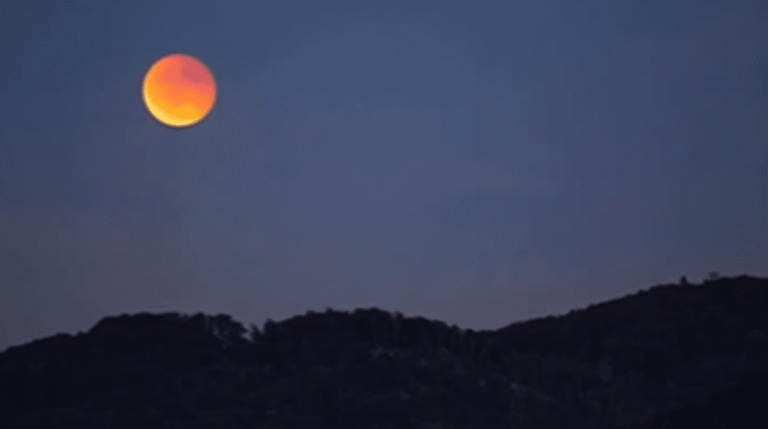

Rare Partial Blood Moon Lights Up Night Skies Across the Globe
A stunning partial lunar eclipse was seen across the sky on the night of August 27 into August 28, 2026; a Rare Blood Moon Eclipse. Sky watchers on several continents looked up in wonder. The Moon was seen fell into Earth’s shadow, turning a soft reddish color. Experts called it the most dramatic lunar eclipse until late 2028.
What Exactly Happened
This was not a full total eclipse but it was still very close. About 96 percent of the Moon’s surface passed through Earth’s darkest shadow. That shadow is known as the umbra. Only a thin sliver of the Moon stayed bright and untouched.
Because of this many people named it an almost Blood Moon. The event reached its peak around 4:12 a.m. Universal Time on August 28. From start to finish, the whole eclipse lasted around five and a half hours.
Why This Eclipse Happened
A lunar eclipse happens when all three the Sun, Earth, and Moon line up almost perfectly. Earth passes directly between the Sun and the full Moon. When this happens, Earth blocks most sunlight from reaching the Moon.
The Moon then falls into Earth’s shadow instead of shining brightly white. During a deep partial eclipse like this one, only a small edge of the Moon escapes the darkest shadow.
Sunlight bending through Earth’s atmosphere gives the shadowed Moon its eerie red and orange glow. This is the same reason sunsets often look red or orange.
Where People Could See It
The partial lunar eclipse was visible across a huge percentage of the planet. People in America, Europe, and Africa all had a chance to watch this view. North and South America enjoyed the clearest and longest views overall.
In the United States, the eclipse began Thursday night and stretched past midnight. Cities like Los Angeles saw the peak just hours after sunset.
On the East Coast, places like New York watched it near midnight. In Europe and the UK, the eclipse developed slowly before dawn broke. Millions of people across these regions had the opportunity to look up and view this wonder.
The View From the Ground
The viewers described a Moon that slowly darkened and changed color. As the shadow sneaked across the surface, craters became sharper and clearer. Near the peak many people noticed a faint turquoise band near the shadow’s edge.
That subtle blue green tint comes from sunlight passing through Earth’s ozone layer. The rest of the Moon glowed a deep coppery red during the darkest phase.
No special glasses or equipment were needed to enjoy the show safely. Many families and friends gathered outdoors just to watch it unfold together. Photographers set up cameras and tripods hours before the eclipse even began.
How People Reacted to the Amazing View
Excitement spread quickly online as the eclipse approached its dramatic peak. Social media filled with photos, videos, and live commentary from happy sky watchers. Astronomy clubs organized public viewing events in parks and open fields.
Some communities hosted telescope nights so more people could see the details closely. Many first time viewers said were amazed by the changing colors. Long time eclipse chasers called it one of the best sights of the year.
Weather played a big role in who got the clearest view. Cloud cover blocked the sky in some areas, disappointing some watchers there. Meanwhile, clear skies were over the parts of the western United States and South America and these areas gave excellent viewing conditions.
Why This Eclipse Was Special
This event stood out because of just how close it came to totality. Scientists said this was the deepest partial eclipse in years. The last similarly deep partial eclipse took place back in September 2024.
The next one this striking will not happen again until January 2028. This eclipse also arrived shortly after August’s total solar eclipse and the Perseid meteor shower. That made August 2026 an unusually busy month for sky lovers everywhere.
What Comes Next
Astronomers are already looking ahead to future eclipses on the calendar. The next major lunar eclipse will arrive in 2028, though it will be much shallower.
This week’s eclipse gave millions a rare and beautiful memory. Many are already planning ahead so they do not miss the next one. As one longtime sky watcher described it, moments like these remind us how connected we are to the sky above.