

Pink salt leaves Pakistan mostly as cheap raw rock, and other countries profit from the polish. On Thursday, Chief Minister Maryam Nawaz Sharif put Rs5 billion of interest-free lending behind changing that.
What Punjab Announced on 1 October
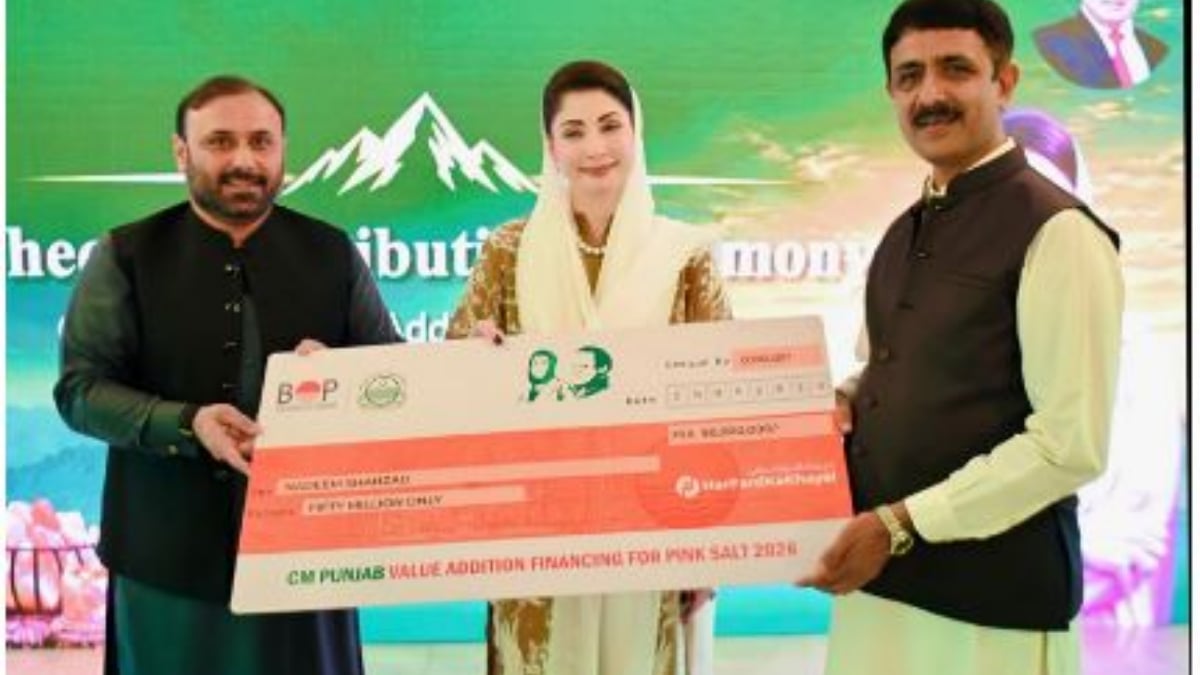
Chief Minister Maryam Nawaz Sharif distributed cheques to 10 businesspeople on Thursday, 1 October 2026, under the Pink Salt Value Addition Financing Scheme. The loans are interest-free, with the province absorbing the cost of borrowing.
Coverage reviewed for this report does not name the 10 recipients or state the cheque amounts. That gap matters, because a headline allocation says little about how much money has actually left the treasury.
Launch or Payout? Sorting Out the Dates
The scheme was first unveiled on 15 July 2026, when the chief minister inaugurated it digitally. Thursday’s ceremony, by contrast, was a cheque distribution, though some reports described it as a fresh launch.
Treat July as the start date and October as a disbursement milestone. The reports offer no explanation for the gap of about 11 weeks, or whether any loans were released earlier.
Key Numbers Behind the Pink Salt Loans
The allocation totals Rs5 billion in interest-free loans, with each business eligible for up to Rs50 million. The Punjab government will bear Rs1.456 billion in interest costs, according to the October announcement.
Factfile’s own arithmetic puts the interest bill at roughly 29 percent of the principal. If 200 borrowers shared the pool, the average loan would be Rs25 million, half the Rs50 million ceiling.
| Item | Detail |
|---|---|
| Total allocation | Rs5 billion, interest-free |
| Loan size | Rs5 million to Rs50 million |
| Government interest cost | Rs1.456 billion |
| Repayment period | Five years |
| Eligible uses | Processing, grinding, refining, cleaning, packaging, machinery |
| Processing zone | 110 acres near Quaidabad |
| Cheques distributed | 10 businesspeople |
Who Can Borrow and What the Money Covers

Reports from the July launch describe the lending as aimed at new investors in pink salt processing, grinding, refining, cleaning and packaging. Loans can also fund machinery and export-standard technology, with a Rs5 million floor.
Applications go online through the provincial Mines and Minerals Department’s website. The chief minister also said young entrepreneurs and startups would receive support and help reaching international buyers under the scheme.
The Quaidabad Processing Zone
A 110-acre pink salt processing zone is planned near Quaidabad in Khushab district, meant to host about 200 value-addition units. Officials say the project could generate more than 10,000 jobs, though sources differ on whether all are direct.
READ MORE: KP CM Sohail Afridi Reschedules Long March to October 4-5
Published details give no construction timeline, tender date or budget for the zone. Without those, the 200-unit target is a promise rather than a schedule, and investors will want dates before committing capital.
Two Unexplained Figures From the July Briefing
The July briefing cited Rs471 million in first-phase bids and Rs2.5 billion in second-phase offers. One report tied both figures to salt auctions, while the others left their purpose entirely unstated.
Readers should not treat either number as loan demand until the Mines and Minerals Department clarifies what was bid for and by whom. Clarity matters because demand data would show how fast the Rs5 billion pool can move.
Why Raw Salt Exports Earn So Little
Pakistan earned $76.7 million from all salt exports in 2024, a five-year high, according to research from the Pakistan Institute of Development Economics. Most of it left as raw rock priced between $0.15 and $0.30 per kilogram.
That gap is the policy’s target. Officials estimate value addition could yield up to $300 million a year, roughly four times the 2024 salt export total, though no method behind the estimate was shared.
Who Profits From the Rebranding Gap

The chief minister argued that Pakistan supplies the salt and the labour while other countries collect the profit. “Pink salt is Pakistan’s uniqueness,” she said, adding that products would now carry the “Made in Pakistan” label.
Recent research points the same way: Pakistan sells raw salt cheaply, while much of the value is captured downstream through processing, branding and packaging, steps the province now wants to move onshore.
What Research Says About Value Addition
That research attributes the weak returns to missing value addition, naming processing, cleaning and branding as the gaps. The loan list covers processing and packaging machinery, but branding is absent from the reported eligible activities.
Khewra Salt Mine in Punjab is the main source of Himalayan pink salt, according to a government trade report. Origin labelling therefore matters, and the “Made in Pakistan” tag the chief minister promised is an early test.
Delivery Risks and Fiscal Exposure
A scheme of this size invites scrutiny on delivery, not just intent. Reported details omit approval criteria, borrower screening and default rules, all of which decide whether subsidised money reaches productive processors.
Fiscal exposure is the second concern. The Rs1.456 billion interest commitment is a fixed public cost, and its payoff depends on exports that, for now, exist only as an official estimate of up to $300 million.
Implications for Exporters and Revenue
If pink salt processing capacity grows, Pakistan stands to earn more from each tonne it mines, through higher export values and a wider tax base. The chief minister has linked the scheme to government revenue and foreign-exchange reserves.
Small and mid-sized processors gain the most immediate relief, since interest-free capital lowers the cost of buying grinding and packaging machinery. Whether Rs50 million is enough for a full refining line is untested.
What to Watch Next
Three markers will show whether the programme is delivering beyond the ceremony stage, and each can be tracked through routine departmental reporting rather than through speeches, press releases or photo opportunities:
- Total loans disbursed against the Rs5 billion allocation
- Opening date and first tenants of the Quaidabad zone
- Export value of packaged and branded pink salt products, not raw rock
If those numbers move, the $300 million estimate gains credibility and the scheme earns its subsidy. If they stall, it will be remembered for its announcement rather than its results, however generous the terms.