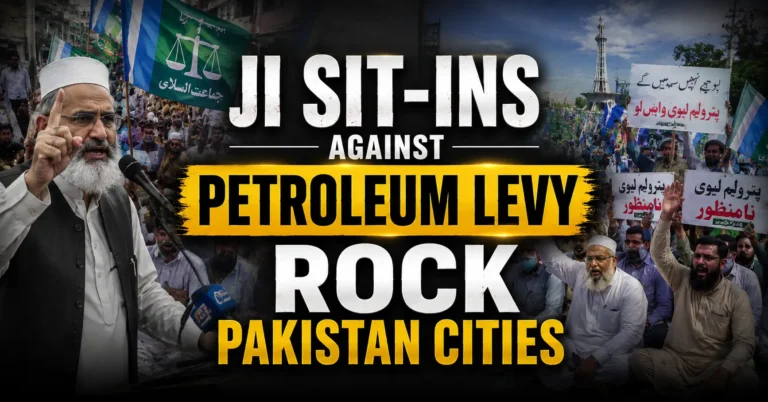

JI sit-ins against the petroleum levy resumed on Sunday, August 16, with Jamaat-e-Islami cadres gathering outside the Chief Minister’s House in Lahore and the Governor Houses in Karachi, Peshawar and Quetta. The party has refused to name an end date this time.
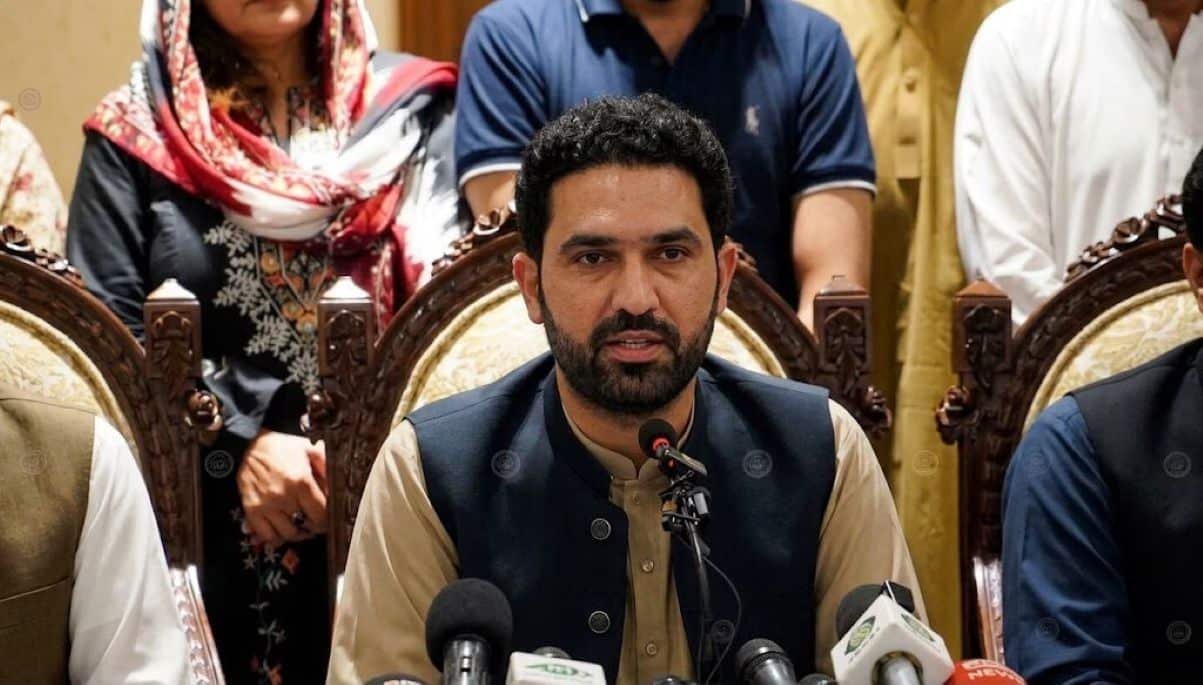
That refusal matters. Earlier rounds of protest carried a clear finish line — a rally, a road closure, a few hours of disruption. This one is designed to last. JI Emir Hafiz Naeemur Rehman told reporters in Lahore the sit-ins would continue “until the government addresses their demands,” a phrase that turns a single-day demonstration into an indefinite pressure campaign.
What Sparked the Protest Movement

The petroleum levy sits at the centre of JI’s grievance, and the party has spent weeks building toward Sunday’s escalation. It began on August 7, when JI staged demonstrations at more than 500 locations across 170 districts nationwide.
- Roads blocked included Shahrah-e-Faisal and Natha Khan Bridge in Karachi
- Qurtaba Chowk in Lahore and Stop No. 26 in Islamabad also saw sit-ins
- Toll Plaza Peshawar, Bosan Road Multan and the Chakdara interchange were shut
JI warned then that if authorities interfered, the campaign would expand from 510 to as many as 1,500 roads and highways — a threat that framed everything that followed.
Hafiz Naeem-ur-Rehman’s Demands, In His Own Words
Hafiz Naeem-ur-Rehman has repeated a consistent set of demands throughout the campaign against the petroleum levy: cut petrol to Rs225 per litre, scrap the levy outright, and lower taxes on essential goods more broadly.
READ MORE: Pakistan security forces kill seven Fitna al-Khawarij in Balochistan
He has not softened his language. Rehman accused the government of “dropping a petrol bomb on the public every day,” and told supporters the state had failed to pass on relief even when international crude prices fell. At Mansoorah on August 15, he added that JI would “not remain silent over this injustice.”
Rs1,567 Billion: The Numbers Fuelling the Anger

The financial figure JI keeps returning to is Rs1,567 billion — the amount Rehman says the government has collected from citizens through petroleum levies, a sum he claims exceeds targets set under the IMF programme.
| Detail | Figure |
|---|---|
| Levy revenue cited by JI | Rs1,567 billion |
| JI’s demanded petrol price | Rs225 per litre |
| Protest locations (Aug 7) | 500+ across 170 districts |
| Potential expanded locations | Up to 1,500 |
| Karachi Governor House sit-in schedule | 15 days (party sources) |
Whether the Rs1,567 billion figure is independently verified by the finance ministry has not been confirmed in any government statement so far; it remains JI’s own accounting, repeated at every press conference.
From 500 Roads to Governor House Sit-Ins
The path from scattered road blockades to permanent sit-ins outside government residences followed a deliberate sequence, and JI leadership signalled each escalation in advance rather than acting spontaneously.
- Aug 7: Nationwide protests at 500+ locations against fuel prices and the levy
- Aug 8–9: Rehman announces sit-ins outside Governor Houses and Lahore’s CM House
- Aug 9: Sit-ins postponed to allow Independence Day (Aug 14) celebrations
- Aug 15: Press conference at Mansoorah confirms restart date of Aug 16
- Aug 16: Sit-ins begin at 3–4pm across Lahore, Karachi, Peshawar and Quetta
Government and Provincial Response

Provincial administrations have treated the renewed sit-ins as a law-and-order matter rather than a policy one, deploying traffic police while largely deflecting responsibility for the levy itself onto Islamabad.
Punjab’s Information Minister Azma Zahid Bukhari said the petroleum levy “was a federal matter” outside provincial control, while acknowledging JI’s right to peaceful protest. She cautioned, though, that road blockades and disruption to public life “would not be tolerated” — a line that signals tolerance for the protest, not for its side effects.
Disruption on the Ground
Traffic congestion has been the most visible, immediate cost of the campaign, particularly in Karachi, where police reported pressure building on multiple arteries as caravans converged toward the Governor House.
- Lasbela Chowk to Numaish Chowrangi carriageways affected
- Tibet Centre–Numaish Chowrangi link roads congested
- Numaish to Shahrah-e-Quaideen stretch under pressure
- Ambulances given right of way despite closures, police say
Commuters in Lahore, Peshawar and Quetta faced similar bottlenecks as marches converged on official residences during Sunday’s peak hours.
What Happens Next
With no end date attached, the sit-ins against the petroleum levy now function as a test of endurance between JI’s street organisation and the federal government’s willingness to negotiate on fuel taxation.
JI has paired the physical protest with a parallel online push — a coordinated social media trend against what the party calls the “Bhatta Levy” — suggesting the movement intends to sustain pressure digitally even if turnout on the roads fluctuates day to day.The government responds with talks, a partial rollback, or continued silence will likely determine how long the sit-ins actually run.