
Pakistani travelers digital payments habits are shifting faster than banks anticipated. A tax cut, a fintech rivalry, and a cashless government mandate have converged in the same six months — and the wallet in your pocket is quietly becoming obsolete.
Why Pakistani Travelers Are Abandoning Cash and Traditional Cards
Pakistani travelers digital payments preference didn’t emerge overnight. For years, a punishing 5% withholding tax on international card transactions pushed people toward informal cash channels, hurting both convenience and government revenue collection simultaneously.
That equation flipped in mid-2026. Finance Minister Muhammad Aurangzeb told parliament the old tax structure had backfired, effectively rewarding people for avoiding the formal banking system entirely.
The 0.5% Tax Cut That Changed Everything
The Budget 2026-27 slashed withholding tax on overseas debit and credit card transactions from 5% down to just 0.5%, a nearly 90% reduction under Section 236Y of the Income Tax Ordinance.
- Effective date: July 1, 2026
- Old rate: 5% on every international card transaction
- New rate: 0.5%, applied via banks and EMIs
- Stated goal: pull informal cash transfers into documented banking channels
Officials frame this as documentation policy, not just traveler relief. Aurangzeb explicitly linked the cut to reducing reliance on undocumented cash networks that had flourished under the older, punitive tax regime.
Digital Wallets Leading the Shift: SadaPay vs NayaPay

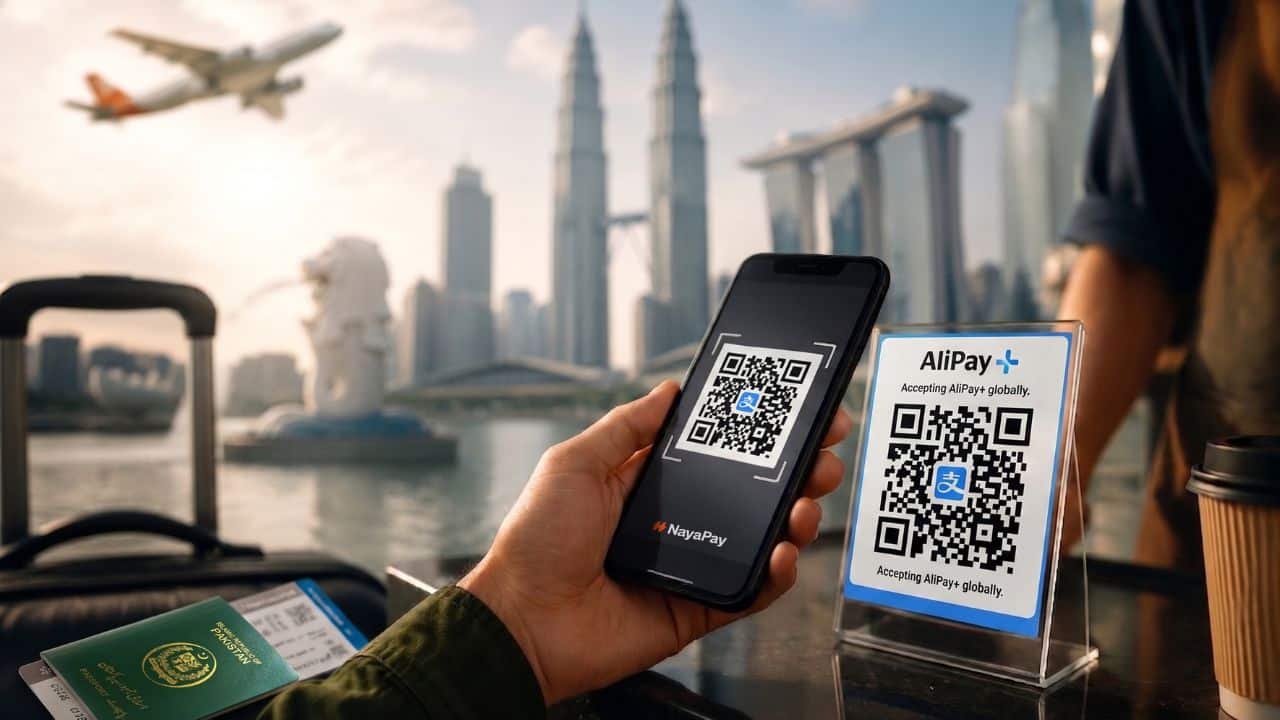
Pakistani travelers digital payments increasingly run through SBP-licensed electronic money institutions rather than traditional banks. SadaPay and NayaPay dominate this space, each courting freelancers, students, and frequent international spenders differently.
Feature | SadaPay | NayaPay |
|---|---|---|
| Card network | Mastercard | Visa |
| Intl. transaction fee | ~6% (some sources cite 1.5%) | 3.5%–4% |
| Physical card | Free virtual, paid physical | Paid physical (previously free) |
| Regulator | State Bank of Pakistan (EMI) | State Bank of Pakistan (EMI) |
| Standout feature | SadaBiz freelancer FX rates | Alipay+ global QR acceptance |
- Both are fully regulated, not experimental startups
- Fee structures vary by source and change frequently, so travelers should verify current schedules before booking
- Neither functions as a full bank, despite bank-like daily use
QR Codes and Raast: The New Face of Everyday Payments
Pakistani travelers digital payments now extend into government services themselves. Starting July 1, 2026, every passport office in Pakistan stopped accepting cash, shifting entirely to QR-code payments through banking apps.
READ MORE: Zindigi and nsave Partnership: Revolutionary Free Remittances for Freelancers
Interior Minister Mohsin Naqvi chaired the reform meeting behind this shift, which also introduces e-passports and online applications through the Pak ID platform. The message from Islamabad is unambiguous: cash is being engineered out of formal transactions nationwide.
The USD 30,000 Annual Limit Every Traveler Should Know
Pakistani travelers digital payments are not unlimited. The State Bank of Pakistan caps card-based international transactions at USD 30,000 per person, per year, across every card an individual holds combined.
- The limit applies per individual, not per card
- It covers personal spending only — business use is explicitly excluded
- Breaching intended use categories can trigger compliance flags from issuers
This ceiling matters for frequent flyers, students abroad, and freelancers who mix personal and business spending, since exceeding it risks account restrictions from SadaPay, NayaPay, or traditional banks alike.
Where Cash Still Rules: Northern Pakistan and Rural Routes

Pakistani travelers digital payments face real limits once they leave major cities. Card acceptance and ATM reliability remain patchy in Hunza, Skardu, Naran, and other northern tourist corridors popular with domestic travelers.
- Islamabad, Lahore, and Karachi offer dense ATM and card-acceptance networks
- Northern valleys still favor cash for hotels, transport, and small vendors
- Travel guides consistently advise carrying backup cash alongside any digital wallet
That gap explains why the shift is uneven: urban, tech-savvy travelers are moving fastest, while highland tourism routes still function largely as a cash economy regardless of national policy direction.
What This Means for the Future of Travel Payments in Pakistan
Pakistani travelers digital payments are heading toward a hybrid model rather than a total cash-free future. Tax incentives, QR infrastructure, and EMI competition are pulling urban spending patterns firmly toward digital rails.
Rural and mountain tourism will likely lag for years given inconsistent connectivity and ATM coverage. Even so, the direction from regulators, budget policy, and fintech competition all points the same way — toward documented, traceable, and increasingly cashless travel.