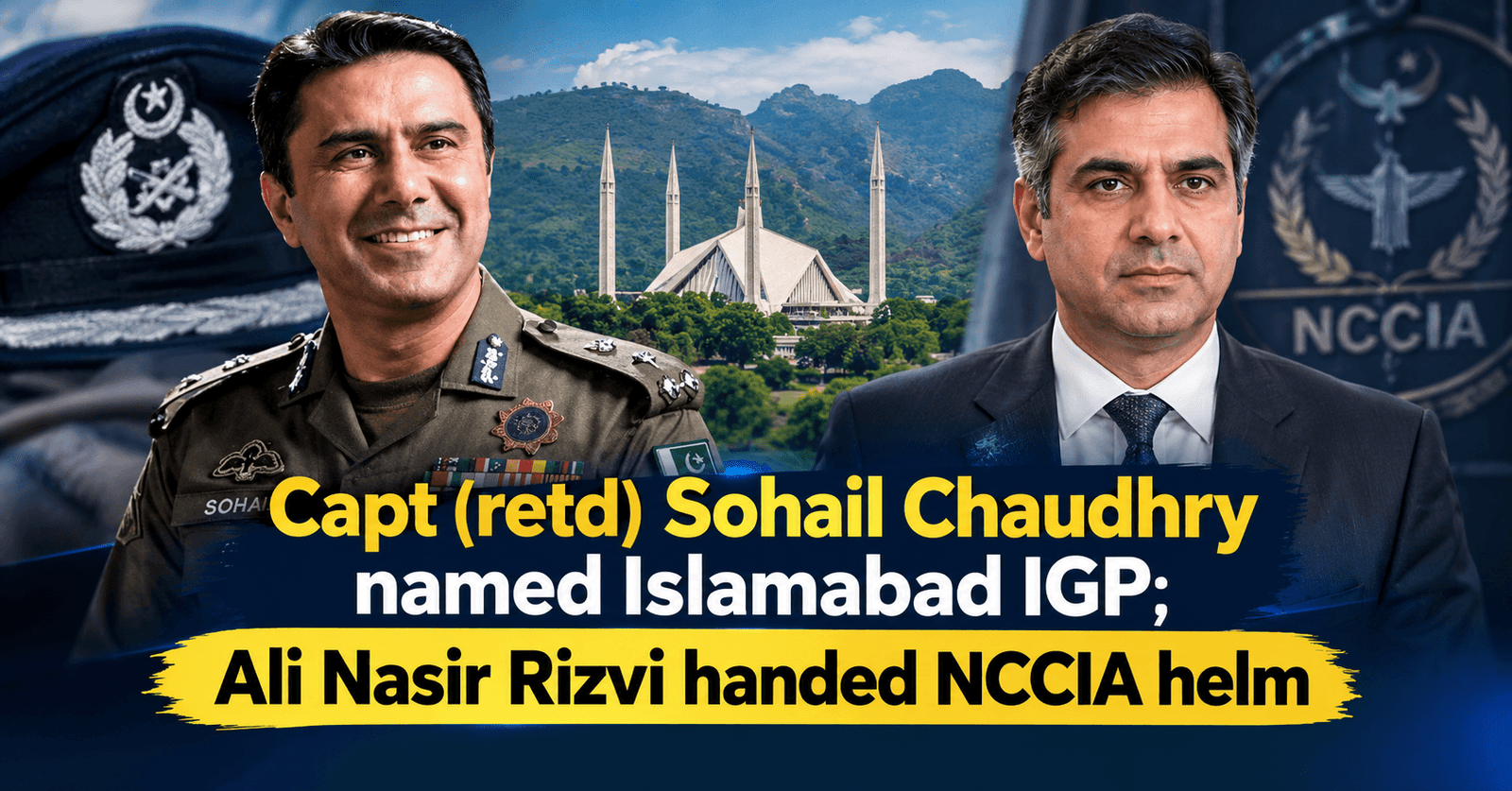

Islamabad woke up on September 13 to a leadership shake-up nobody quite saw coming. Sohail Chaudhry Islamabad IGP appointment papers landed on a Saturday, and by evening, three of Pakistan’s most sensitive law-enforcement chairs had changed hands.
Capt (Retd) Muhammad Sohail Chaudhry, a BS-20 officer of the Police Service of Pakistan, was pulled from Punjab and posted as Inspector General of Islamabad Capital Territory Police. The order took effect immediately.
- Chaudhry replaces outgoing IG Syed Ali Nasir Rizvi
- The notification was issued by the Establishment Division on September 12, 2026
- The appointment cites Section 10 of the Civil Servants Act, 1973
Who Is Sohail Chaudhry? Inside the New Islamabad IGP’s Career
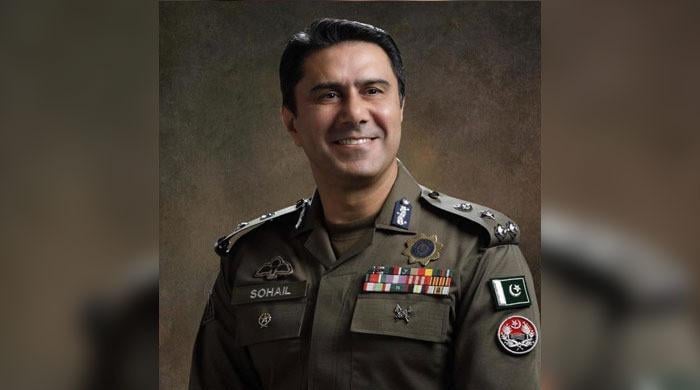
Long before this appointment, Sohail Chaudhry built a name as a field commander, not a desk officer. A former Pakistan Army captain, he cut his teeth in some of Punjab’s toughest policing assignments.
His CV reads like a tour of Punjab’s law-and-order hotspots. Some local reports have already tagged him with the nickname “dabbang” — a nod to his blunt, hands-on style.
- Chief Traffic Officer (CTO), Lahore
- City Police Officer (CPO), Faisalabad
- Deputy Inspector General (DIG) Operations, Lahore
- DIG Counter Terrorism Department (CTD), Punjab
- Regional Police Officer (RPO), Multan
Ali Nasir Rizvi’s Move to NCCIA: What the Notification Says

Rizvi isn’t being sidelined — he’s being redirected toward one of Pakistan’s fastest-growing enforcement priorities. He has been named Director General of the National Cyber Crime Investigation Agency, effective immediately.
The posting comes with legal weight attached. It was made under Section 29(3) of the Prevention of Electronic Crimes Act, 2016, as amended in 2025, alongside Section 10 of the Civil Servants Act. That clause caps the DG’s term at three non-extendable years.
READ MORE: Maryam Nawaz daughter Mahnoor nikah to take place today at Jati Umra
Rizvi had led Islamabad Police since April 2024, a stint marked by expanded command-and-control technology and recurring security coordination meetings. His exit closes that chapter just as the capital pushes further into AI-assisted policing.
Reshuffle at a Glance: Key Appointments Compared
The September 12 notification wasn’t limited to two names. A third senior officer also picked up a major federal posting the same day, rounding out a broader institutional shuffle.
| Officer | Previous Role | New Role | Legal Basis |
|---|---|---|---|
| Capt (Retd) Sohail Chaudhry | Serving under Govt of Punjab | IG, Islamabad Capital Territory Police | Civil Servants Act, 1973, Sec. 10 |
| Syed Ali Nasir Rizvi | IG, Islamabad Capital Territory Police | Director General, NCCIA | PECA (Amendment) Act, 2025, Sec. 29(3) |
| Khurram Ali (Grade 21) | — | Director General, National Police Bureau | Establishment Division notification |
Why NCCIA Leadership Is a Bigger Deal Than It Looks
Handing Rizvi the NCCIA charge isn’t a lateral move — it’s arguably a promotion in influence. As DG, he now holds powers equivalent to a provincial Inspector General under the Police Order, 2002.
- NCCIA has exclusive authority to investigate PECA offences
- Its officers carry police-equivalent powers at corresponding ranks
- Islamabad Police has reportedly shortlisted 23 officers for transfer into the agency
That last point matters. NCCIA has been actively seeking manpower, drawing candidates from Capital Patrol, the Investigation Wing, the Counter Terrorism Department and the Anti-Car Lifting Cell — meaning Rizvi arrives with reinforcements already in the pipeline.
How PECA 2025 Created the NCCIA

The agency itself is barely a year old. The Prevention of Electronic Crimes (Amendment) Act, 2025 dissolved the FIA’s old Cyber Crime Wing and replaced it with a standalone body built specifically for digital-age offences.
Since its rollout, NCCIA has already made headlines for real operations — including arrests tied to a reported Rs20 billion online fraud scheme in Multan and joint IMEI-tampering raids with the PTA in Gujranwala. Rights groups, meanwhile, have flagged the amendment’s broader speech-related powers as a separate, ongoing controversy worth watching.
What This Means for Islamabad Policing and Pakistan’s Cyber Enforcement
For ordinary Islamabad residents, the immediate effect is continuity with a harder edge. Sohail Chaudhry counterterrorism and operational background suggests a tougher stance on street crime rather than a policy overhaul.
For the digital economy — online sellers, freelancers, and everyday internet users — Rizvi’s NCCIA appointment signals that cybercrime enforcement is being handed to someone who already knows Islamabad’s security architecture inside out. That translates into faster fraud investigations or tighter online scrutiny will likely become clear only in the coming months.